Plan my Serbia route

Novi Sad • Attraction Guide

Petrovaradin Fortress – The Gibraltar of the Danube

Serbia’s most iconic fortress rises above the right bank of the Danube, combining sweeping views, layered history, underground tunnels, and a lively cultural scene. It’s the one place in Novi Sad you should not skip.

Location: Novi Sad Built: 17th–18th century Famous for: Clock Tower, EXIT Festival Plan Your Visit
A fortress above the river Petrovaradin Fortress rises above the right bank of the Danube, with 18th-century Vauban ramparts, 25 km of tunnels, and the Sahat Kula clock tower whose hands are deliberately reversed.
Panoramic views
Underground tunnels
EXIT Festival
Free to enter

Petrovaradin Fortress in one minute

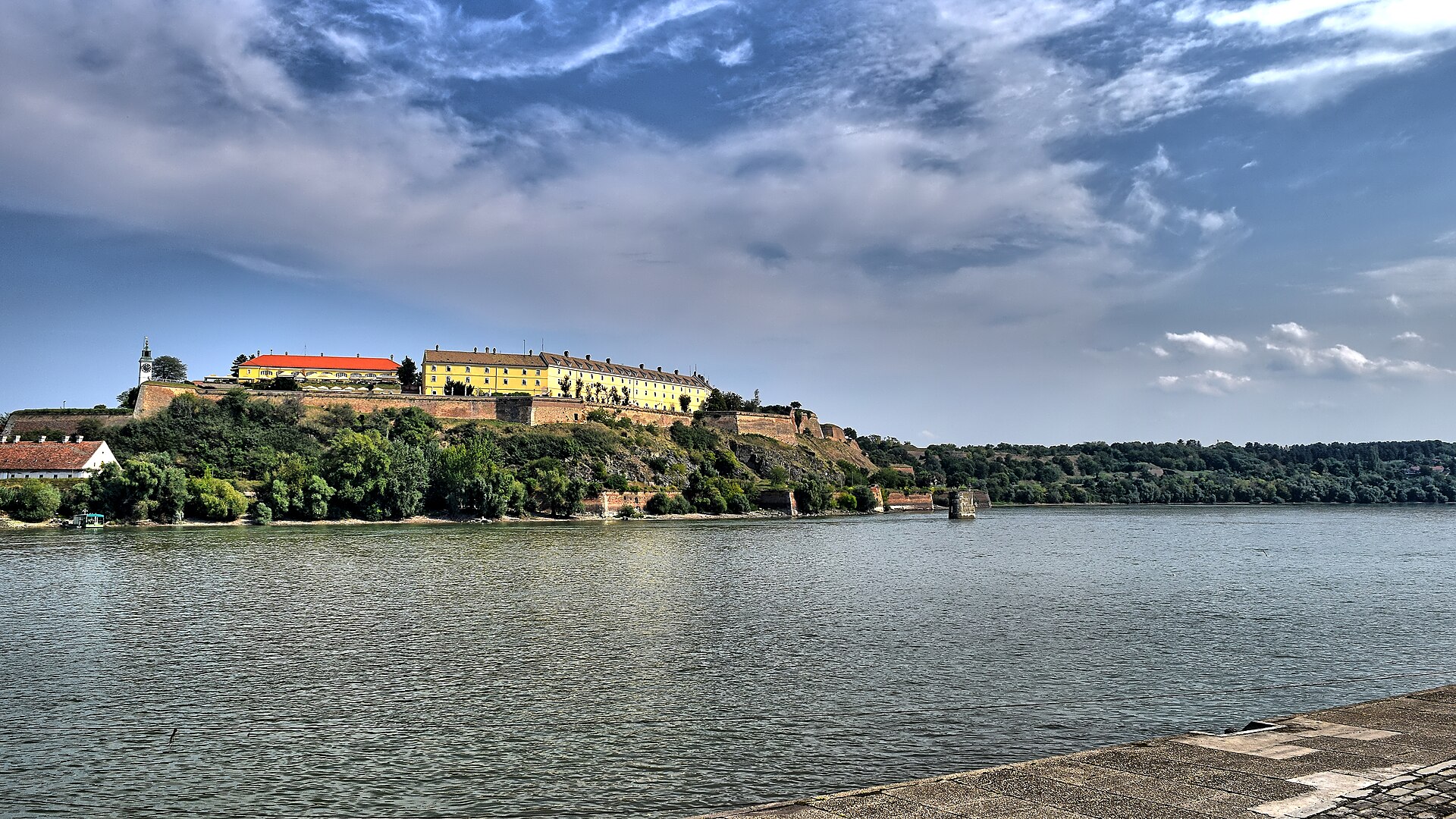
Petrovaradin Fortress sits on a basalt outcrop above the Danube on the right bank, directly across from Novi Sad. The current Habsburg-era complex was built in stages from 1692 onwards and is one of the largest preserved fortresses in Europe, with a network of underground galleries reaching about 16 kilometres in length.

Today the fortress is best known for the clock tower with its reversed clock hands, panoramic views over Novi Sad and the Danube, the small museum of the City of Novi Sad inside the upper plateau, and as the venue for the EXIT music festival each July.

For the city below, see the Novi Sad Travel Guide.

Last checked: 2026-05-27. For corrections, contact us.

Where is Petrovaradin Fortress?

Petrovaradin Fortress stands on the right bank of the Danube, directly opposite Novi Sad's Old Town. The site has been used as a defensive position for centuries; the present Vauban-style fortification was begun in 1692 under the Habsburgs. By the 18th century the complex covered almost 112 hectares, with over 25 km of tunnels and catacombs spread across four underground levels — roughly half of which remain officially unmapped.

From the Upper Town (Oberstadt), five gates control access to a complex that includes a Lower Town (Unterstadt) built throughout the 18th century as a combined military and residential district. After the Serbian army entered Novi Sad through the Belgrade Gate at the end of the First World War, that gate became a symbol of liberation for the city.

For broader context on Novi Sad itself, see the Novi Sad Travel Guide and the wider Vojvodina guide.

Tours and activities in Petrovaradin Fortress

Hand-picked guided experiences from local operators — booked through GetYourGuide with free cancellation on most.

We earn a commission on bookings — at no extra cost to you.

A landmark that makes Novi Sad feel complete

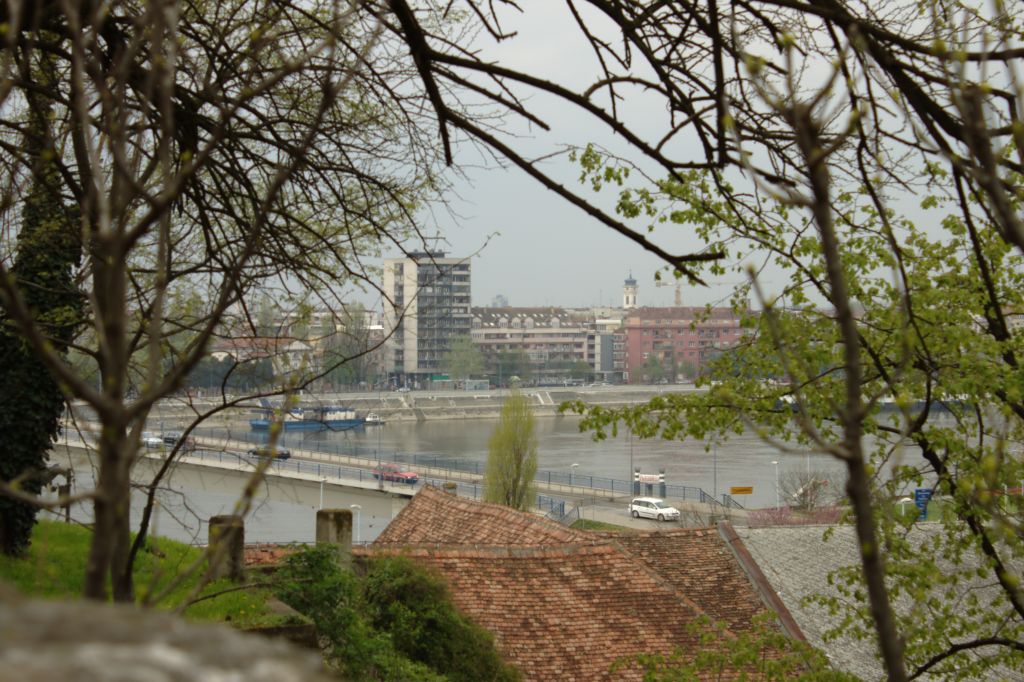
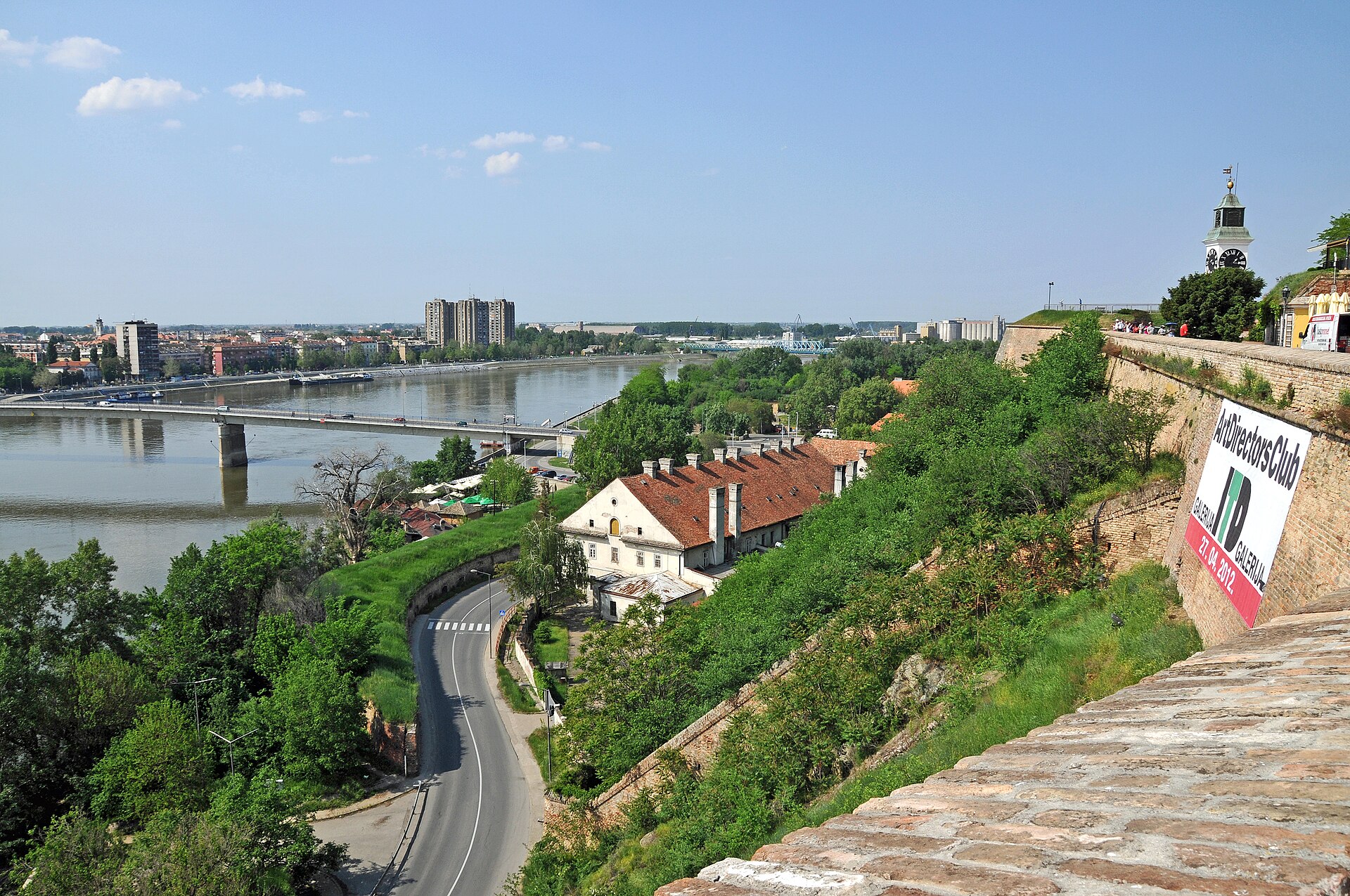
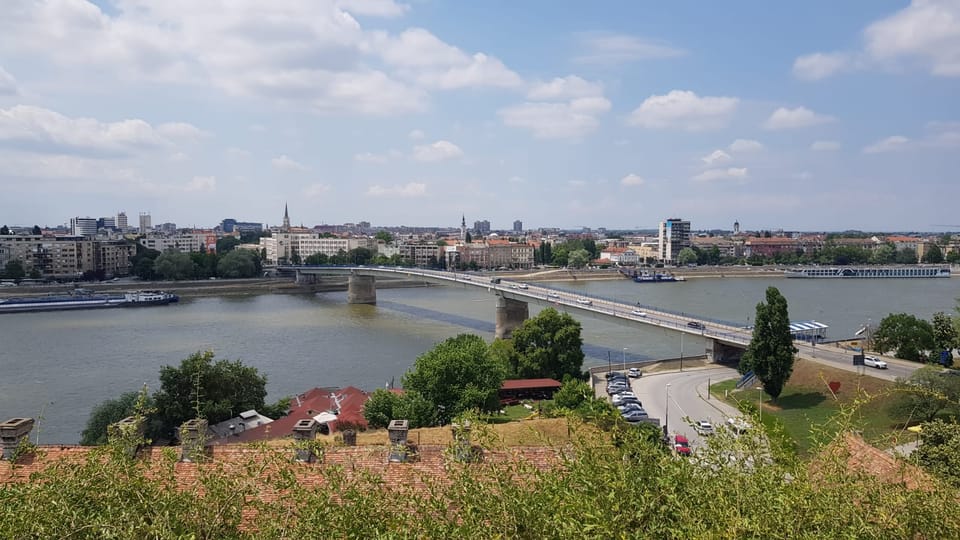
Petrovaradin is Novi Sad's defining landmark in the most literal sense: from the ramparts you see the entire city, the Danube bend, the bridge approaches, and the flat Vojvodina plain beyond. Matthias Pasler's Serbia Travel Pocketbook describes the view as a place where it is genuinely difficult to decide which perspective is finer — looking up at the fortress or looking out from it.

Compared with Belgrade, which has its own fortress above the Danube and Sava confluence, Novi Sad reads as its quieter, more measured counterpart. A Belgrade taxi driver put it to Pasler this way: Novi Sad is like Belgrade thirty years ago. The author respectfully disagreed — but the remark captures something real about the city's pace and self-possession.

Both cities share a strong bicycle culture; Novi Sad had its first cycling club by 1886 and dedicated cycle paths by 1900, making it unusual by European standards of the time.

The fortress and the Old Town below it

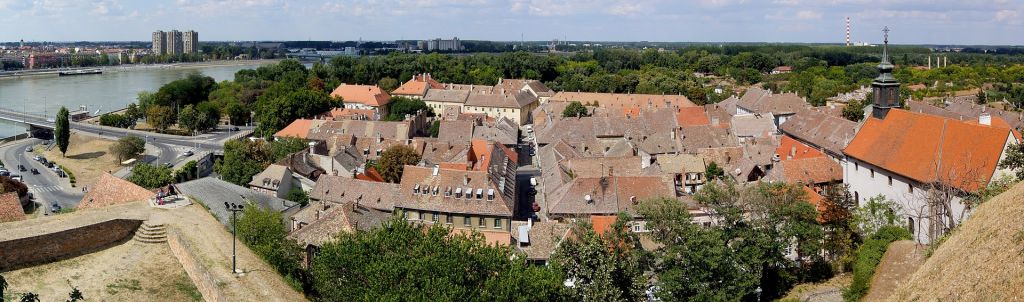
The lower fortress district was extensively renovated when Novi Sad held the European Capital of Culture title in 2021, and the formerly muted facades now appear in fresh pastel tones. The historic military-baroque architecture has been preserved throughout, and the Belgrade Gate at the district's edge remains the most recognizable entry point from the riverbank.

Across the river, Novi Sad's Zmaj Jovina and Dunavska streets reward those who look beyond the facades into the Pasaži — covered courtyards that range from quiet cafés to architectural curiosities. The Donaupark, laid out in 1895 on reclaimed swamp land, retains its original lake and the statue of poet Đura Jakšić, an identical copy of which stands in Belgrade's Skadarlija quarter.

Petrovaradin Fortress — Novi Sad’s defining landmark

Construction of the current fortification began in 1692, when Habsburg engineers laid the first stone of what would become one of the largest fortresses in Europe of its time. The design followed Vauban principles — layered earthworks, angled bastions, and an extensive underground system intended to counter Ottoman mining tactics. Ottoman engineers were known to tunnel beneath enemy fortifications and plant explosives; the roughly 100 architects of Petrovaradin responded by building a second hidden tunnel network below their own tunnels, so that any Ottoman underground advance would end in a decoy passage.

The fortress survived the Second World War largely intact, and the reason is specific: a 20-year-old Neapolitan named Guildo Pesapane, a German prisoner of war, chose to sabotage a demolition order after falling in love with a woman from Petrovaradin. As German forces retreated before the advancing Red Army, they positioned 30 wagons carrying approximately 300 tonnes of explosives in the tunnels. Pesapane and a group of rebels cut the detonation cables at the last moment. The old railway bridge had already been destroyed, preventing the Germans from returning, and the fortress survived. His daughter reportedly still lives in Novi Sad.

[3]

Danube life: promenades, beaches, and breathing space

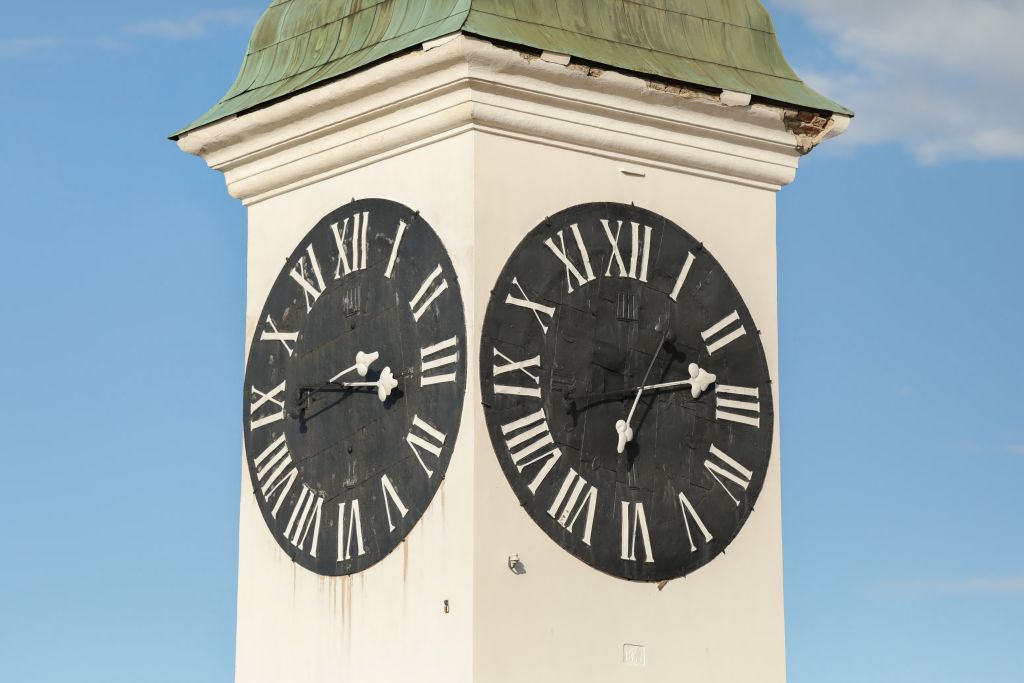
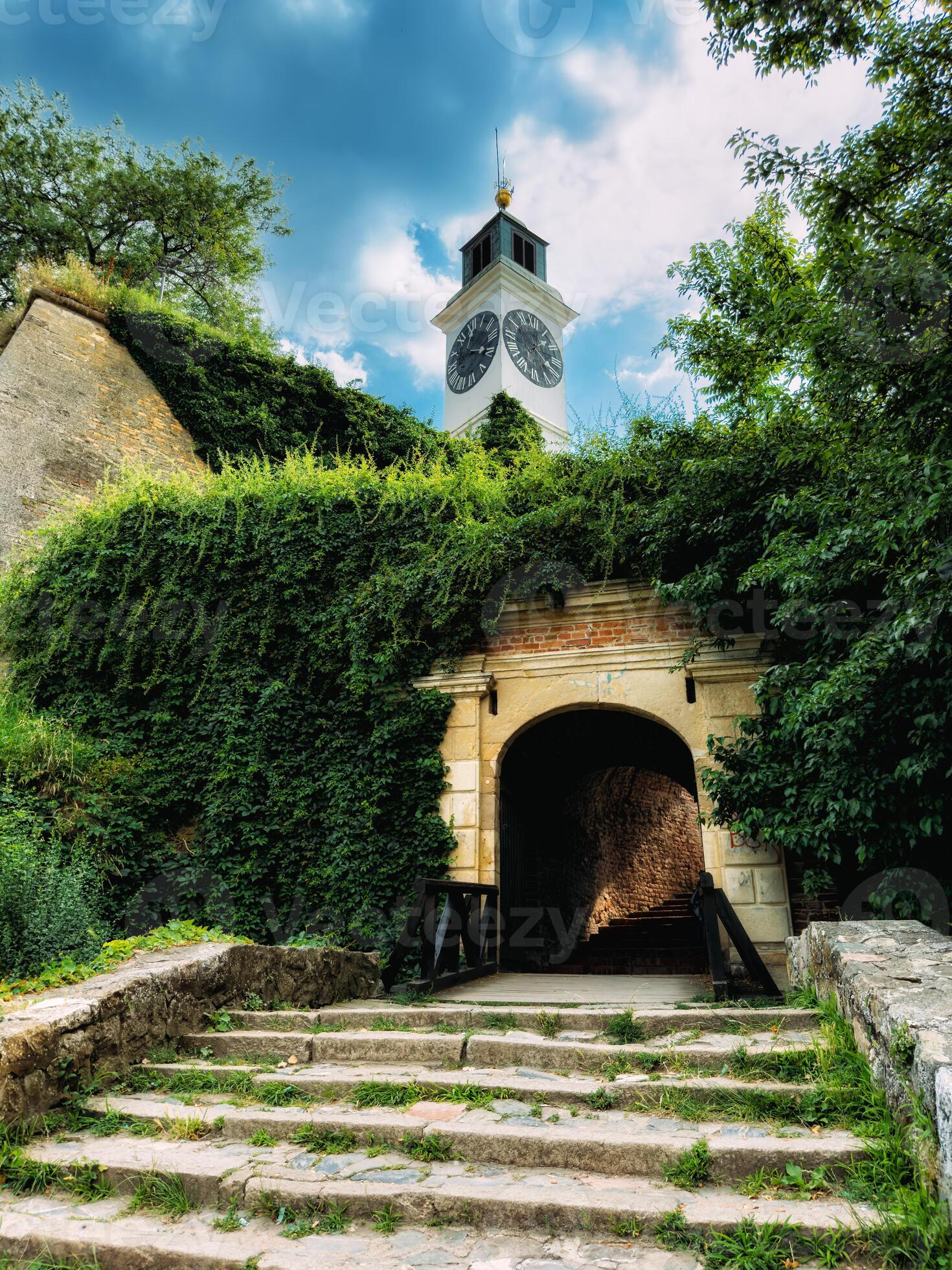
The Clock Tower (Sahat Kula) at the Ludwig Bastion is among the most photographed elements of the fortress. What makes it unusual is the deliberate reversal of its hands: the larger hand shows the hour, the smaller shows the minutes. This arrangement was designed so that river pilots could read the hour clearly from the water below. The tower's nickname — the drunken clock — comes from its hand-wound mechanism, which runs slow in cold weather and fast in warm.

Also accessible from the riverbank, and currently in legal limbo, is the Franz-Josef-Tunnel beneath Petrovaradin, a 300-metre passage that once carried the Orient Express. It is neither officially open nor formally closed; visitors with a charged phone torch can walk through it via the entrance steps near Kamenički put.

Culture and creativity inside the walls

The upper fortress is home to two distinctive cultural institutions. Atelier 61 was founded in 1961 around the idea that tapestry is an independent and specifically Serbian art form worth preserving; the atelier has since collected over 260 works by artists from across the Balkans.

Alongside it, the artist colony Likovni krug (Pictorial Circle) houses more than 100 working artists across 80 studios — described by Pasler as the largest such colony in the world. Both institutions are open to visitors. The Museum of the City of Novi Sad also arranges guided tours through sections of the tunnel system for those who want a structured underground visit rather than self-guided exploration.

Food and cafés: easy to like, hard to leave

The fortress terraces include several restaurants with views over the Danube. Pasler notes their setting is undeniably dramatic but the character tends toward mainstream. More varied options are available in Novi Sad's Old Town, a short walk or taxi ride across the river.

For a locally valued experience in Belgrade, Pasler recommends Zavičaj Balkanska on Gavrila Principa (six branches), particularly for breakfast — noting that Serbian friends independently confirmed its quality. The style is traditional, the atmosphere genuine, and the food unpretentious. The same principle applies in Novi Sad: look for kafanas rather than tourist-facing menus.

Getting around Petrovaradin Fortress

The fortress complex is walkable but uneven. Comfortable footwear is essential; some slopes between the upper and lower sections are steep. The fastest pedestrian route between levels uses the hidden staircase beside the Church of St. George on Štrosmajorova 20. Cars can access the upper fortress from the east.

The UGRIP volunteer organisation — whose name translates loosely as Urban Guerrilla Fighters from the Underworld — runs three-hour guided tours of the tunnel network for a set fee per person. Founded by Leon Šurbanović after 2016, the group has removed some 300 tonnes of accumulated rubbish from the catacombs without state support or formal authorisation, and continues to document sections that authorities have not yet officially acknowledged.

Day trips and easy add-ons from Novi Sad

Novi Sad developed a strong bicycle culture from the 1880s onwards — the first cycling club formed in 1886, and dedicated paths followed by 1900. Combined with the city's compact layout, this makes cycling a practical option for combining fortress visits with other city sights.

For regional day trips, the Fruška Gora ridge north of Novi Sad holds a chain of Orthodox monasteries. To the south, the roads lead toward central Serbia and Šumadija. Belgrade is approximately 90 km by road, making a same-day return trip straightforward.

The fortress in four chapters

Roman and early settlement layers

The hill’s strategic position mattered long before the modern fortress. Early occupation and defense made it valuable for controlling movement along the Danube corridor.

Ottoman period

The site remained militarily relevant under Ottoman rule, especially because it overlooked both the river and the surrounding plains.

Habsburg expansion

The current fortress was largely shaped in the 17th and 18th centuries, when it became a major defensive system for the empire.

From army base to cultural landmark

Today, the fortress is no longer just about defense — it is a city icon, a creative district, and a festival stage with serious historical weight.

Best ways to enjoy the river setting

Sunset walks

The fortress and the Danube are at their best in late afternoon, when the sky softens and the city begins to glow.

Photo stops

The elevated position gives you clean framing for river views, bridges, and the skyline of Novi Sad.

Relaxed detours

Don’t treat the fortress as a checklist stop. Give yourself time to wander, sit, and enjoy the setting.

Seasonal energy

In summer, the whole area feels livelier, with events, visitors, and longer evenings outdoors.

Smart pairings for your itinerary

Novi Sad Old Town

Combine the fortress with a walking route through the city center for a balanced half-day in Novi Sad.

Fruška Gora

If you have a car or a guided transfer, add the nearby wine-and-nature landscape for a fuller regional experience.

Belgrade

For a bigger urban contrast, continue to Serbia’s capital and compare two very different river cities.

Vojvodina round trip

Use Petrovaradin as the signature stop on a north Serbia circuit that includes Subotica, Sombor, and the wider plain.

Find Petrovaradin Fortress

The fortress sits above Novi Sad on the right bank of the Danube. Use the map below to orient yourself before walking up from the city side.

Why people keep coming back

These are the experiences that make Petrovaradin Fortress more than a historic site.

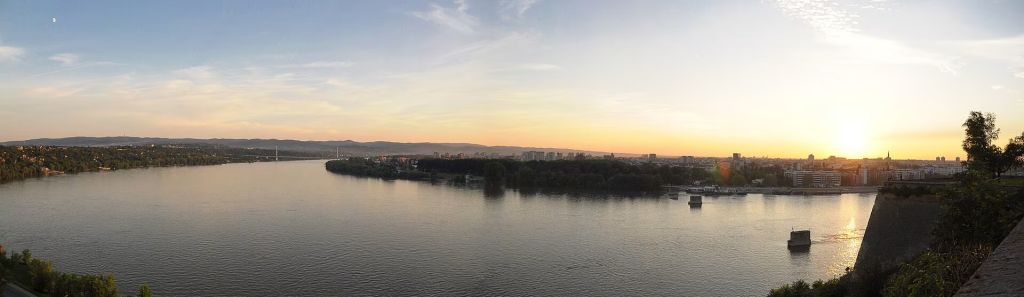
Sunset panorama over the Danube and Novi Sad from Petrovaradin Fortress with bridges and distant hills

Danube River Panorama

Sunset view over the Danube and Novi Sad from Petrovaradin Fortress, with bridges, river traffic, and distant hills

Twin black clock faces on the Petrovaradin Fortress tower beneath a green copper roof

Fortress Clock Tower

Twin clock faces mark the tower at Petrovaradin Fortress against a clear blue sky

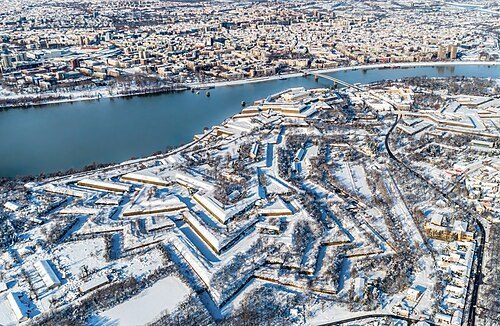
Snow-covered Petrovaradin Fortress above the Danube with Novi Sad spread across the far bank

Snowy fortress aerial view

An aerial view of Petrovaradin Fortress showing snow-covered walls above the Danube and the city beyond

Snow-covered artillery piece at Petrovaradin Fortress with dim buildings behind it

Snow-covered fortress artillery

A snow-covered artillery piece rests at Petrovaradin Fortress, with dim structures visible in the background

Places to explore nearby

These nearby points anchor a fuller Novi Sad itinerary alongside the fortress itself.

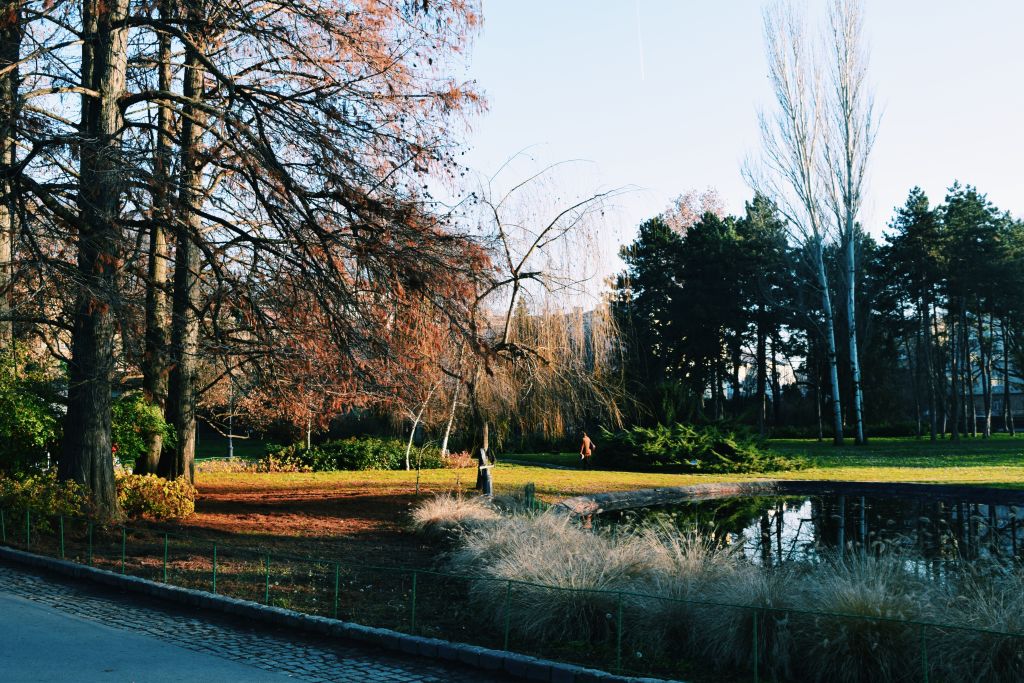
Danube Park in Novi Sad with trees and walking paths

Danube Park

A calm green break in the city center, ideal after a fortress walk.

A simple, pleasant place for a pause between sightseeing stops. Great for a slower pace and a bit of shade.

  • Central location, Easy walk from downtown, Good for families
Freedom Square in Novi Sad with historic buildings

Freedom Square

The city’s main civic heart and a good starting point for a Novi Sad stroll.

If Petrovaradin is the dramatic high point, Freedom Square is the everyday urban counterpoint.

  • Cafés nearby, Historic architecture, Easy orientation point
Old Town streets in Novi Sad with pedestrian cafes and historic facades

Old Town of Novi Sad

Pedestrian streets, cafes, and the city’s easiest place to linger.

Perfect for lunch, coffee, and unhurried walking after your fortress visit.

  • Walkable, Food and cafés, Best for city atmosphere

Quick facts for Petrovaradin Fortress

Where it is

Right bank of the Danube, opposite Novi Sad Old Town; reachable on foot in 15–20 minutes.

Best time to visit

Late afternoon for golden light over Novi Sad; July for EXIT (book early).

Underground galleries

Visit only with a guide booked through the Museum of the City of Novi Sad.

Don't miss

The reversed clock tower, Tešnjar gate viewpoints, and the small art studios on the upper plateau.

Good for

Half-day visit, sunset photos, history, and music in July.

Typical stay

2–4 hours; full day if combined with the museum and a dinner in Lower Town.

Quick location note

Quick location note

A hidden staircase (Stepenice) beside the Church of St. George on Štrosmajorova 20 offers the quickest route between the lower and upper fortress on foot. Alternatively, the upper fortress can be reached by car from the east, where parking is available.

Back to Novi Sad
Micro-tip

Micro-tip

The western ramparts of the upper fortress are among the most popular gathering points in Novi Sad for watching the sunset. In fine weather, couples and groups assemble with wine and beer, sometimes a guitar, as the city light shifts across the Danube.

Why the nickname matters

Why the nickname matters

Drawing on Matthias Pasler's Serbia Travel Pocketbook: the nickname Gibraltar of the Danube reflects the fortress's commanding position above the river and its reputation for military impregnability. In its 300-year history, Petrovaradin never suffered major structural damage — a record owed as much to fortunate circumstance as to engineering.

Best way to time your meal

Best way to time your meal

Arrive at the fortress in the late afternoon for daylight exploration and golden-hour photographs, then cross to the Old Town for dinner. This avoids the midday heat in summer and takes full advantage of the evening light on the Danube.

Practical visit tips

Practical visit tips

The fortress grounds are accessible at all hours. Individual museums, galleries and tunnel tours operate on separate schedules; check the Museum of the City of Novi Sad and UGRIP in advance if tunnel access is a priority. The fortress entry is generally free; underground tours and museum tickets are priced separately.

How long should you spend here?

How long should you spend here?

Two hours covers the essential viewpoints and upper fortress grounds. Half a day allows for the Sahat Kula clock tower, the Franz-Josef-Tunnel, the Atelier 61 and Likovni krug studios, and a relaxed sunset stop on the ramparts. A guided UGRIP tunnel tour adds roughly three hours to any visit.

Frequently asked questions about Petrovaradin Fortress

Is Petrovaradin Fortress free to visit?

Yes, the fortress grounds are generally free to enter. Some museums, guided tunnel tours, and special events may charge an admission fee.

How long do I need to visit Petrovaradin Fortress?

A focused visit takes about 1–2 hours. If you want to walk the walls, visit an exhibit, and stay for sunset, plan for half a day.

Can you visit the underground tunnels?

Yes, but usually only with a guide or during organized tours and special programs. Availability can vary, so check current schedules in advance.

What is the Clock Tower famous for?

Its most famous detail is the reversed hands: the minute hand is larger than the hour hand, making it easy to read from afar and instantly recognizable.

When is the best time to go?

Sunset is the best all-around time for views and photos. Summer evenings are especially lively, while early mornings are quieter and better for a calm walk.

Is Petrovaradin Fortress worth visiting at night?

Yes. The fortress and the city lights create a beautiful contrast after dark, especially if you enjoy photography or a more atmospheric walk.

What else should I see nearby?

Pair it with Novi Sad’s Old Town, the Danube promenade, and the city’s main squares and parks. For a broader trip, use the Novi Sad and Vojvodina guides as your base.

Sources

Authoritative references for the facts on this page. Last reviewed 31 May 2026.

  1. Petrovaradin Fortress - Novi Sad Tourism Organisation novisad.travel Official
  2. Publisher: novisad.travel Official
  3. A short overview of history of Petrovaradin - Novi Sad Tourism Organisation novisad.travel Official
  4. Petrovaradin Fortress - Wikipedia en.wikipedia.org Official
  5. Fort van Petrovaradin - Wikipedia nl.wikipedia.org Official
  6. 彼得羅瓦拉丁要塞 - 維基百科,自由的百科全書 zh.wikipedia.org Official
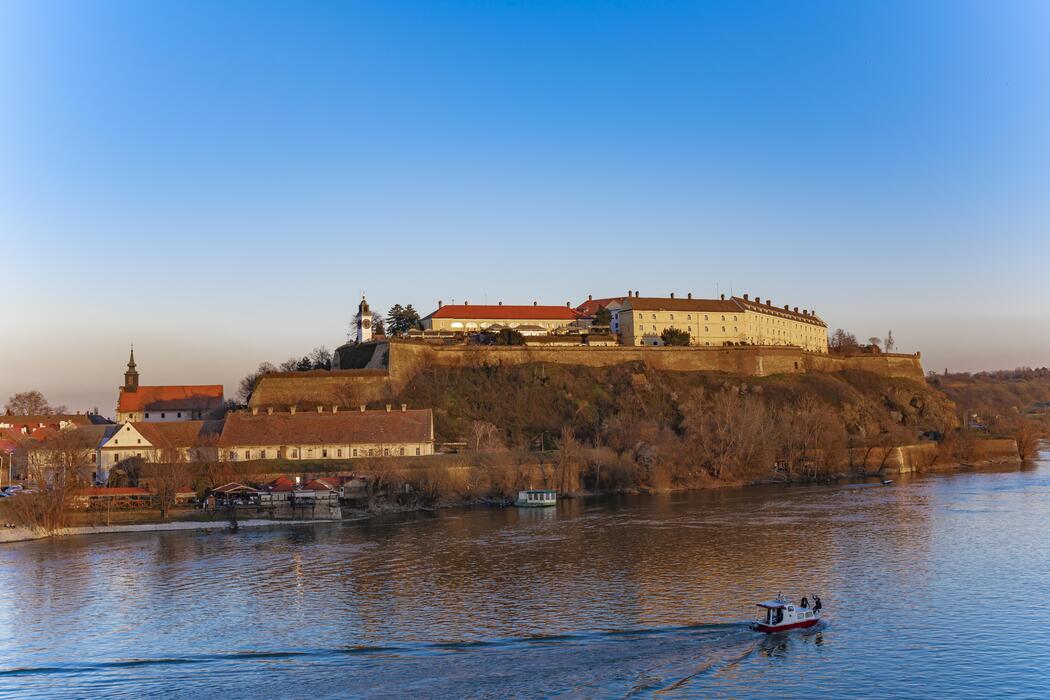
Petrovaradin Fortress with yellow buildings and stone walls above the Danube River

Fortress above the Danube

Petrovaradin Fortress rises above the Danube, with yellow barracks and stone ramparts along the riverbank

Petrovaradin Fortress with clock tower above ramparts, overlooking the Danube and Novi Sad

Fortress Overlooking Danube

Petrovaradin Fortress overlooks the Danube and Novi Sad, with a clock tower above the stone ramparts

Clock tower above an arched fortress entrance with ivy-covered walls at Petrovaradin Fortress

Petrovaradin Clock Tower

The clock tower rises above a fortified tunnel entrance at Petrovaradin Fortress, framed by dense greenery and stone steps

Petrovaradin Fortress overlooking the Danube with hilltop buildings and a small boat on the river

Petrovaradin Fortress Riverside

The fortress rises above the Danube at Petrovaradin Fortress, with historic buildings lining the hilltop and river below

Bridge crossing the Danube with Novi Sad skyline seen from Petrovaradin Fortress

Bridge over the Danube

A wide view from Petrovaradin Fortress shows the bridge crossing the Danube toward Novi Sad's riverside buildings

Travel essentials

Stay connected in Serbia