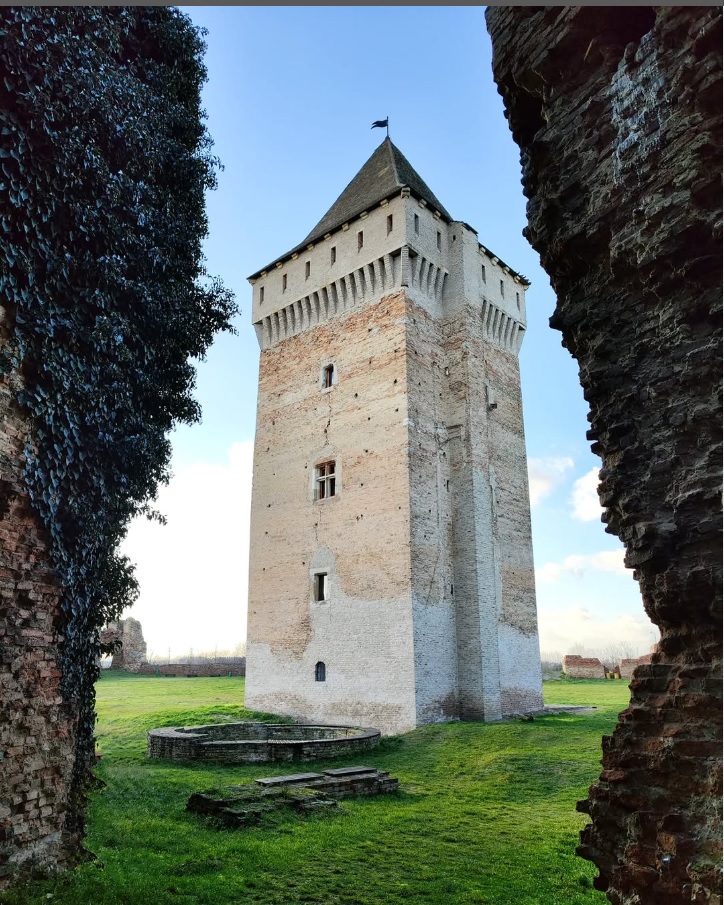
Bač Fortress, Bačka 39, 21420 Bač

Bač occupies a low-rise, small-town setting in Bačka, part of the wider plain described in the Vojvodina travel guide. Its historic fabric is distributed rather than concentrated inside one museum precinct: the fortified enclosure stands apart from the civic centre, while the Franciscan complex introduces another religious and architectural layer. The scale encourages unhurried observation rather than a checklist of attractions. Visitors should allow the surviving structures to define the sequence and keep nearby Bođani separate from the town portion of the visit.
The defining idea at Bač Fortress is not simply a stone wall. The mid-fourteenth-century fortification was established within a former meander of the Mostonga, where water and drawbridges contributed to its defence. That historical setting explains why Bač is often approached as a water fortress, but it should not be mistaken for a promise of a functioning moat crossing today.
Look for the relationship between the enclosed courtyard, wall remains and central keep. Together they reveal a defensive system designed in layers: an outer boundary controlled movement, the courtyard organised the interior, and the donjon provided a dominant vertical point. The surviving plan is more useful than imagined reconstruction when reading the site on foot.
Bač is a small Vojvodina destination for which the checked destination information does not provide a stable public-transport timetable, numbered municipal bus route or verified transfer time. Intercity coaches in this part of Serbia are generally identified by destination rather than by a tram, trolleybus or urban bus line number. Confirm a same-day service and return departure before relying on public transport.
For navigation, use Bačka 39, 21420 Bač as the fortress endpoint. A verified walking time and turn-by-turn route from the central square have not been published, so avoid building a tight connection around an estimated walk. A typical taxi fare is also not published. Drivers should confirm the final approach and legal parking locally because no current visitor-parking arrangement is established in the available information.
If several regional connections are involved, allow margin for an onward journey rather than assuming that a missed departure can be replaced quickly. The municipal tourism office is the appropriate contact for current local arrival advice.
Choose a daylight visit so the fortress plan, wall lines and relationship between the keep and courtyard remain easy to read. No dependable year-round or seasonal access calendar is published, and the currently circulating third-party hour listings disagree. Weekday and weekend access therefore require the same advance check rather than an assumption that one is more reliable.
No reservation rule is published for an independent visit. Contact municipal tourism if tower entry, a guided explanation or monastery interiors are important to the day. The most resilient plan is one that remains worthwhile from the exterior and does not depend on a single unconfirmed door being open.
Bač rewards visitors who are comfortable reading fragments of architecture. The fortress is not presented here as a fully controlled museum circuit with a guaranteed tower climb, fixed guided duration or uniform access across every structure. Some interest lies in comparing the surviving mass of the keep with lower wall remains and open parts of the enclosure.
No fortress dress code is published, but stable outdoor footwear is sensible around old masonry and uneven ground. Step-free routes, handrails, accessible toilets and assistance for visitors with reduced mobility are not confirmed. Families should supervise children closely beside walls, drops, stairs or closed areas and should respect barriers even when an alternative route looks possible.
For the Franciscan and Bođani monasteries, modest clothing and quiet conduct are prudent because these are religious settings, not merely architectural exhibits. Photography rules, interior access and service times should be checked on arrival. Bring water and basic weather protection rather than assuming visitor facilities will be operating.
Bač adds a small-town medieval layer to a region often approached through Habsburg-era urban architecture, monasteries and the Danube plain. It works best when the trip has enough room for a deliberate detour rather than when it is forced between tightly timed city connections. No transfer time should be assumed until the day's transport has been checked.
The contrast is clearest after time in the Novi Sad city guide: Novi Sad offers a larger urban base and a broad visitor infrastructure, while Bač asks for a narrower focus on one fortified plan and a few distinct religious sites. Travellers continuing through Fruška Gora National Park and monasteries should keep that area's walking, wine and monastery logistics separate from Bač rather than presenting the two as one verified local route.
This structure suits independent travellers who prefer fewer sites with more time to examine them. It also reduces the risk of treating Bođani or another regional point as if it were within an effortless town-centre walk.
Begin by finding the enclosure's basic geometry before concentrating on individual stonework. From an accessible position, trace where the surviving walls define the courtyard and notice how movement would have been channelled through a defended interior. Gaps are part of the present archaeological reality; they help show what has survived without justifying entry into unstable or restricted areas.
The donjon then becomes an orientation point. Its height establishes a hierarchy within the complex and makes the rest of the plan easier to understand, even if the tower interior is closed. Look back from different points in the courtyard rather than treating the keep as a single frontal photograph.
If tower entry is available, confirm which levels and exhibition spaces are included before paying or joining a tour. A generic statement that the fortress welcomes visitors does not establish access to every stair, room or viewpoint.
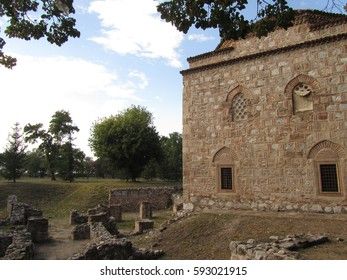
The Franciscan Monastery shifts the visit from military space to an enduring religious landscape. Its value in a Bač itinerary is contextual: it shows that the town's heritage cannot be reduced to the defensive system alone. The transition between the fortress precinct and central Bač also gives time to notice the modest scale of the settlement rather than rushing directly back to a vehicle.
Do not build the day around assumed interior access. If the monastery is closed to visitors, respect the boundary and use the exterior to understand the complex's place in the town. Current service times, guided interpretation, photography rules and admission conditions are not published in the reviewed destination information.
A short pause in central Bač can therefore serve a practical purpose: it separates two kinds of heritage and leaves enough flexibility to obtain local information before continuing.
Bođani Monastery belongs to the wider heritage story of the municipality, but not to a compact fortress-and-town-centre walk. That distinction matters when planning transport: a map pin outside Bač is not evidence of a signed pedestrian route, a fixed transfer or a waiting taxi.
Arrange the excursion only after checking how you will reach the monastery, whether the interior is receiving visitors and how you will return. No current opening schedule, ticket amount or formal reservation procedure is established in the checked visitor information. If those details cannot be confirmed, keep Bođani as an optional addition rather than allowing it to disrupt the fortress visit.
Visitors who do travel there should approach it as a functioning religious environment. Quiet behaviour, modest clothing and compliance with local photography instructions are more appropriate than treating the complex as an unrestricted attraction.
A useful sequence begins with the fortress exterior, where the former water-defence concept is easiest to establish. Continue into any accessible part of the enclosure, orient yourself by the central keep and then spend time tracing the courtyard and wall lines. Ask about tower entry only after the basic plan already makes sense; that way, a closure does not erase the main purpose of the visit.
Move into central Bač afterward and approach the Franciscan complex as a separate chapter. If access is limited, observe the setting respectfully and use the remaining time for the town rather than waiting for an unconfirmed opening. Bođani belongs after this sequence only when transport and monastery access have been arranged.
This is an editorial order, not an official timed, measured or signposted route. It deliberately avoids promised walking minutes and a fixed duration. For planning purposes, one to two hours can be left for the fortress alone, but the actual stay should remain flexible around access conditions and individual interest.
Sources cross-checked for this guide:
Last checked: 9 October 2026. Fact-checked by the editorial team led by Fleet against the official sources above, and reviewed before publishing.
The fortress has published location details, but several operating conditions remain unsettled. Use the status below to decide what must be confirmed before departure.
Do not treat a generic open-to-visitors description as confirmation that the donjon, stairs, exhibition rooms or monastery interiors are operating.
Historical scope and destination context were reviewed on 9 October 2026. Opening hours, ticket prices, tower access and monastery-interior arrangements remain subject to direct local confirmation.
The map centres on Bač Fortress at Bačka 39. Check the final approach and current access locally before setting out.
The first three entries belong to the Bač visit itself. Bođani Monastery is included as a separate excursion outside the compact town sequence, not as another stop on a verified walking route.
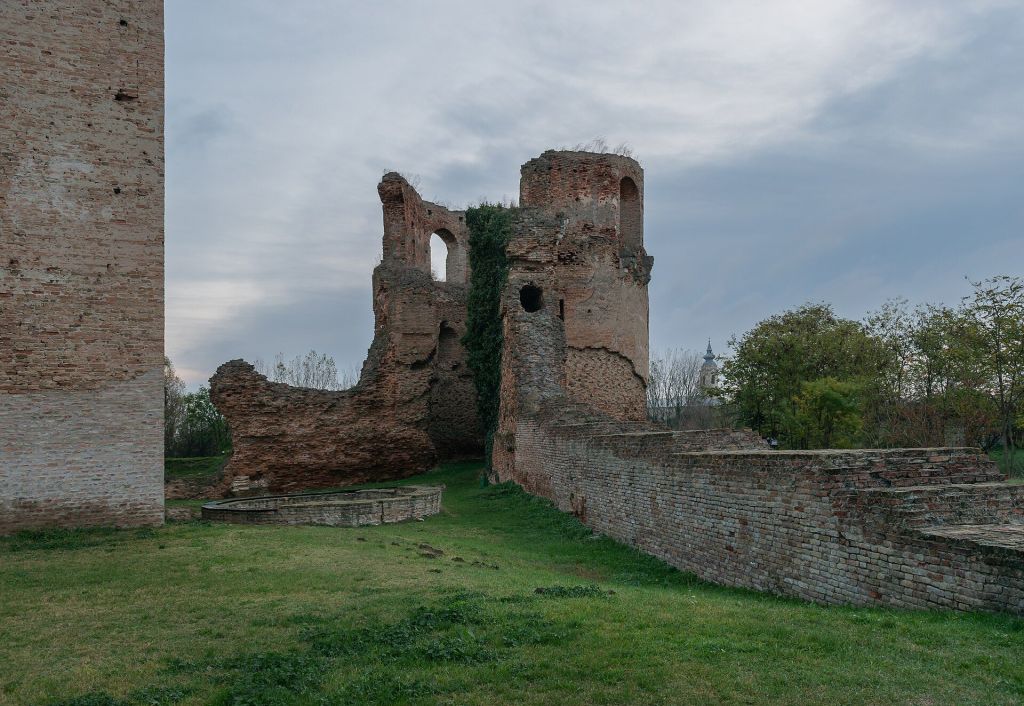
Bač Fortress
The principal medieval enclosure, shaped historically by the former Mostonga water system.
Focus on the surviving courtyard, walls and relationship between the enclosure and central keep. Current admission, guided arrangements and the extent of interior access are not published consistently, so confirm them with municipal tourism before travelling.
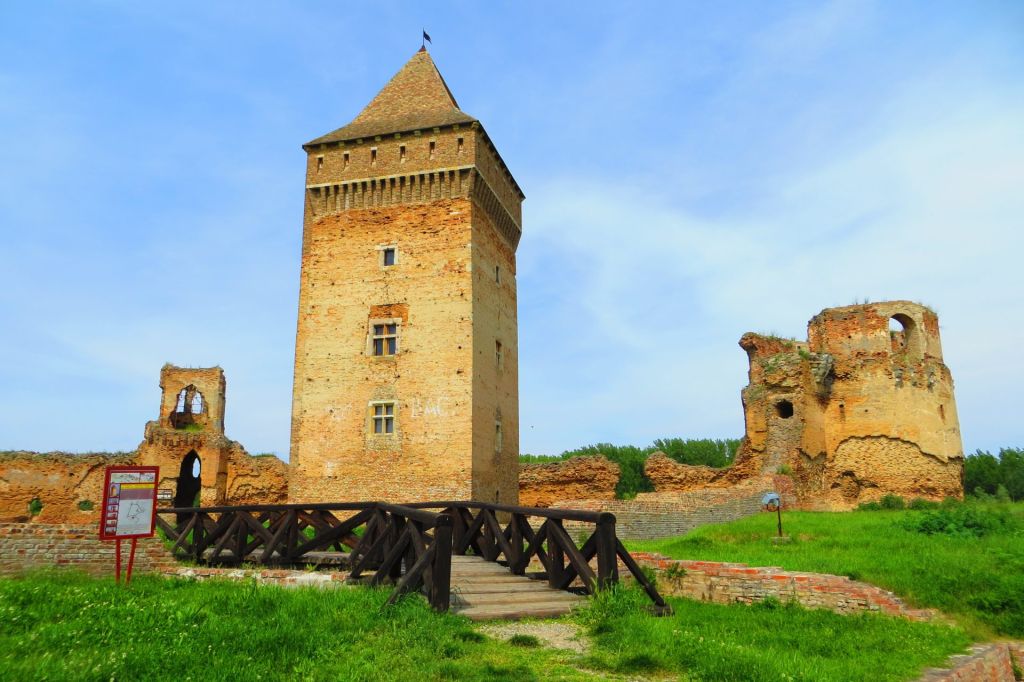
Donjon Tower of Bač Fortress
The central keep that gives the fortress plan its strongest vertical marker.
Treat the donjon as a distinct architectural element within the fortress rather than assuming that entry to the grounds includes a tower visit. A small exhibition and tower access have been described in visitor material, but present opening arrangements need direct confirmation.
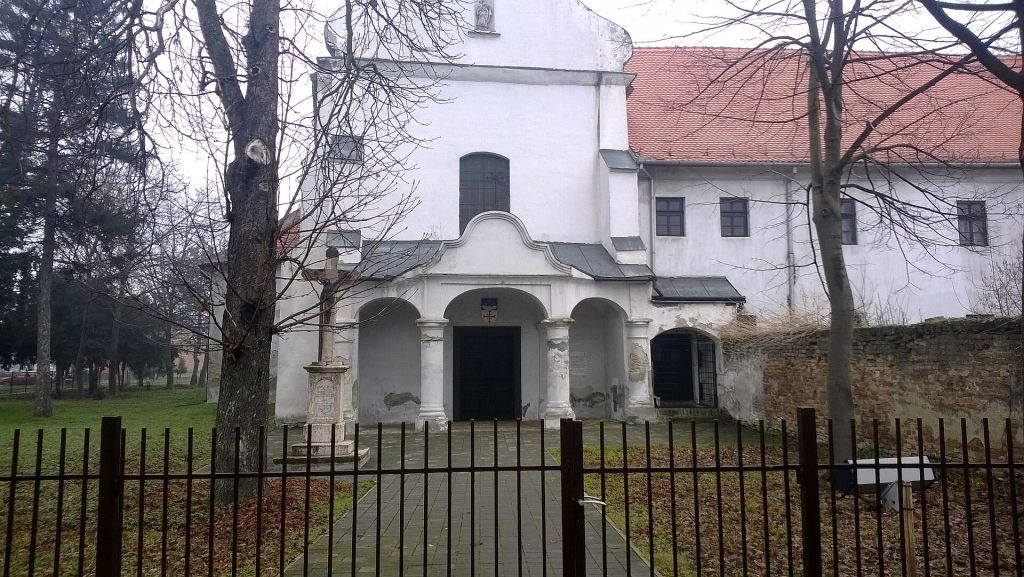
Franciscan Monastery in Bač
A separate strand of the town's religious heritage beyond the fortified enclosure.
Approach the complex as an active religious setting rather than an extension of the fortress museum experience. Public information identifies it as a key Bač landmark, but current interior hours, visitor services and any guided arrangements are not published in the checked destination material.
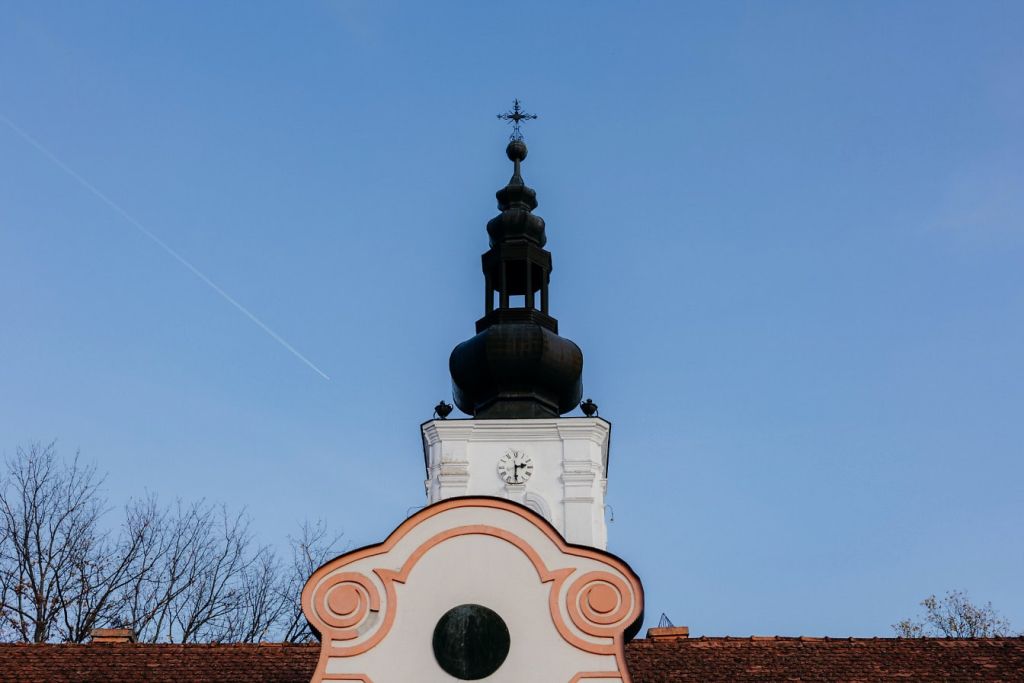
Bođani Monastery
A monastery outside Bač that requires its own access and transport plan.
Bođani broadens a heritage-focused stay, but it should not be treated as part of a compact town walk. Confirm interior access and arrange transport separately before departure; no current ticket price, public schedule or reservation rule is established here.
Bač Fortress, Bačka 39, 21420 Bač
Bač town centre
Medieval fortress with historical Mostonga water defences
Current official admission price not published
Daylight, after confirming access
Not published; no online booking page found
Bač Fortress stands in Vojvodina and is associated with the former Mostonga water-defence setting. Golubac is a different fortress beside the Danube in eastern Serbia. Search results, photographs and operating information for one should not be used to plan a visit to the other.
Access to the fortress precinct does not automatically establish that the central keep is open. Ask specifically about tower levels, stairs and any exhibition before arranging the day around an interior visit.
The Franciscan complex and Bođani Monastery may have worship, community or conservation needs that limit visitor movement. Use modest clothing, keep voices low and request permission before interior photography.
Step-free routes, lift access, accessible toilets and assistance on fortress stairs are not confirmed. Travellers with specific mobility requirements should obtain a current description of the accessible area before departure.
Remain on permitted routes and do not climb wall fragments or pass barriers to obtain a view. Closures may protect unstable masonry or active conservation work even when another part of the precinct remains accessible.
No. Bač Fortress is in Vojvodina and developed around the former Mostonga meander. Golubac Fortress is a separate Danube fortification in eastern Serbia.
Current tower access is not confirmed for every visitor day. Contact municipal tourism and ask specifically whether the donjon, its stairs and any exhibition rooms will be open.
No current official ticket amount was established in the checked information. A visitor review mentioning free entry is not sufficient confirmation of today's policy, so verify the price directly.
There is no official guaranteed visit duration. One to two hours is a flexible planning allowance for the fortress alone, with additional time needed for central Bač or a separately arranged Bođani excursion.
Interior access and visitor hours are not currently established here. Treat exterior viewing as the fallback and follow instructions from the religious community on arrival.
A current numbered urban bus line and dependable timetable are not published in the checked destination information. Confirm intercity departures and the return journey before relying on public transport.
Stay connected in Serbia