
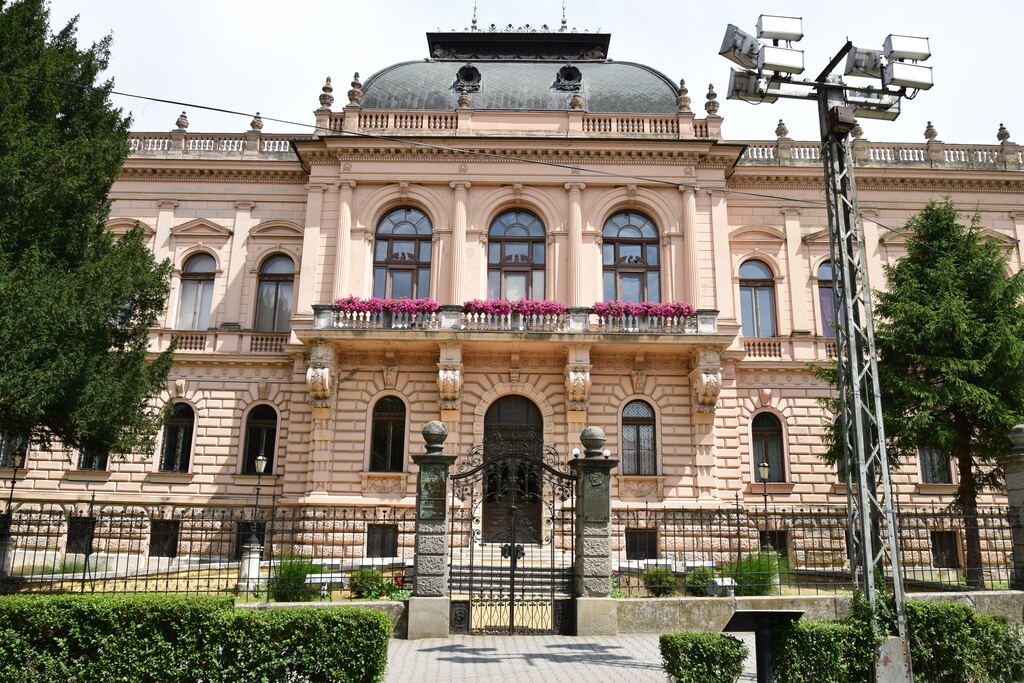
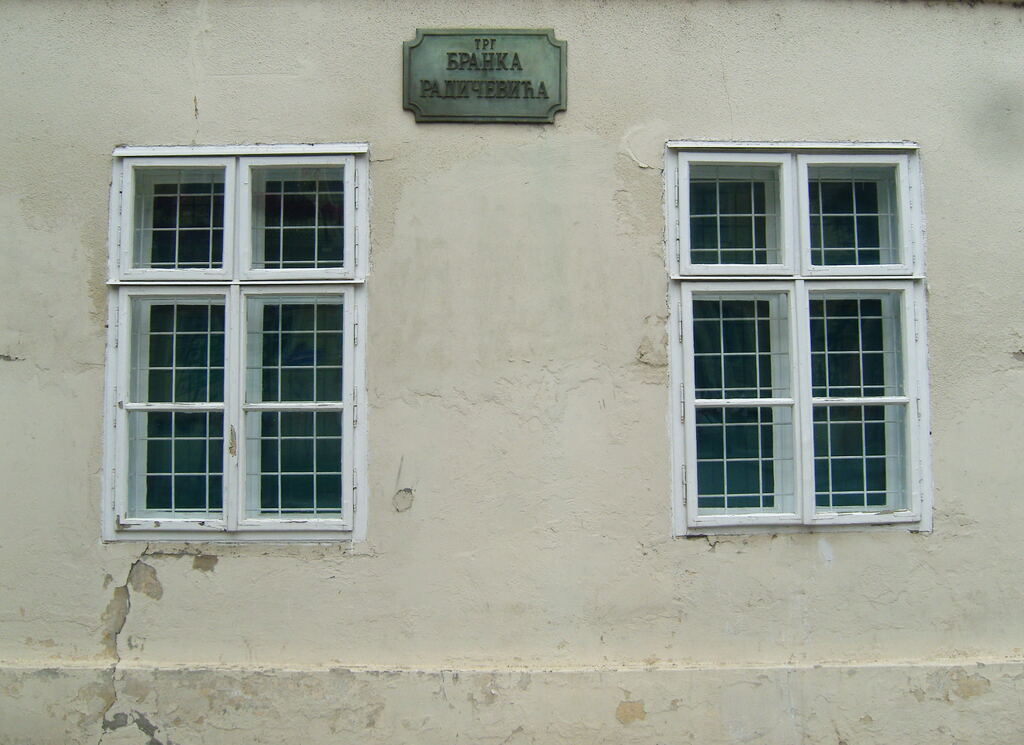
Patriarchal Palace, Trg Branka Radicevica
This self-guided walking tour fits inside a single loop around Branko Radicevic Square, the central space of Sremski Karlovci about 12 km south of Novi Sad. In roughly 90 minutes it links the Patriarchal Palace, Saint Nicholas Cathedral with its Baroque iconostasis, the oldest Serbian gymnasium, and the Orthodox seminary, with family wine cellars only a short walk downhill.
Sremski Karlovci is a small Danube town on the northern edge of Fruska Gora, and almost everything a first-time visitor wants to see sits around one square: Branko Radicevic Square. The walking tour described here is a short, level loop that begins in the courtyard of the Patriarchal Palace, crosses to Saint Nicholas Cathedral, passes the Karlovci Gymnasium and the Seminary of Saint Arsenije of Srem, and ends back near the town centre where the cellars and cafes are. The square itself was once marshland fed by an arm of the Danube; the civic buildings that frame it today were raised in a single burst of construction at the end of the 19th century. The route is best read as a story about church, school, and wine, three threads that have shaped the town for more than three centuries.
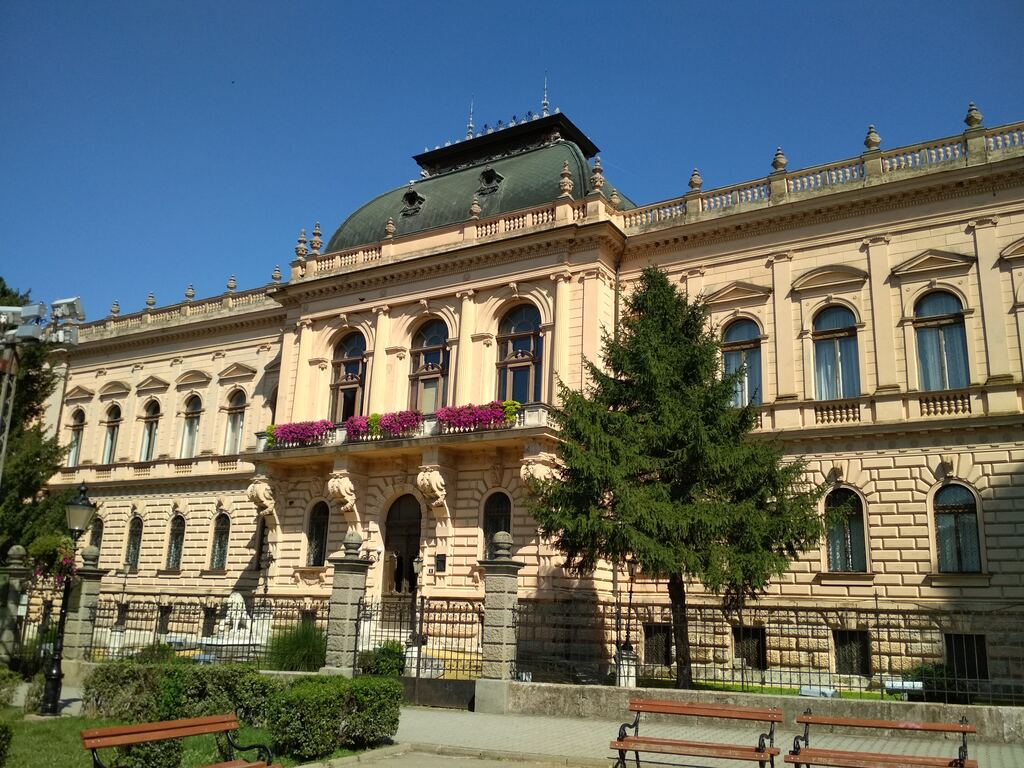
The whole route covers a few hundred metres and can be walked in 15 minutes without stops, or stretched to about 90 minutes if you enter the church and pause at each building. Start in the courtyard of the Patriarchal Palace, the summer residence of the Serbian Patriarch, built between 1892 and 1894 to a design by the architect Vladimir Nikolic. Seen from above, the palace traces the shape of the Cyrillic letter Ш, and a chapel to Saint Demetrius sits in its central wing with an iconostasis by Uros Predic.
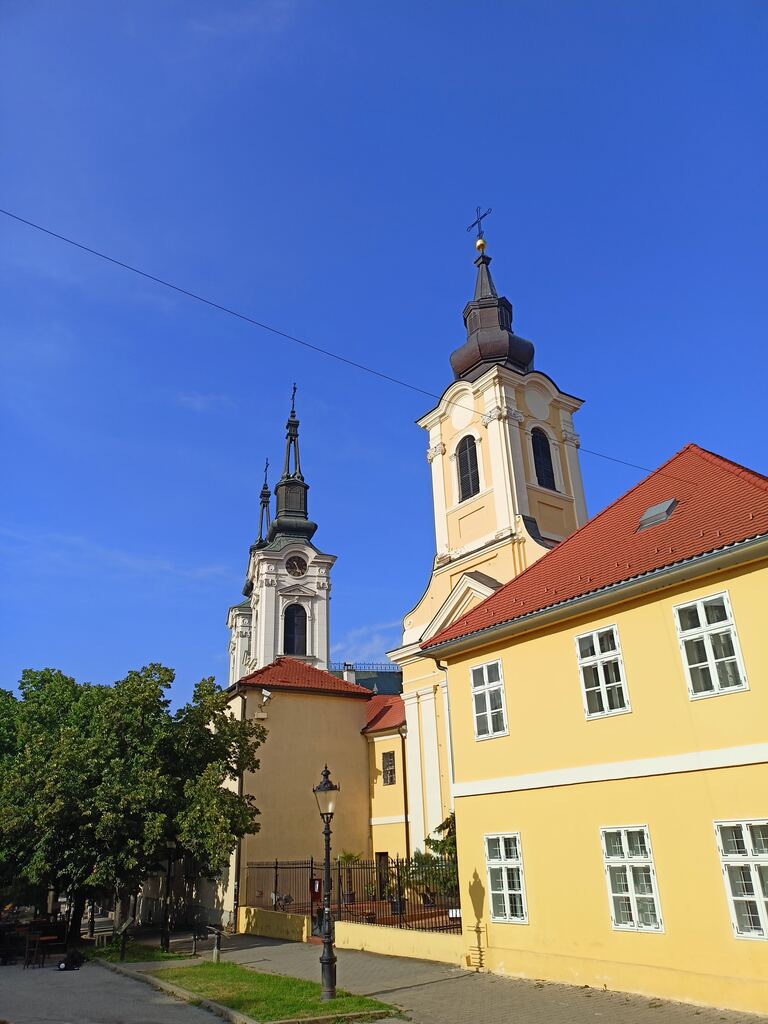
From the palace, the Cathedral is only a few steps away, leaning against the palace wall. Cross the square to reach the Karlovci Gymnasium, then continue a short way to the seminary and the building guarded by sphinxes. The same Vladimir Nikolic designed the palace, the seminary, and the student boarding houses, so much of what frames the square carries one signature. When you are ready, the wine cellars below the palace close the loop.


The Patriarchal Palace (Patrijarsijski dvor) is the historic home of the Serbian Patriarch and today his summer residence; Metropolitan Vasilije of Srem lives on the second floor. During Ottoman rule the square was known as Secer Sokak, or Sugar Lane, and the local Pasha's residence stood near the church. Patriarch Georgije Brankovic commissioned the present palace in a mixed Baroque and pseudo-Renaissance style, completed in just two years.
The first floor holds a small museum across six rooms. Among its pieces are icons from northern Dalmatia, an icon roughly 700 years old, walls lined with pressed lambskin, and Zsolnay ceramic stoves from Pecs. The same Zsolnay ceramics cover the roof of the Church of the Name of Mary in Novi Sad, an easy detour from the tour.

Saint Nicholas Cathedral (Saborna crkva Svetog Nikole) is the central church of the Eparchy of Srem and widely regarded as the high point of Serbian Baroque architecture in Vojvodina. Metropolitan Pavle Nenadovic began the stone church in 1758 on the site of an earlier wooden one, using plans drawn in Vienna, and work finished in 1762. After a fire in 1799 and a neoclassical refit in 1811, the facade was reworked between 1909 and 1910, again by Vladimir Nikolic, to harmonise it with the palace next door.
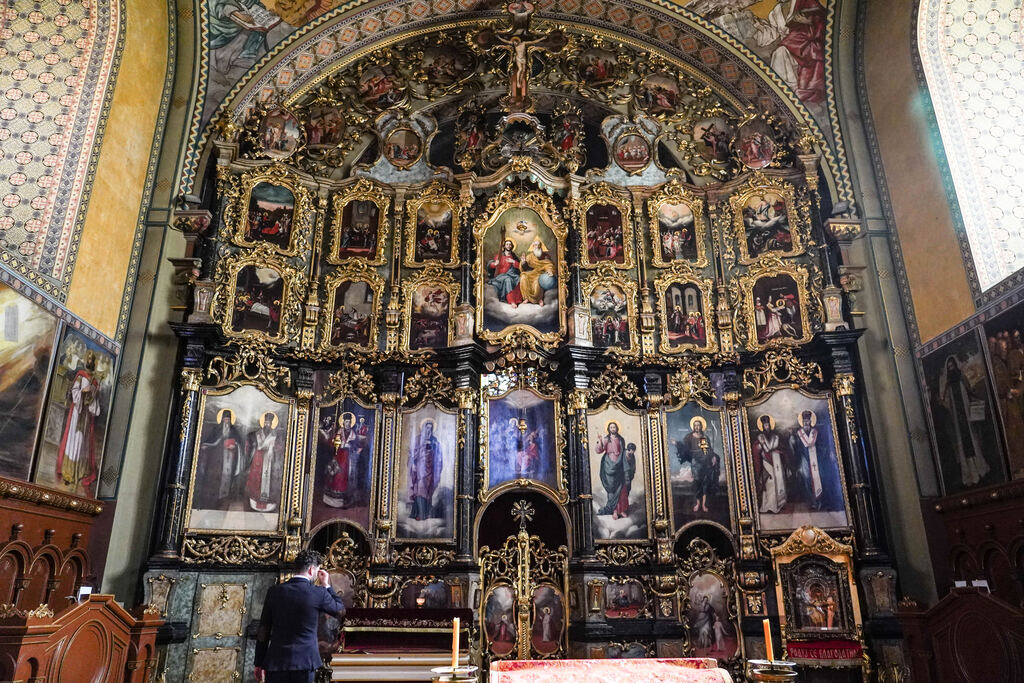
Inside, the eye goes straight to the iconostasis, painted between 1780 and 1781 by Teodor Kracun and Jakov Orfelin, two of the most important Serbian painters of the 18th century. Kracun painted the festal icons and the royal doors; Orfelin painted the rest. Look also for an icon of the Virgin and Child attributed to 14th-century Russian masters, paintings by Paja Jovanovic, and the two ceremonial thrones between the altar and the nave. Below the church lies the crypt where almost every Metropolitan and Patriarch of Karlovci was laid to rest.


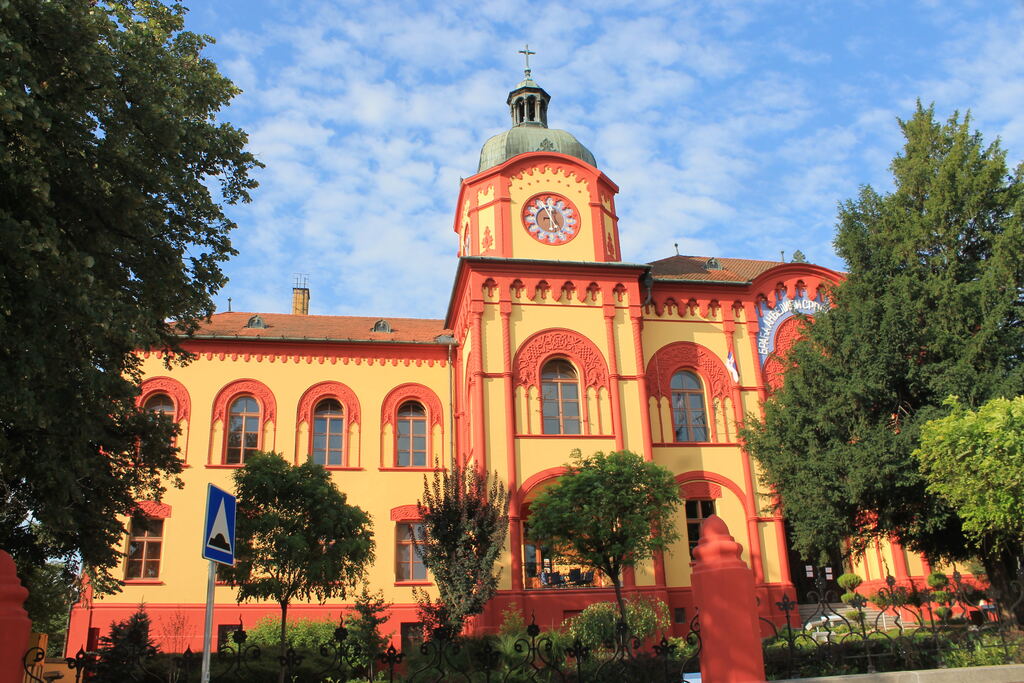
Across the square stands the Karlovci Gymnasium (Karlovacka gimnazija), the oldest Serbian secondary school and one of the oldest in southeastern Europe. It opened on 1 November 1791 as the first Serbian gymnasium in the Habsburg Monarchy, made possible by Metropolitan Stefan Stratimirovic, who secured the imperial licence from Emperor Leopold II, and the merchant Dimitrije Anastasijevic Sabov, who donated 20,000 Austrian forints.
The grand building you see today was completed in 1891 to a design by the Hungarian architect Djula Partos, mixing neo-Renaissance and Baroque with details that echo Studenica Monastery. Its library is the oldest school library in Serbia, holding close to 18,000 titles, including a photo-type edition of the Gospel of Miroslav and first editions of poets such as Branko Radicevic, once a pupil here. The building still works as an active high school for around 600 students and opens to visitors by appointment.

The Seminary (Bogoslovija) of Saint Arsenije of Srem is one of the oldest Orthodox seminaries in the world, founded soon after the gymnasium, with the small general seminary opening in 1794. A specific rule applies: boys from Sremski Karlovci itself cannot enrol, as the move away from home is treated as part of the test of maturity. Today the seminary has around sixty pupils, where thirty years ago it had closer to three hundred. The day begins at 06:00 and ends at 21:30, with morning and evening services built into the schedule.
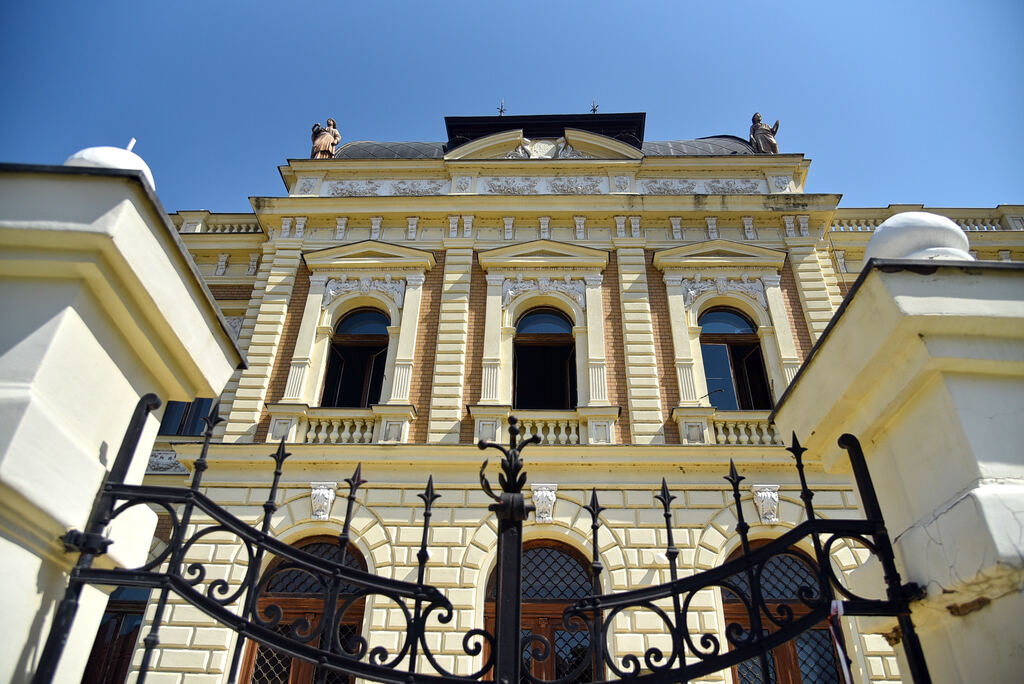
Opposite the seminary stands another Nikolic building that puzzles visitors: a facade flanked by sphinxes and muses. Completed in 1902, it originally housed the Church-People's Funds, effectively an ecclesiastical bank. At the time, sphinxes were the standard guardians of banks across Europe, symbols of secrecy and protection, and when the building changed use no one saw any need to remove them.

Just below the palace lies the Patriarchal Wine Cellar (Patrijarsijski podrum), a reminder that winemaking here is old. Already in the 3rd century the Romans recognised that the slopes of Fruska Gora suited the vine, with warm exposure, the moderating Danube, and well-drained soils. Tradition credits Emperor Probus (Marcus Aurelius Probus, who reigned 276 to 282) with planting the first vines. Today the area counts around 25 registered wineries, and almost every second house keeps a small cellar.
The warm months fill with events. Sacijada at Strazilovo falls on 6 June, Kult Fest runs over five weekends in August, and Grozdjebal, the local grape festival, comes in late August or early September. A more recent addition is Podrumarenje, a guided cellar-hopping tour that pairs tastings with traditional meze and live music, with a fixed edition on 14 February for the feast of Saint Tryphon, patron of winemakers.

The walk starts at the Patriarchal Palace on Branko Radicevic Square (Trg Branka Radicevica). From Novi Sad, about 12 km away, suburban buses run from the Novi Sad bus station toward Sremski Karlovci and stop close to the centre; the ride takes roughly 20 to 30 minutes. By car from Novi Sad the drive is about 20 minutes along the Danube; street parking is available near the square but can fill on summer weekends.
Belgrade is about 70 km to the south-east. Travellers usually reach Novi Sad first and continue from there; see the practical notes on Belgrade to Novi Sad. Once you arrive, the whole tour is on foot: the square is flat, and the furthest stop, the seminary, is only a few minutes from the palace. Strazilovo and its picnic area sit about 5 km uphill and need a separate short drive or a longer walk.
Late morning to early afternoon works best, since the church and the gymnasium are easier to enter before evening and cellar visits are simpler to arrange in daylight. Weekdays are calmer than weekends, when day visitors arrive from Novi Sad. Spring and early autumn are the most comfortable seasons for the walk, with summer fine but warm and shade limited on parts of the square.
If you want to go inside the Cathedral or the gymnasium, or join a cellar tasting, message ahead, especially outside the main tourist months. For festival visits, check dates in advance; Podrumarenje and the grape festivals shift slightly from year to year.
This is a calm, low-key walk rather than a packed sightseeing circuit. Most of the time is spent outdoors on the square, with optional interiors at the church and gymnasium. Several stops belong to the Serbian Orthodox Church, so modest clothing and low noise are appropriate inside the Cathedral and the Patriarchal Palace area. The square is level and easy underfoot, though some older surfaces nearby are uneven.
Families can do the route comfortably because distances are short, but the appeal is cultural rather than activity-based. Carry water in warm months, and keep some cash for cellar purchases and small museum fees. If you add a tasting, slow the pace; the town rewards a measured visit over a rushed checklist.
The walk loops around Branko Radicevic Square in the centre of Sremski Karlovci, about 12 km south of Novi Sad.
These are the stops the walking route links in order. Interior visits to the church and gymnasium depend on timing and arrangement, so it is worth checking before you arrive.

Patriarchal Palace
Summer residence of the Serbian Patriarch and a six-room museum.
Built 1892 to 1894 by Vladimir Nikolic; the museum holds 700-year-old icons, lambskin walls, and Zsolnay stoves.

Saint Nicholas Cathedral
Baroque cathedral with an iconostasis by Kracun and Orfelin.
Built 1758 to 1762; the iconostasis dates to 1780 to 1781 and the crypt holds the Metropolitans of Karlovci.

Karlovci Gymnasium
The oldest Serbian secondary school, founded 1791.
Current building completed 1891 by Djula Partos; its library is the oldest school library in Serbia.

Seminary of Saint Arsenije of Srem
One of the oldest Orthodox seminaries, opened 1794.
Students come from outside the town and follow a schedule built around morning and evening services.

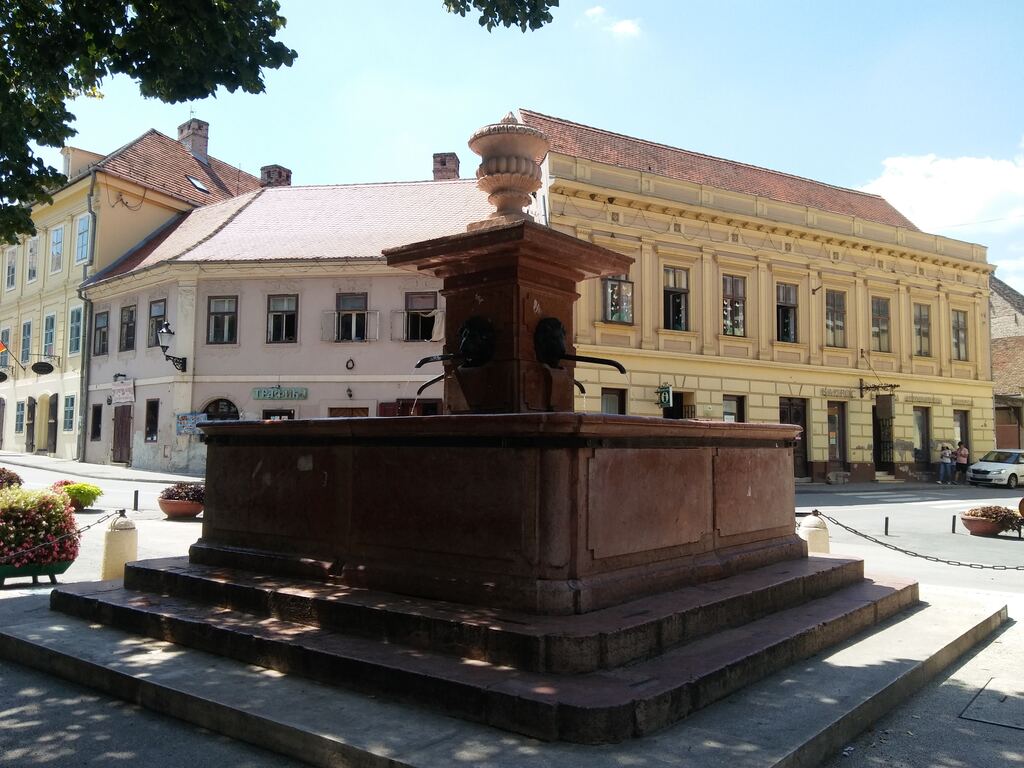
Four Lions Fountain
Town-centre fountain and easy meeting point.
A simple orientation stop on Branko Radicevic Square between the palace, the church, and the cellars.

Strazilovo picnic area
Wooded picnic area in Fruska Gora above the town.
About 5 km uphill, with the grave of the poet Branko Radicevic and the June Sacijada gathering.
Patriarchal Palace, Trg Branka Radicevica
Branko Radicevic Square, Sremski Karlovci
Baroque square walking route with church, school, and cellars
About 90 minutes with stops; 15 minutes without
Late morning to early afternoon, spring or autumn
Only for interiors and cellar tastings
Start at the Patriarchal Palace, cross to the Cathedral, then move to the gymnasium and the seminary. Keeping this order means little backtracking, and the cellars sit at the end of the loop.
The Cathedral, the palace area, and the seminary belong to the Serbian Orthodox Church. Keep noise low and dress modestly when entering interiors or the palace courtyard.
Family cellars near the centre offer tastings of local wine and Bermet. For a tasting, message ahead, especially on weekdays or outside the main season.
If you have extra time, Strazilovo lies about 5 km uphill in Fruska Gora, with shaded picnic spots and the grave of the poet Branko Radicevic. It needs a short drive or a longer walk.
Before a wider trip, review the guides on the best time to visit Serbia and money and currency in Serbia.
About 90 minutes at a relaxed pace with stops, or roughly 15 minutes if you only walk the loop without entering buildings.
Yes. The route is self-guided and easy to follow on foot around Branko Radicevic Square, with all main stops within a few minutes of each other.
The Cathedral opens around services and the gymnasium arranges interior visits by appointment, so it is best to check timing or message ahead.
Yes. Distances are short and the square is level, though the appeal is cultural rather than activity-based, so set an easy pace for younger children.
Family cellars near the centre, including the Patriarchal Wine Cellar below the palace, offer local wine and Bermet, usually by arrangement.
Stay connected in Serbia