Historic façades
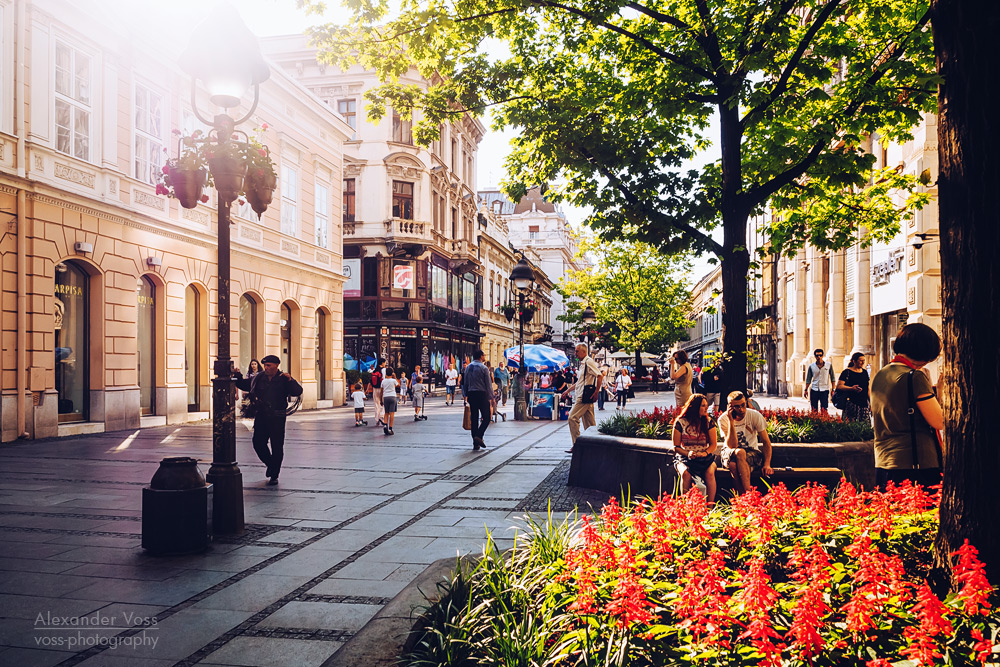
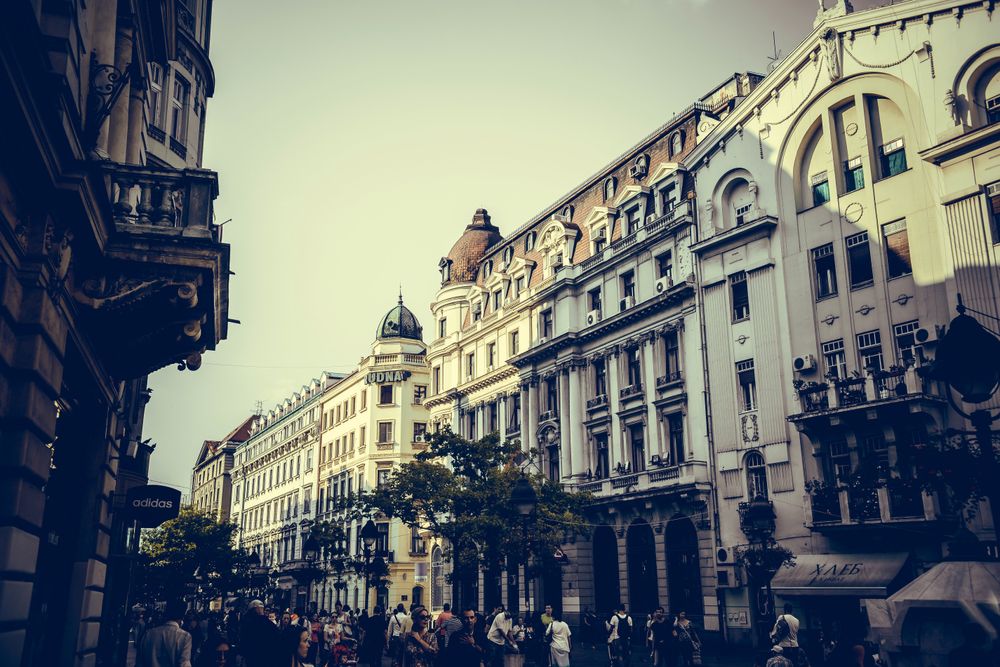
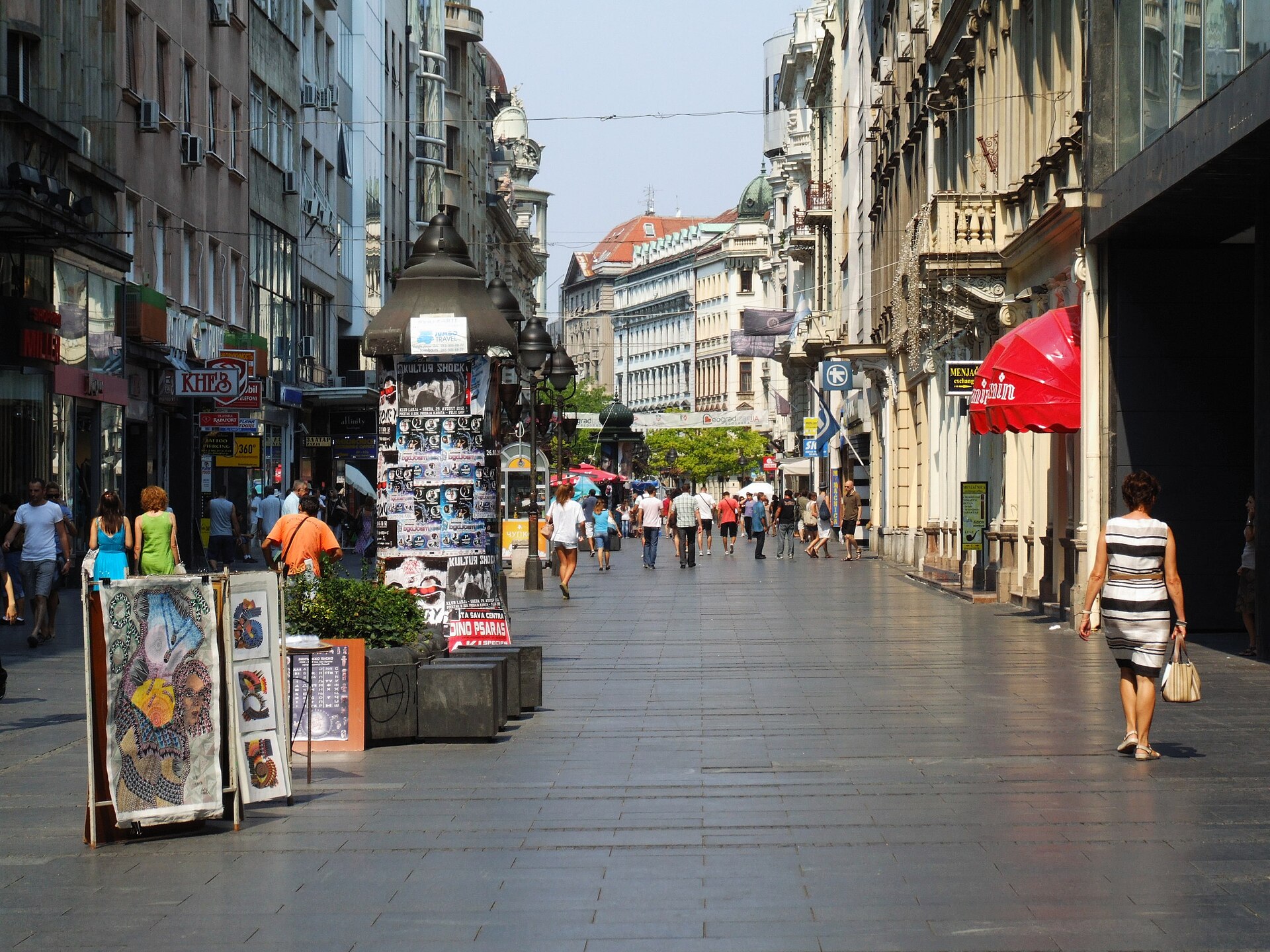
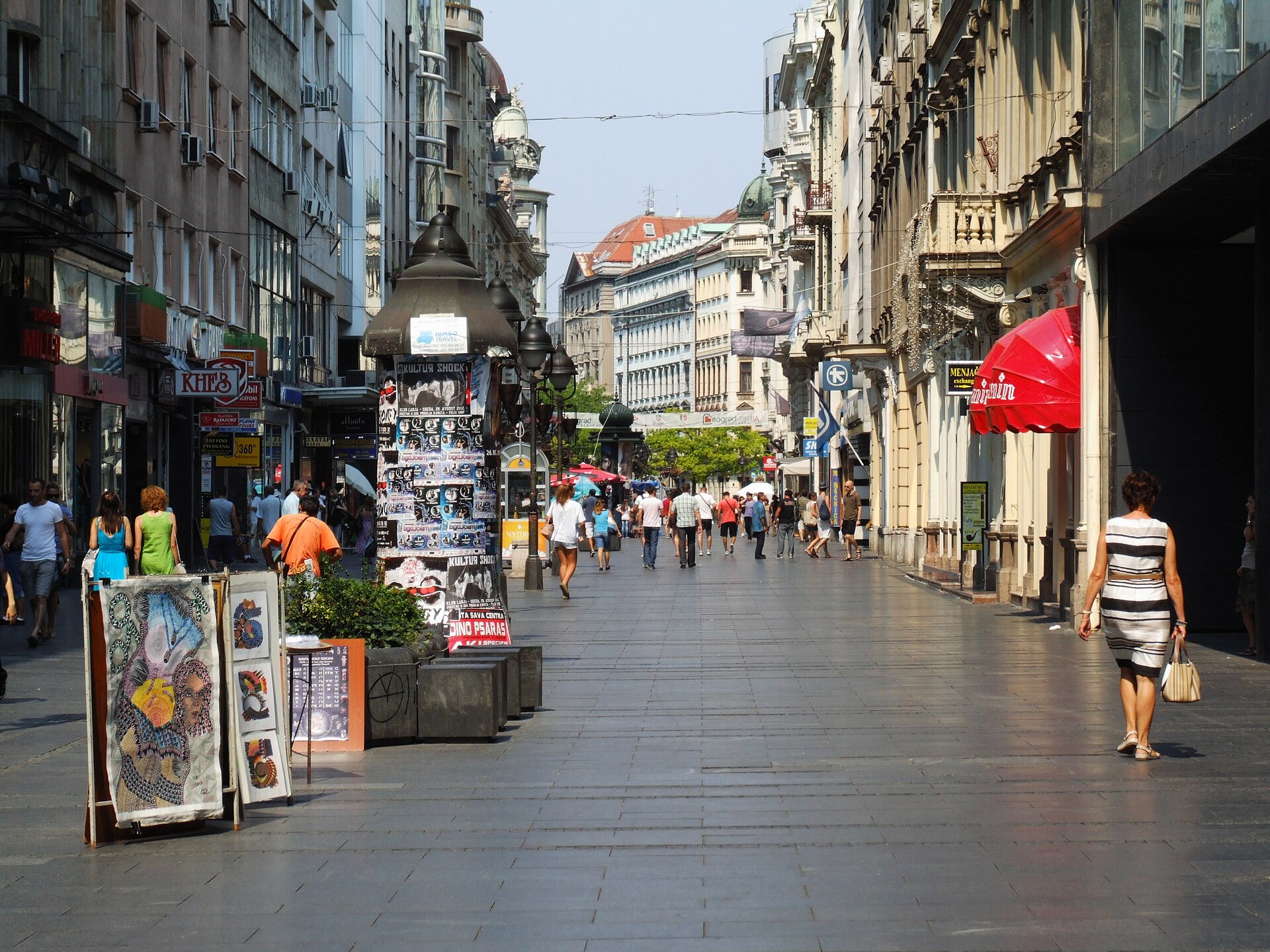
Late-19th-century and early-20th-century frontages give the street its formal city-center character.

Knez Mihailova Street is the main pedestrian and shopping artery of Belgrade, connecting Republic Square with the entrance to Kalemegdan Fortress. The protected street is lined with late-19th-century buildings, brand stores, bookshops, cafes, and cultural institutions. It is one of the busiest walking routes in the city and a starting point for exploring the old town.
Knez Mihailova Street is Belgrade’s best-known pedestrian promenade, lined with 19th-century façades, chain stores, bookstores, cafés, and street performers. It connects Trg Republike with the approach to Kalemegdan, so most visitors use it as a walking route rather than a destination for a long stay.
Knez Mihailova Street is the central pedestrian boulevard in the old core of Belgrade, running through the Stari Grad area between Trg Republike and the approach to Kalemegdan. The street took its present urban form in the late 19th century, when the city began rebuilding its center with representative apartment houses and commercial fronts. Today it is known for continuous foot traffic, large storefront windows, and a steady mix of locals, students, and visitors walking between the main square and the fortress. If you are building a first-day route through the city, it fits naturally with Belgrade Travel Guide.
The vibe is busy but orderly: daytime shoppers, afternoon café tables, evening strollers, and street musicians near the busiest crosswalks and squares.
Knez Mihailova is one of those streets that tells you a lot about Belgrade before you even look up. The pedestrian spine in the city centre feels like a showcase of how the city has grown, changed, and absorbed different influences while keeping a very clear sense of itself. It is not only a shopping zone. It is a guardian of the city’s identity.
What makes the street so compelling is the concentration of important buildings along and around it. Each one contributes a different piece of the Belgrade story, so the walk never feels purely commercial. The architecture gives the street its dignity, while the daily use gives it energy. Students cross it, friends meet for coffee, visitors stop to orient themselves, and local life keeps moving around the edges.
When I walk here, I think of Knez Mihailova as a threshold between the city’s formal history and its everyday rhythm. You can feel that transition especially when the street leads you toward Kalemegdan. The pace changes a little, the air opens up, and the city starts to reveal the fortress, the park, and the river confluence just beyond the retail frontage.
That is why this address matters so much in a Belgrade itinerary. It gives you a first impression of the city that is polished but not sterile, active but not chaotic. It is a place where the public face of Belgrade stays visible all day long.
The street is real urban heritage, not a themed shopping promenade. Most façades belong to the academic historicist and neo-Renaissance city language of the late 1800s and early 1900s, with ornamented cornices, tall windows, stone details, and retail ground floors added below residential upper levels. Several buildings were designed for prominent merchants, banks, and institutions, which is why the frontage feels more formal than a typical commercial street. The effect is strongest when you walk slowly and look up rather than focusing only on shop windows.
The architectural rhythm changes near side streets and corners, where you can spot older townhouse volumes, later interventions, and quieter passages toward nearby streets like Obilićev venac and Čika Ljubina.
The speciality here is a city-center promenade that works as both a walking route and a daily meeting place. Unlike a shopping street that empties after business hours, Knez Mihailova keeps moving because it connects Republic Square with the approach to Kalemegdan, so people cross it all day rather than only browsing in it. The buildings are mostly protected historic façades, so the street’s appeal comes from the architectural backdrop as much as from the stores themselves. Street musicians, portrait artists, and casual seating on café terraces create a lived-in rhythm rather than a staged tourist zone.
Its real value is practical: if you want to walk Belgrade’s center without traffic, stop for coffee, shop for books or clothing, and then continue toward the fortress, this is the cleanest route to do it.
Shopping here is a mix of international fashion, local bookstores, souvenir shops, cosmetics, shoes, and small convenience stops. It is one of the few places in central Belgrade where you can combine practical errands with a slow walk and an easy café pause. Café culture is part of the street’s daily use: many people stop for an espresso, a pastry, or a lunch break rather than sit down for a long meal. For a more bohemian detour, Skadarlija’s bohemian kafanas are a short walk away.
Expect prices to be higher than in neighborhood streets, especially for drinks on the busiest blocks. The street works best for browsing, short rests, and people-watching rather than bargain hunting.
[2]The street performers are a big part of why Knez Mihailova feels so alive. Music changes the pace of the walk. A singer can pull a small crowd in seconds, and an instrumentalist can make the whole street feel softer for a moment. The city noise never disappears entirely, but the performances layer something warmer over it. That is what gives the street its human scale.
Because the pedestrian zone is so central, the street also acts as a casual meeting place for Belgraders. Friends pause to talk, couples drift between shop entrances, and visitors often slow down just to watch the scene unfold. The mix of movement and pause is what keeps the atmosphere from becoming flat. You do not get a museum silence here. You get a public stage.
It helps that the surrounding blocks are filled with restaurants, cafés, and galleries. Those places keep people circulating at different times of day, which means the energy changes naturally from morning to evening. On a sunny day, the street can feel bright and social. Later, as the light softens, it becomes more intimate without losing its bustle. That shift is part of the appeal.
If you want a single Belgrade walk that captures identity, commerce, and street life in one place, this is it. It shows the city in motion, and it does so without asking you to choose between history and everyday pleasure.
From Trg Republike, it is a 2–4 minute walk west into the pedestrian zone; from Kalemegdan’s main entrance, it is usually 6–8 minutes downhill to the street’s upper end. Public transport does not run through the pedestrian core itself, so arrive at the edges and walk in. The nearest useful stops are Trg Republike and Zeleni venac, served by trolleybus lines 2, 3, 5, 6, 7 and bus lines such as 24, 26, 27E depending on your starting point. Taxis from central Belgrade usually cost about 300–600 RSD, depending on traffic and distance. Parking is limited; use a garage on the perimeter rather than trying to drive into the pedestrian zone.
Weekday mornings are the calmest for photographs, shop browsing, and a slower look at the façades. Late afternoon and early evening bring the most street life, especially on Fridays and Saturdays. In summer, go earlier or later in the day to avoid heat reflected by the stone surfaces. In winter, the street still works well as a walking route because it stays active, but café breaks become more important. Reservations are rarely needed unless you are planning a specific restaurant or a weekend dinner nearby in Stari Grad.
Expect a polished city-center pedestrian street with steady noise, lots of foot traffic, and very little shade in warmer months. Dress is casual; comfortable shoes matter more than anything else because the street connects naturally to longer walks toward Kalemegdan. It is generally accessible for wheelchairs and strollers, though some adjacent crossings and side streets can be uneven. Families use it easily for a short outing, but children will need a break if you are combining it with museum stops. Bring water, a card or cash for smaller purchases, and time to detour into side streets if you want quieter corners.
The street gives you a clean north-south walking line through the center, so it is one of the easiest places to use as a reference when exploring downtown Belgrade.
It combines shopping, cafés, a heritage streetscape, and direct access to major squares and the fortress, which keeps it practical throughout the day.
The street runs through central Belgrade, between Trg Republike and the Kalemegdan approach in Stari Grad.
These are reliable names to look for when you want a coffee stop, a casual lunch break, or a practical shopping pause along the pedestrian zone.
Kafeterija Knez Mihailova
Specialty coffee, quick breakfasts, and a steady take-out crowd on the main strip.
Balkan Express Knez Mihailova
Casual sandwich and snack stop for a fast break between Trg Republike and the fortress end.
Bata Shoes Knez Mihailova
Mainstreet footwear shopping with a central location and clear window displays.
Diesel Store Belgrade
Fashion retail with a polished storefront and later opening hours than smaller local shops.
Bulevar Books
Bookshop browsing with Serbian titles, travel books, and gift options.
Mona Knez Mihailova
Local fashion brand for clothing and accessories close to the busiest pedestrian flow.
Late-19th-century and early-20th-century frontages give the street its formal city-center character.
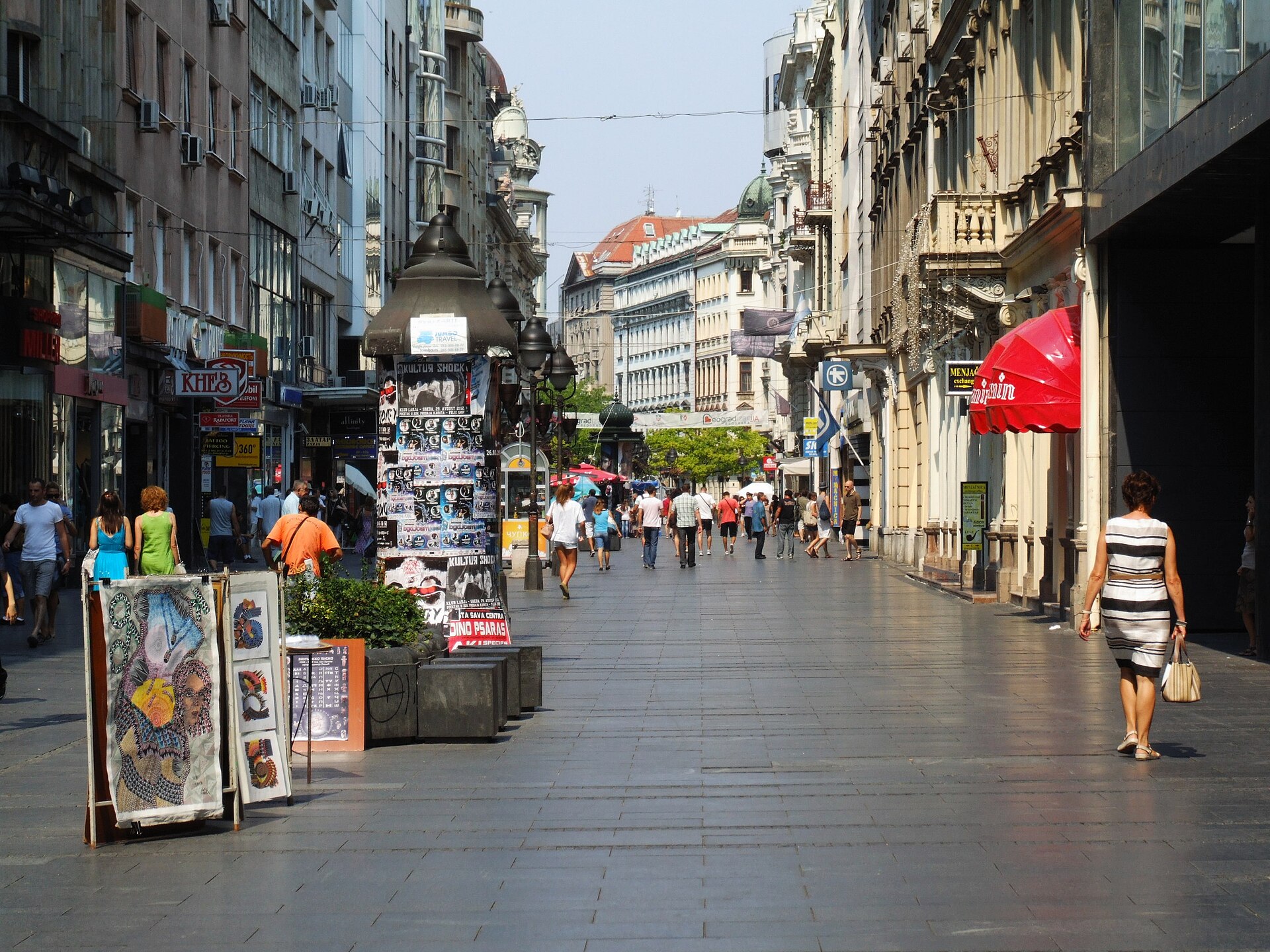
The car-free layout makes it easy to linger, browse, and move between the square and the fortress.
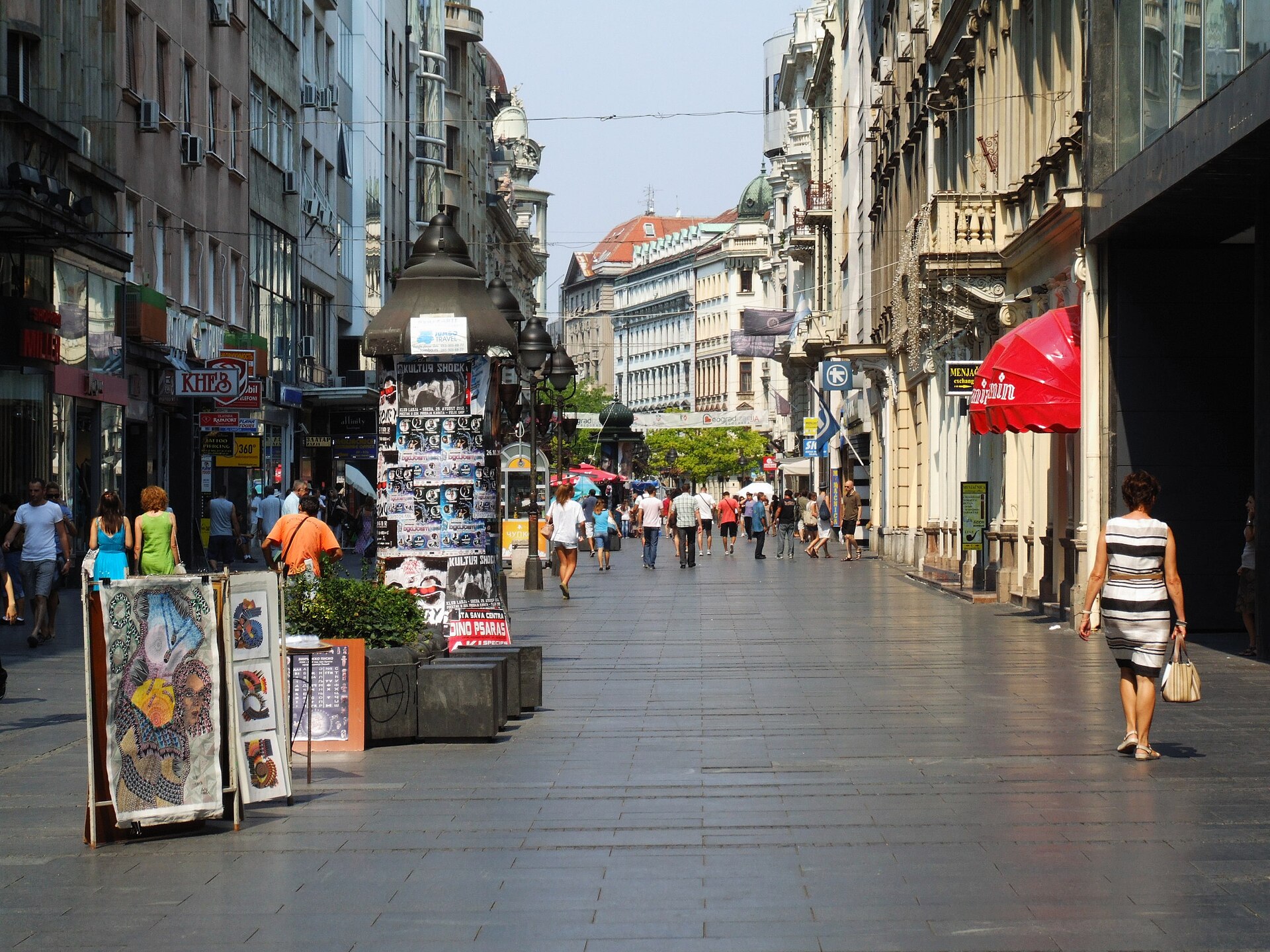
The street stays active with short coffee stops, shopping breaks, and people-watching throughout the day.
Knez Mihailova, Stari Grad, Belgrade
Trg Republike
Pedestrian shopping street with historic façades
€–€€€
Weekday morning or early evening
No, except for specific cafés or restaurants
Start at Trg Republike, walk the full length once without stopping, then return for coffee, shops, or a museum break. That gives you the street’s scale and helps you decide which part feels worth a longer stop.
Pair the boulevard with Kalemegdan Fortress for views, then return toward Trg Republike for lunch or coffee. That combination gives you architecture, public space, and river outlooks without needing a car.
Use the street as a connector, not just a destination. If you want a slower stop, take coffee near the middle blocks, then continue to the museums and squares around Trg Republike or the park and fortress side near Kalemegdan.
Yes. The full walk is short, and the two ends feel different enough to justify the time. You get the square-side city center, then the calmer approach toward Kalemegdan.
Most visitors spend 30 to 90 minutes, longer if they stop for coffee, shopping, or photos of the façades.
Shops and cafés are generally mid-range to higher than neighborhood streets, especially at the busiest tables, but walking itself is free.
Yes, but you arrive at the edges and walk in. Trg Republike and Zeleni venac are the most useful access points.
Yes. It is pedestrian-only, mostly flat, and easy for strollers, though the busiest times can feel crowded.
No. Shopping is part of it, but the street also functions as a heritage corridor, a meeting place, and the most natural walk toward Kalemegdan. The historic buildings and public atmosphere are just as important as the stores.
The combination of cafés, restaurants, galleries, and boutiques keeps people circulating all day. Street musicians and performers add another layer, so the mood changes as you move along the street.
Kalemegdan is the obvious pairing. From there you can see the Belgrade Fortress, the Victor Monument, the zoo, museums, Ružica Church, and St. Petka's Chapel, then continue down to Beton Hala for dinner.
It works as a central first stop or as the middle of a city walk that ends by the river. It also pairs well with Belgrade Travel Guide and an evening in Belgrade Nightlife.
Yes. It gives you a fast read on the city center, and you can combine it with Republic Square or Kalemegdan in a single walk without needing transport.
The street itself can be crossed in under 15 minutes, but most visitors spend 45–90 minutes because of shops, cafés, and photo stops.
It is usually busy and well lit, but like any central pedestrian area you should still watch your belongings in crowded periods.
No. It is pedestrian-only, so taxis and private cars stop at the edge of the center and you walk in.
Usually not for coffee or casual meals, but larger dinner spots and weekend terraces can fill up quickly.
Use Knez Mihailova as your starting line, then add Trg Republike, Kalemegdan, and Skadarlija for a compact first day in the city center.
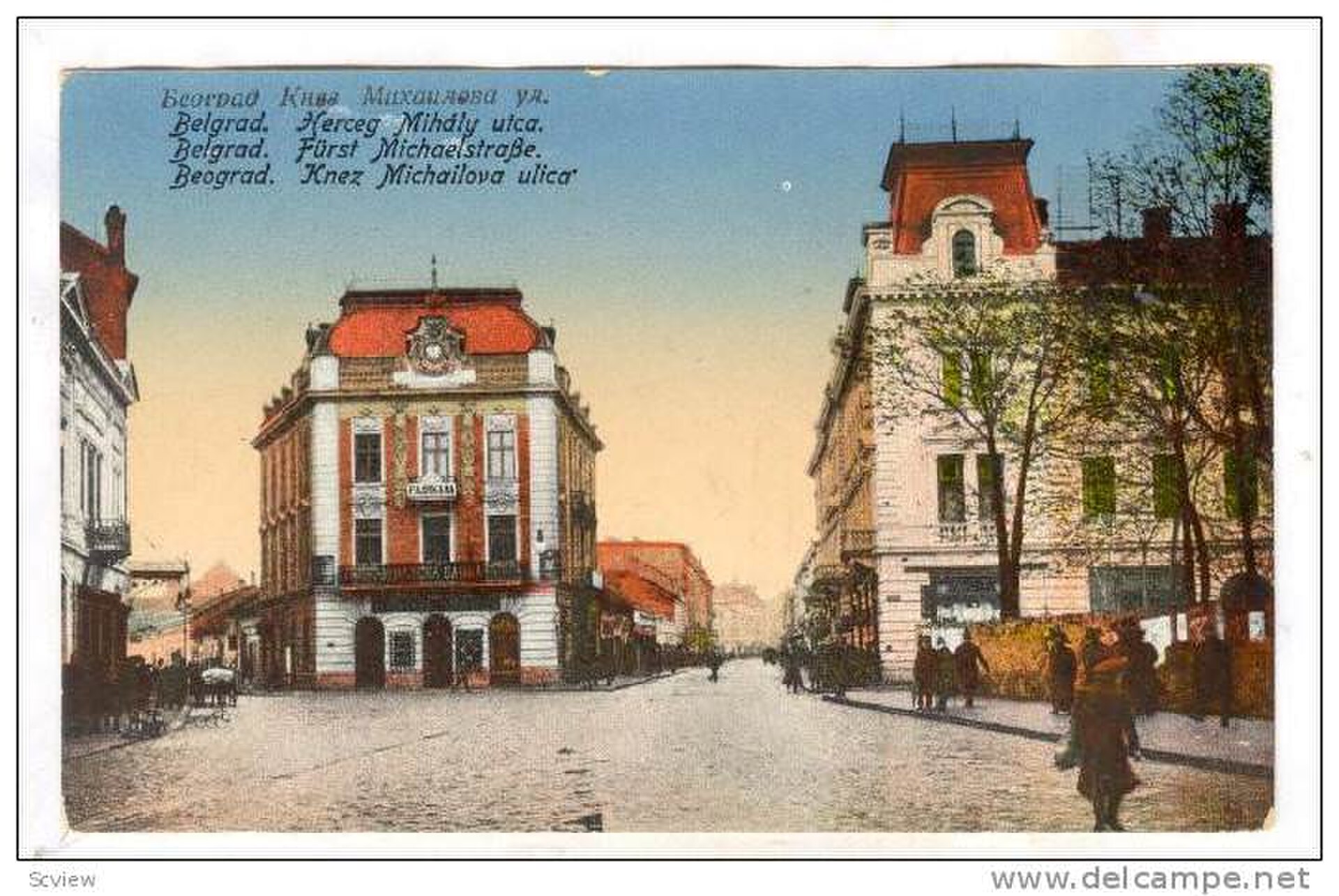
Historic street buildings
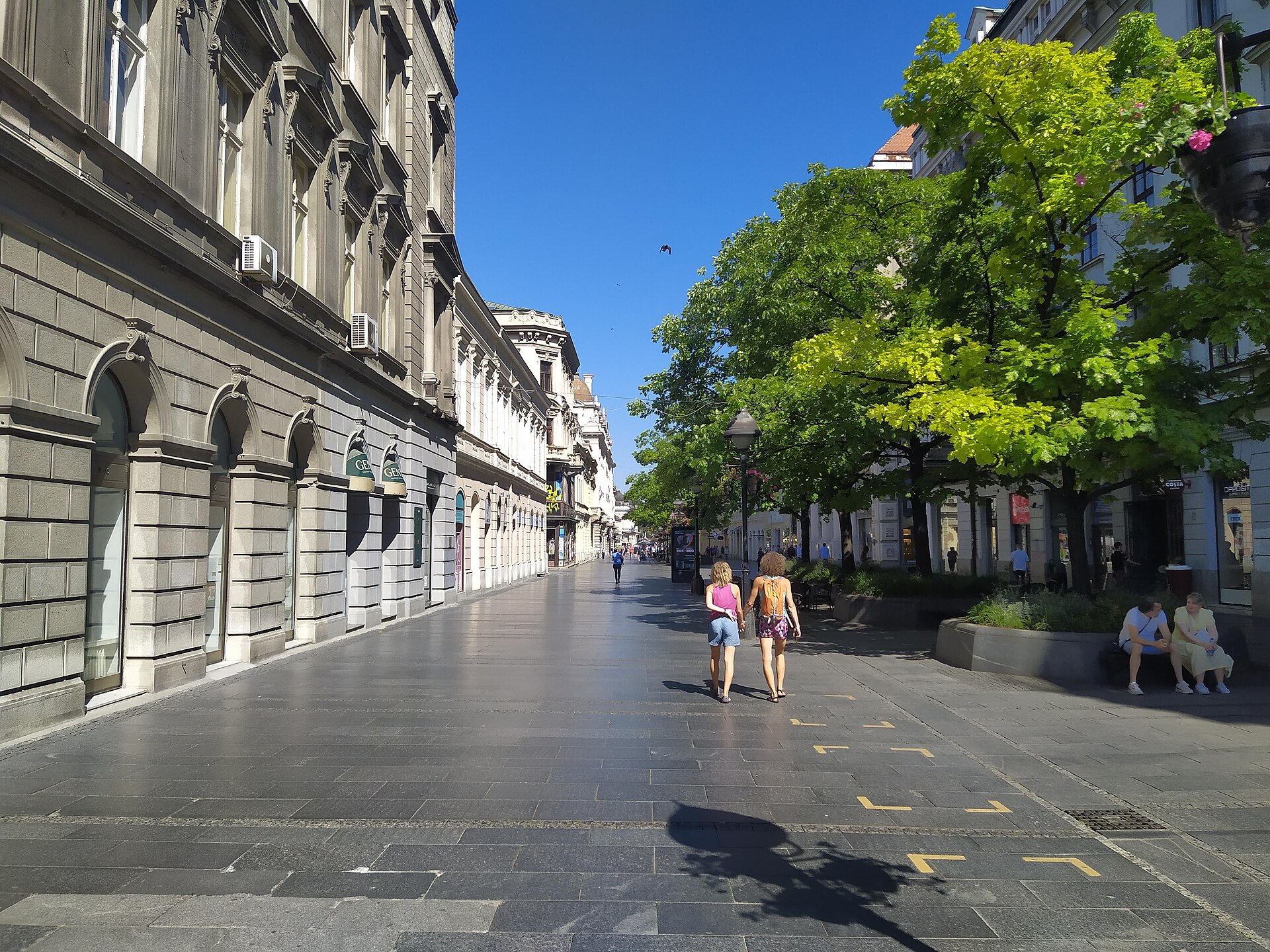
Historic buildings line Knez Mihailova Pedestrian Street in Belgrade, with a wide cobblestone roadway and a few pedestrians
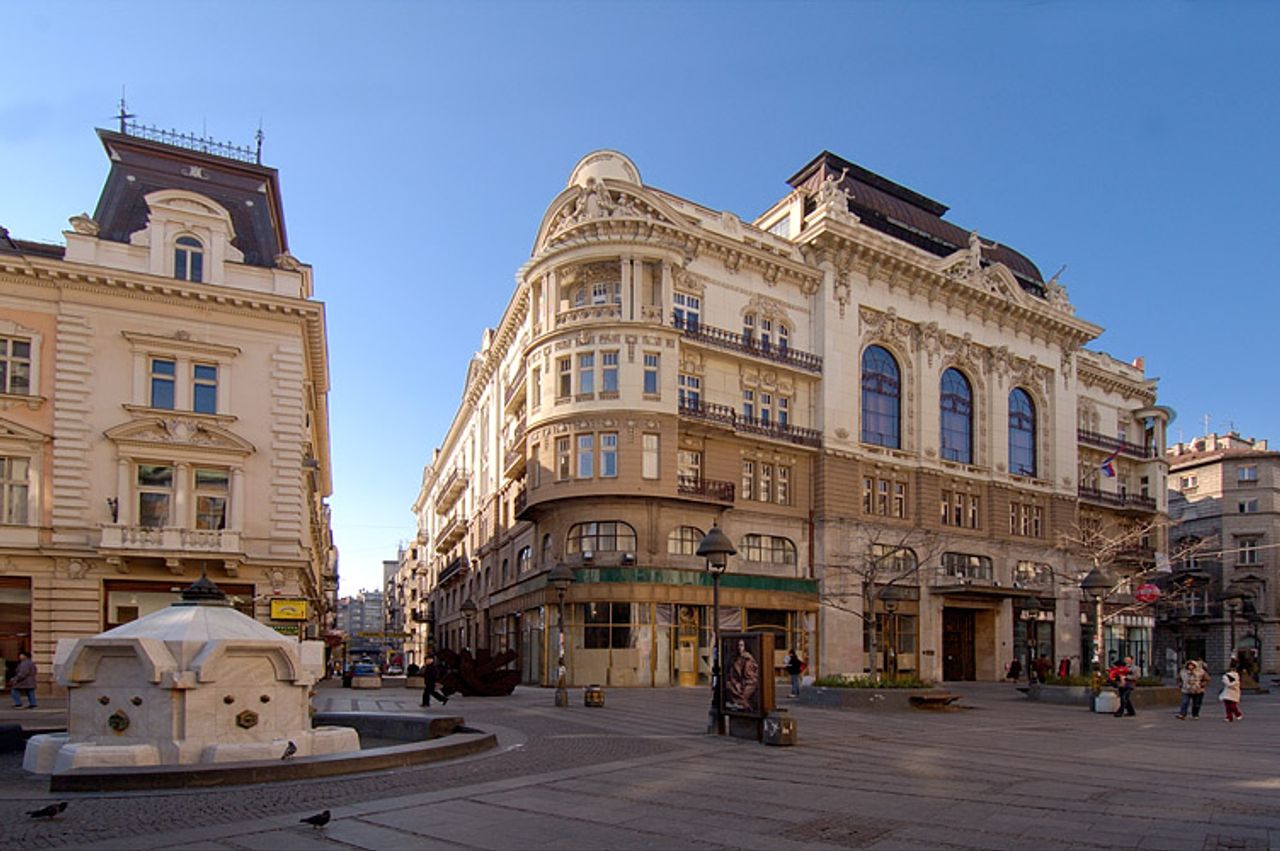
Knez Mihailova Streetscape
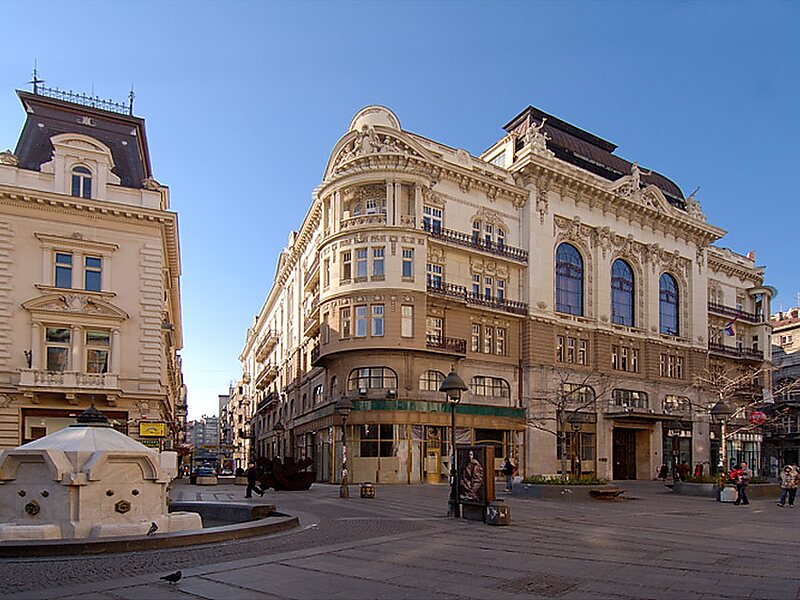
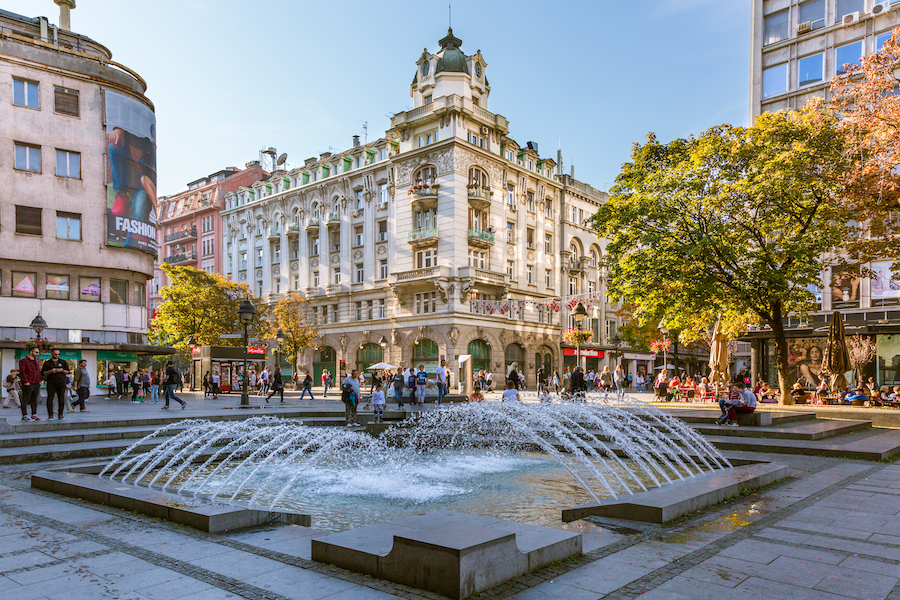
Historic facades and a small fountain line Knez Mihailova Pedestrian Street in Belgrade under a clear blue sky
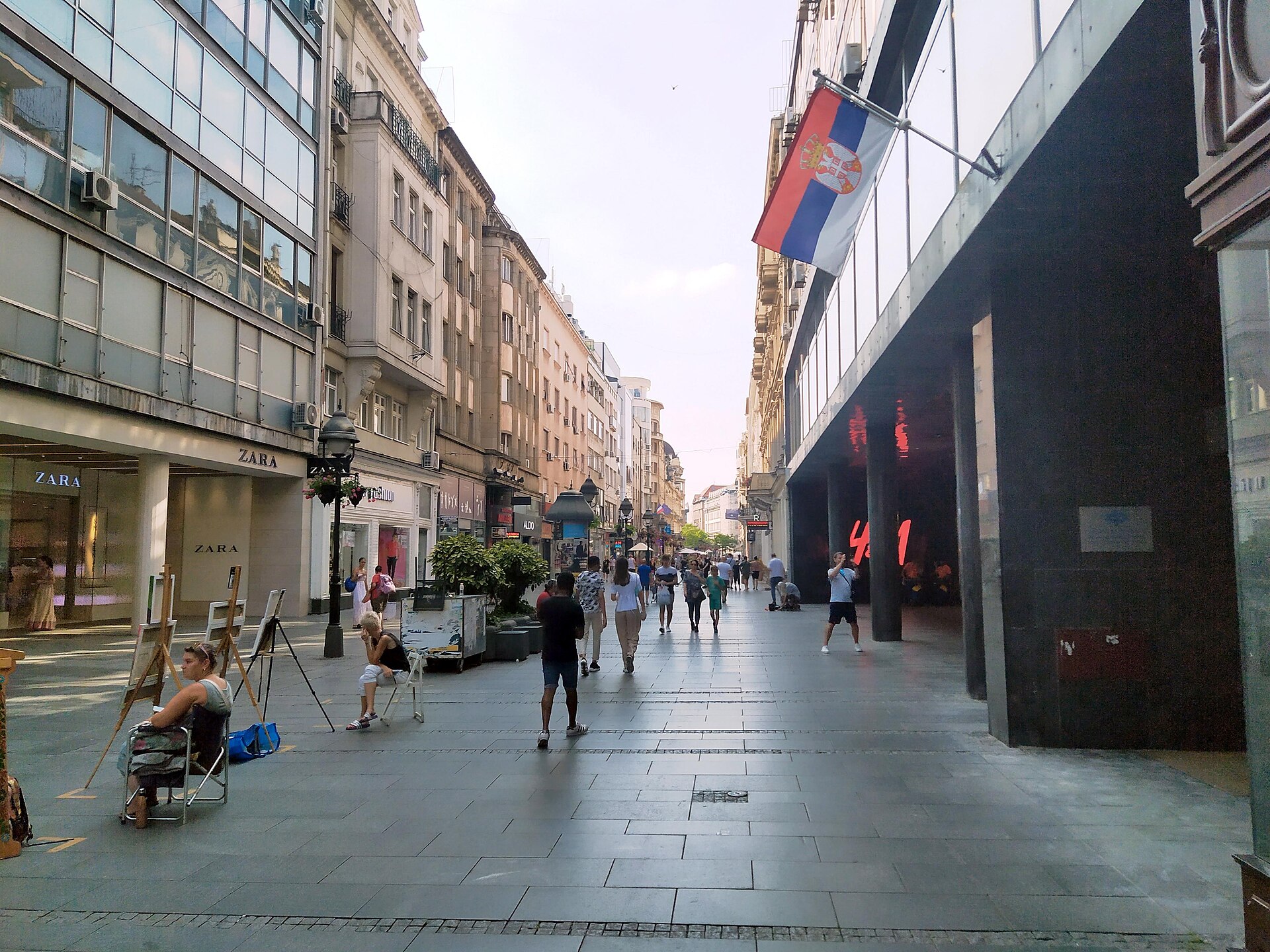
Pedestrian Shopping Street
People walk past storefronts and modern facades along Knez Mihailova Pedestrian Street in Belgrade
Knez Mihailova Pedestrian Street
Pedestrians walk along Knez Mihailova Pedestrian Street in Belgrade, lined with historic facades and leafy trees
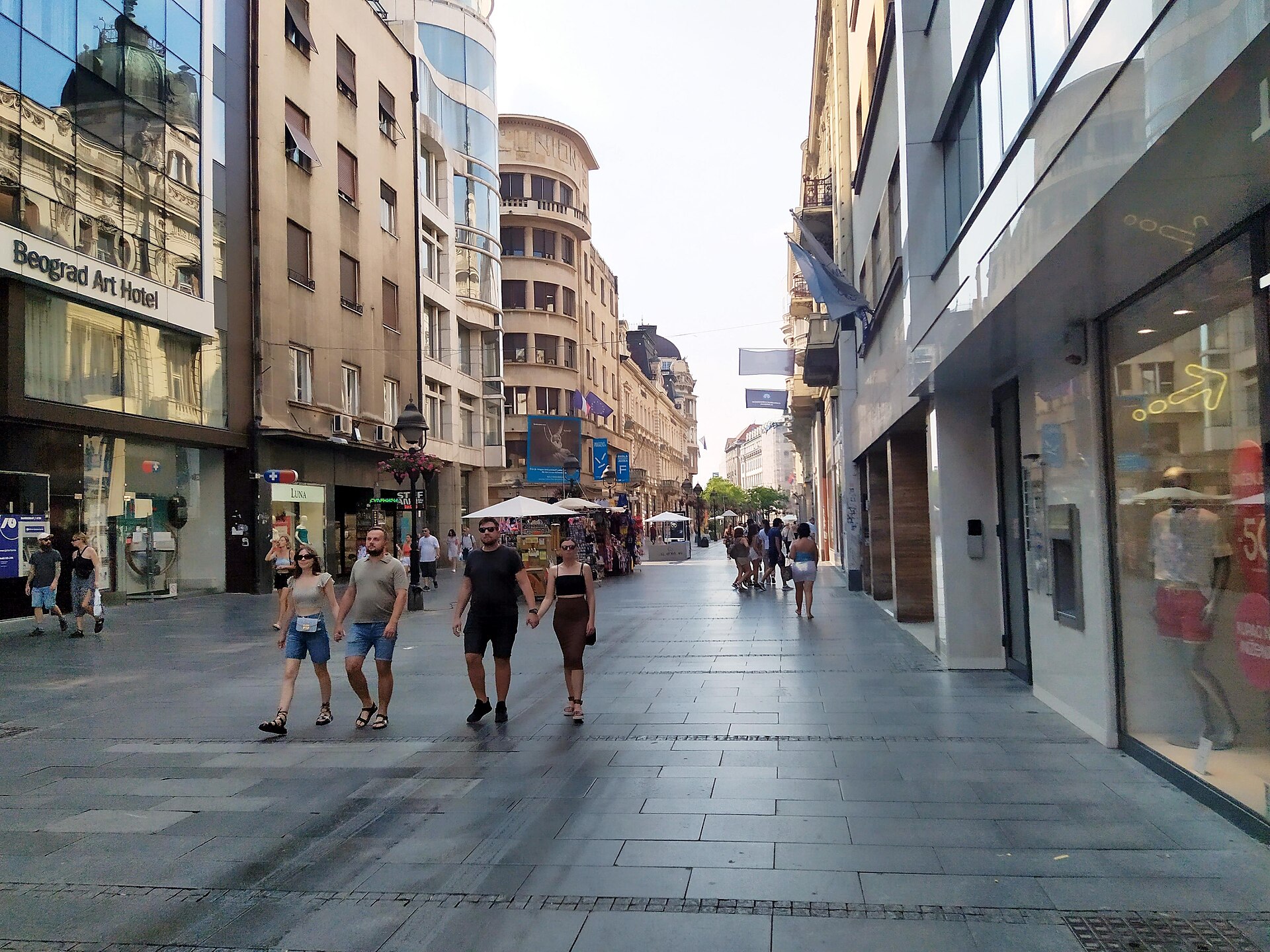
Knez Mihailova Street Scene
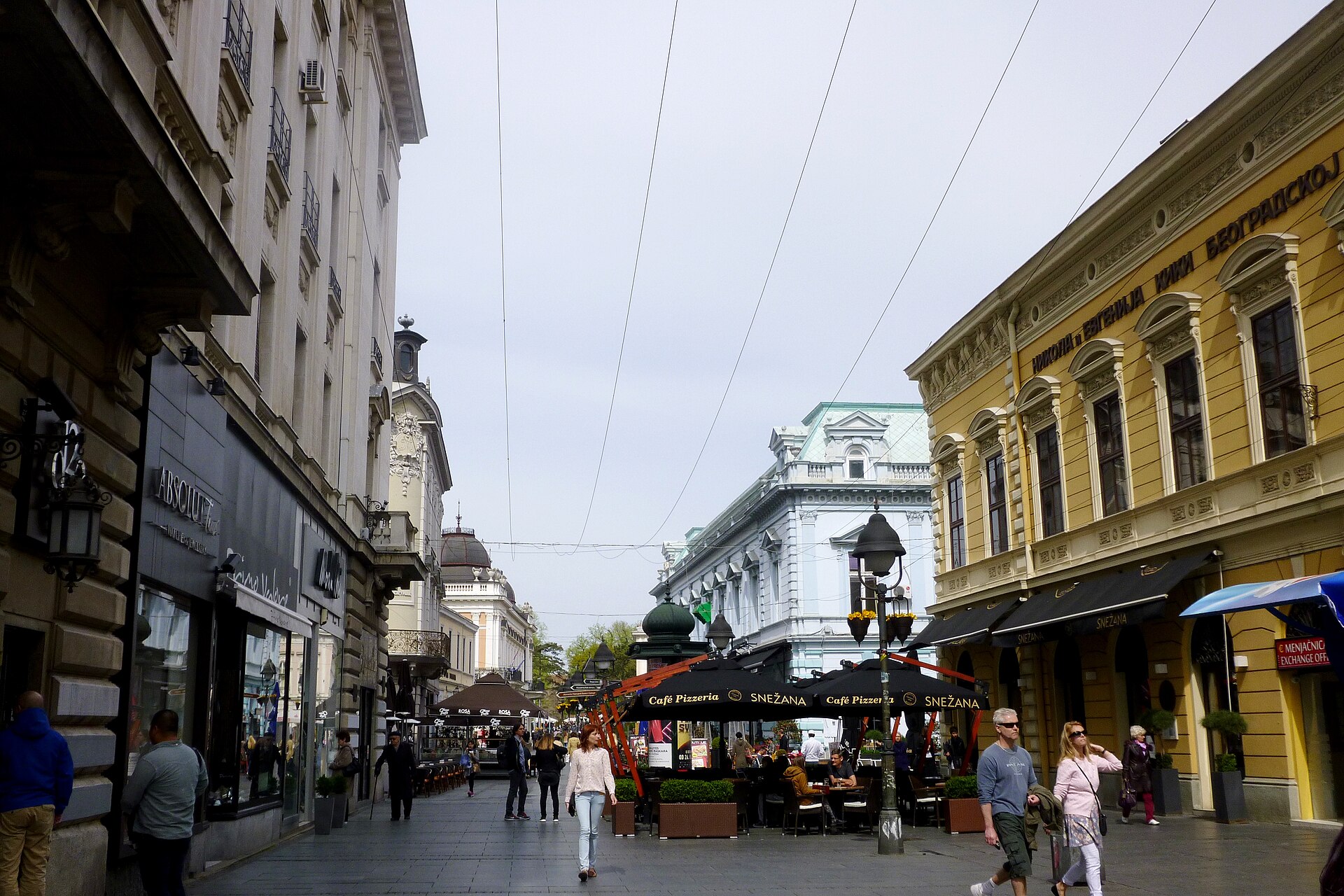
Pedestrians walk along Knez Mihailova Pedestrian Street in Belgrade, lined with shops, hotels, and mixed historic facades
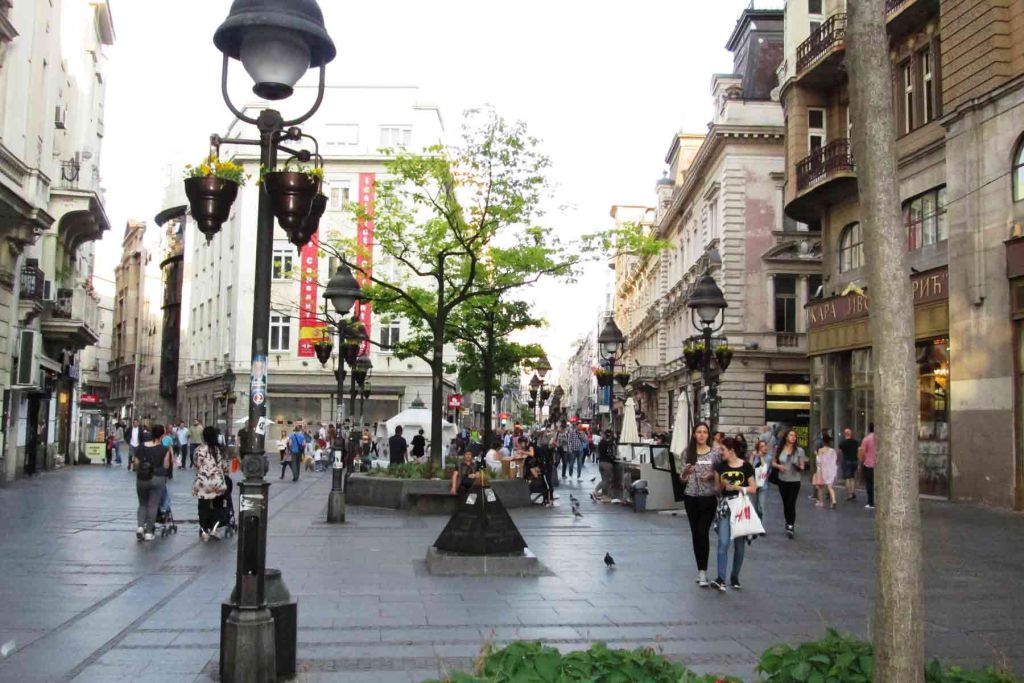
Pedestrian Street Scene
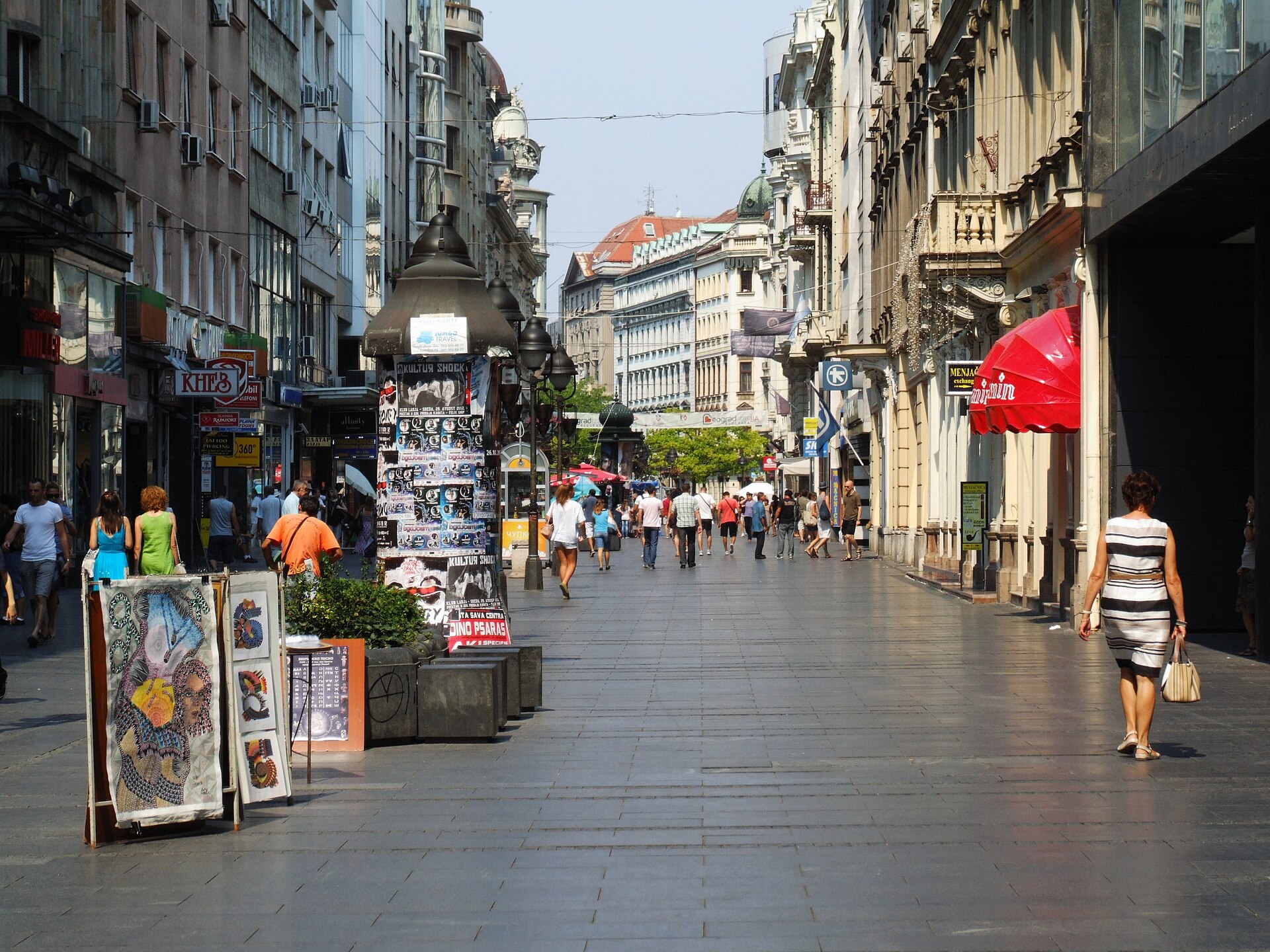
Pedestrians walk along Knez Mihailova Street in Belgrade, lined with historic facades, lamps, and shopfronts
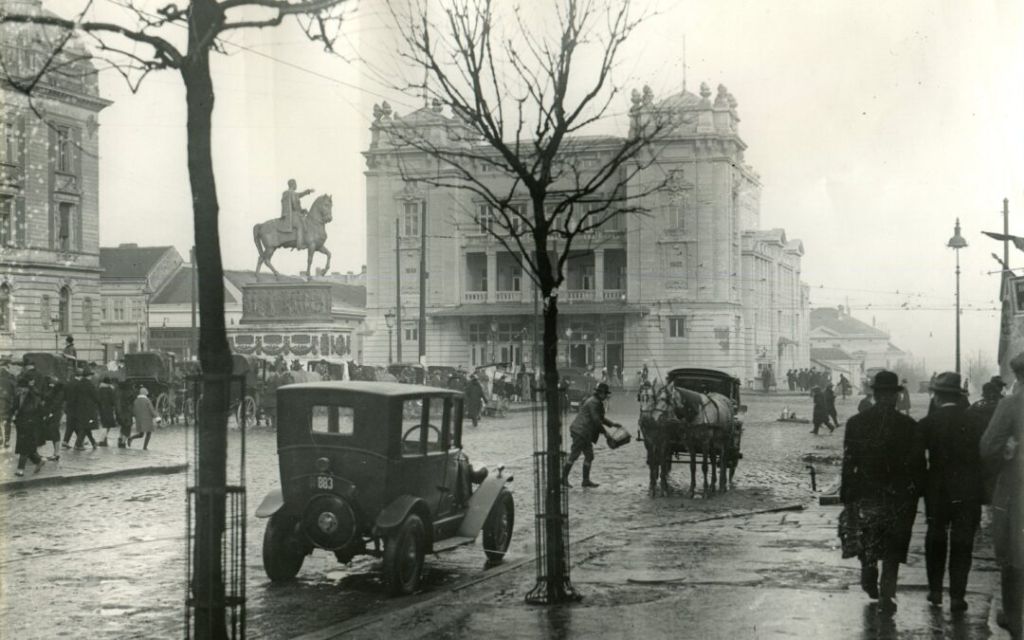
Historic Square Scene
Horse-drawn carriages and an early automobile pass the Prince Mihailo monument near Knez Mihailova Pedestrian Street
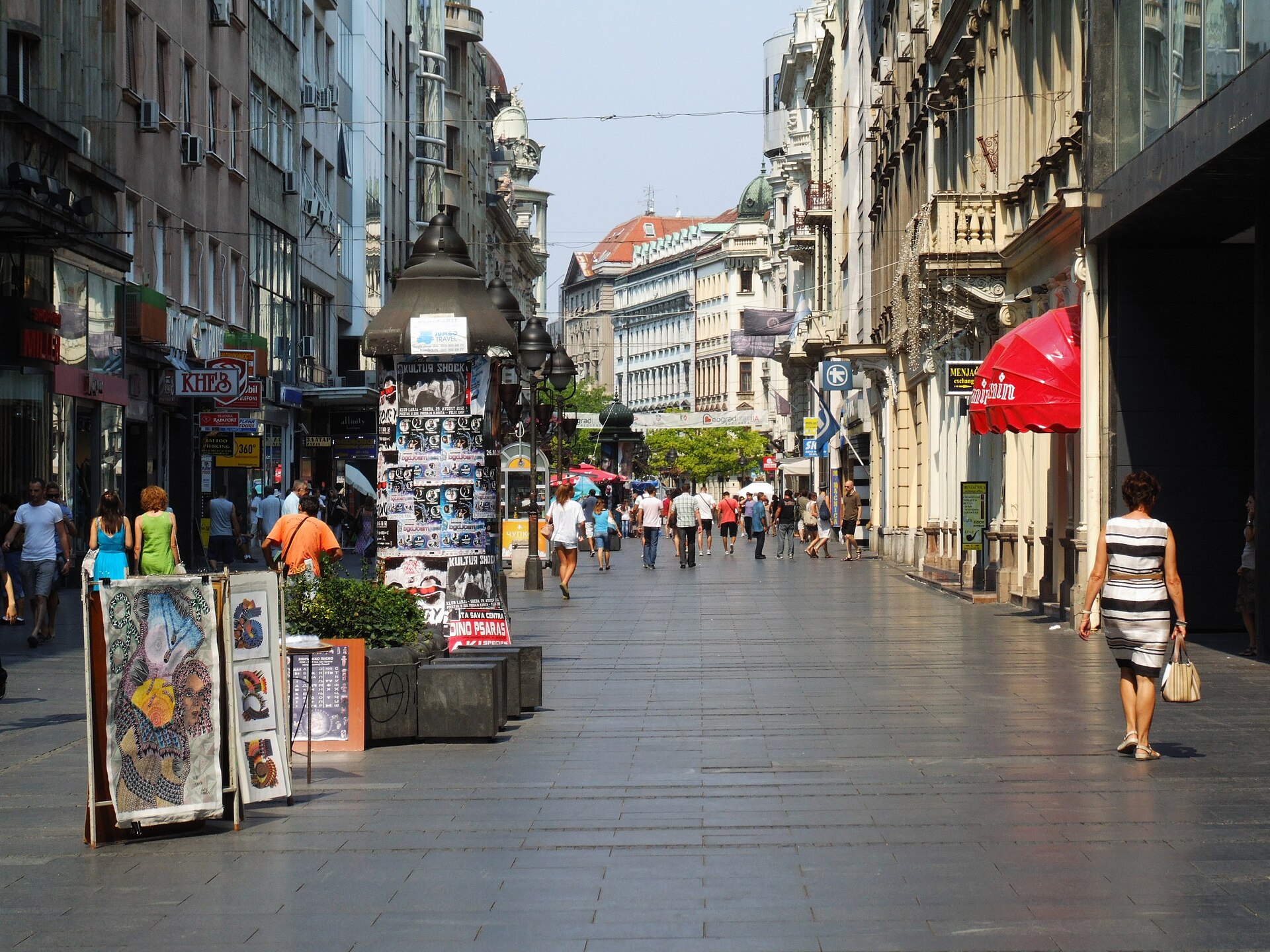
Pedestrian Street Scene
Pedestrians walk along Knez Mihailova Street in Belgrade, lined with shops, historic facades, and street art displays
Rooftop Restaurant Terrace
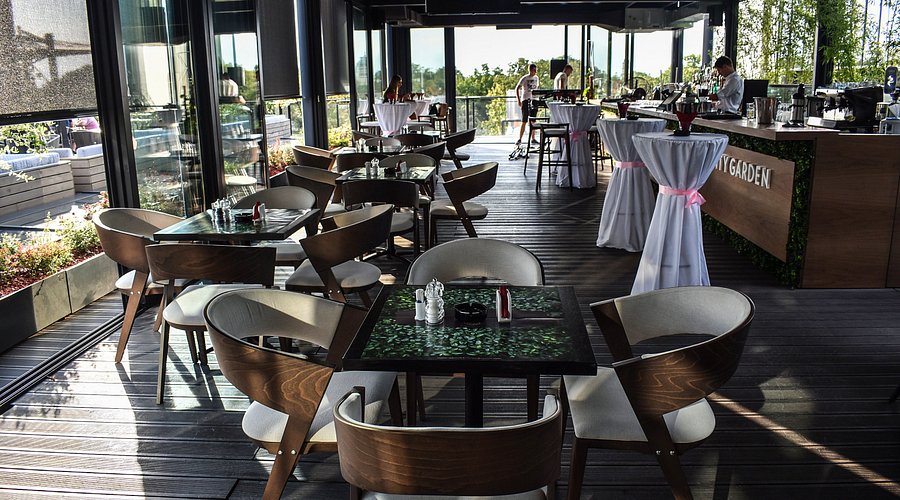
Tables and curved chairs fill a rooftop dining terrace on Knez Mihailova Pedestrian Street in Belgrade
Guided routes, walking tours, and experiences that help you make the most of a visit to Knez Mihailova Street.
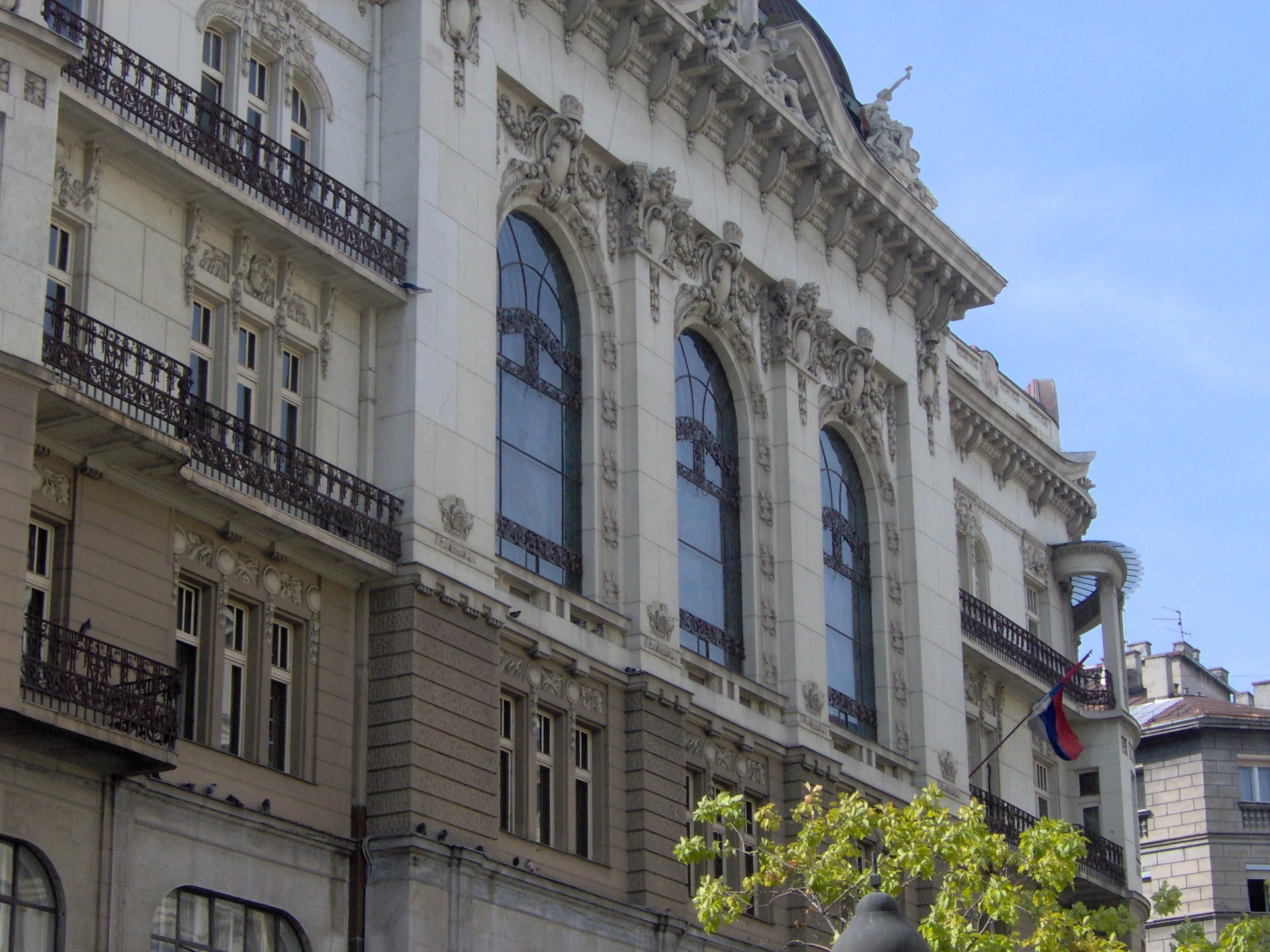
Serbian Academy of Sciences and Arts
Serbian Academy of Sciences and Arts in Knez Mihailova Street.
Most travelers use the academy as a short architectural stop on Knez Mihailova Street, usually on the same walk as Trg Republike and the National Museum. The building is not mainly a long tourist v...
Academy of Sciences and Arts
Academy of Sciences and Arts in Knez Mihailova Street.
The Serbian Academy of Sciences and Arts building sits on Knez Mihailova, Belgrade’s best-known pedestrian street, and is usually visited as an architectural and urban stop rather than as a long ...
Stay connected in Serbia