A landmark in the city park
The statue is part of everyday city life, not only a formal heritage stop. People walk, rest, and pass through here all year.
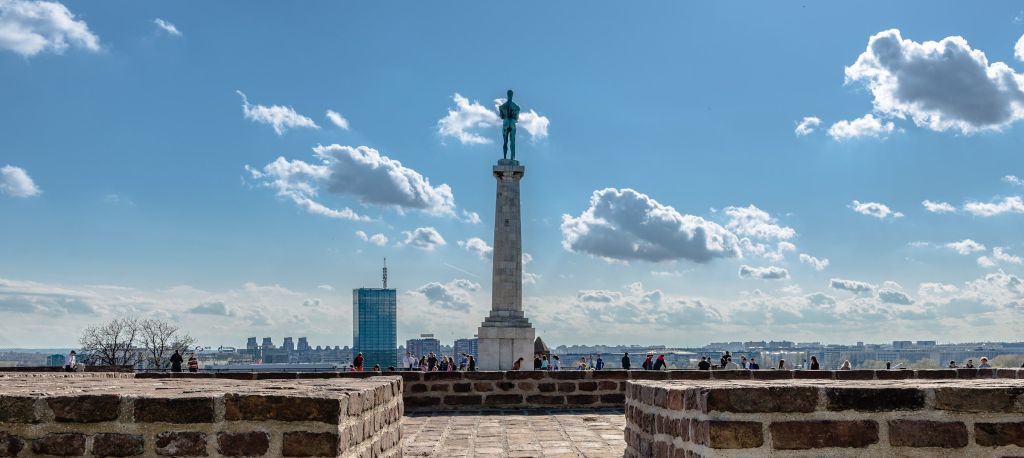
The Victor Monument stands inside Kalemegdan, the largest city park in Belgrade and home to the Belgrade Fortress. From the platform near the stronghold, you get wide views toward the Sava and Danube rivers, and the monument becomes part of the entire riverside panorama rather than a standalone object.
It is closely tied to the city’s layered history, stretching from Roman times through the modern era. For many visitors, the walk to the monument is as memorable as the sculpture itself: fortress walls, shaded paths, museum buildings, Ružica Church, St. Petka’s Chapel, and the open view where the rivers meet.
The Victor Monument is one of the most recognisable figures in Belgrade, not because it is isolated from the city, but because it is fused with the landscape around Kalemegdan. The monument stands where the fortress opens toward the Sava and the Danube, a place that gathers the whole history of Belgrade into one view. When the light is clear, the rivers, the park, the walls, and the statue all seem to belong to the same composition.
That is why the visit feels so balanced between art and place. You do not come here only to look at a sculpture. You come to understand why Kalemegdan matters so much to the city. It is the largest city park, a walking ground for locals, and a historical stronghold that stretches from the Roman era to the modern day. The Victor Monument sits inside that story rather than outside it.
I always think of this walk as one of the clearest introductions to Belgrade. The city has a habit of mixing layers without apology. You feel it here immediately: military history, river views, quiet paths, cultural institutions, and a monument that carries both strength and elegance. The result is a space that feels public, civic, and deeply Belgrade at the same time.
Because Kalemegdan also gathers so many other landmarks, the Victor Monument rarely ends a visit. It becomes a point of orientation. From here you can continue to the Belgrade Zoo, the Military Museum, the Natural History Museum, Ružica Church, or St. Petka’s Chapel, all while keeping the confluence in sight. That combination of movement and viewpoint is part of what gives the monument its lasting presence in the city.
The monument’s historical meaning begins with Kalemegdan itself. This fortress zone has been shaped over centuries, and the Belgrade Fortress carries traces from the Roman era to the modern period. That long continuity matters. The Victor Monument does not stand in a decorative park by chance; it stands inside one of the city’s most important historical settings, where power, defence, and urban life have always been closely linked.
Belgrade grew at the crossroads of cultural influences, and Kalemegdan reflects that better than almost anywhere else in the city. The fortress and park preserve layers of conquest, adaptation, and everyday use. Within that setting, the monument became a sign of endurance. It belongs to the same civic memory that also gives weight to nearby religious and military landmarks. Even before you study the sculpture closely, the location tells you that it is part of a wider narrative of survival and identity.
The route to the monument also passes through other parts of Belgrade’s historic core. Many visitors arrive after walking Knez Mihailova Street, the city’s central pedestrian zone, where old buildings, cafés, galleries, boutiques, musicians, and street performers create a lively transition from urban shopping to heritage space. From there, Kalemegdan feels like an open-air continuation of the city’s story, with the monument as one of its strongest markers.
Seen this way, the Victor Monument is not only about victory in a narrow military sense. It also represents how Belgrade remembers itself. The city has a reputation for accepting different, sometimes opposing ideas and world views, and the monument sits comfortably in that atmosphere. It is formal without being cold, historic without feeling sealed off, and unmistakably tied to the living city around it.
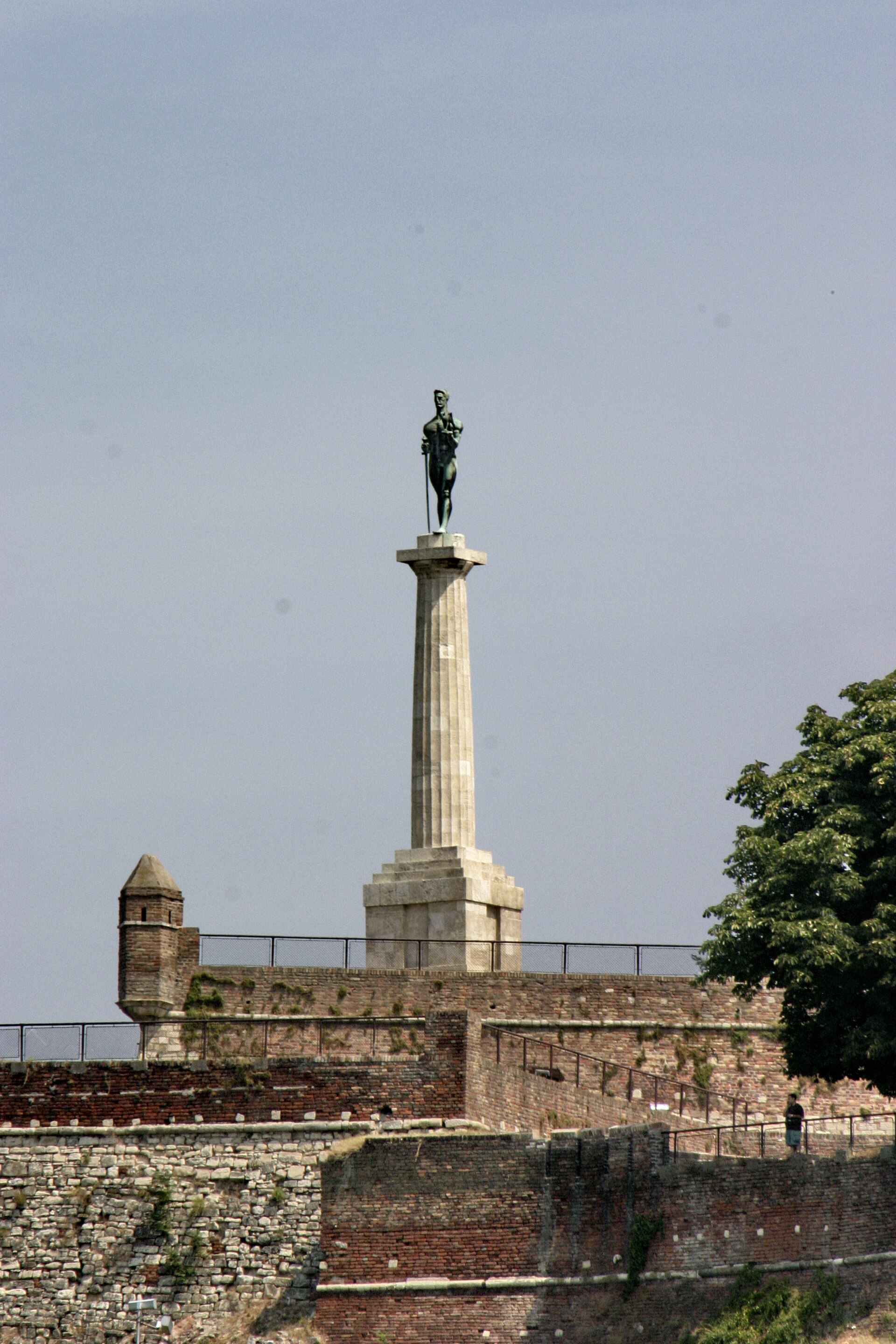
Victor Monument Above Fortress
The Victor Monument rises above the fortress walls in Belgrade, standing on a tall stone column
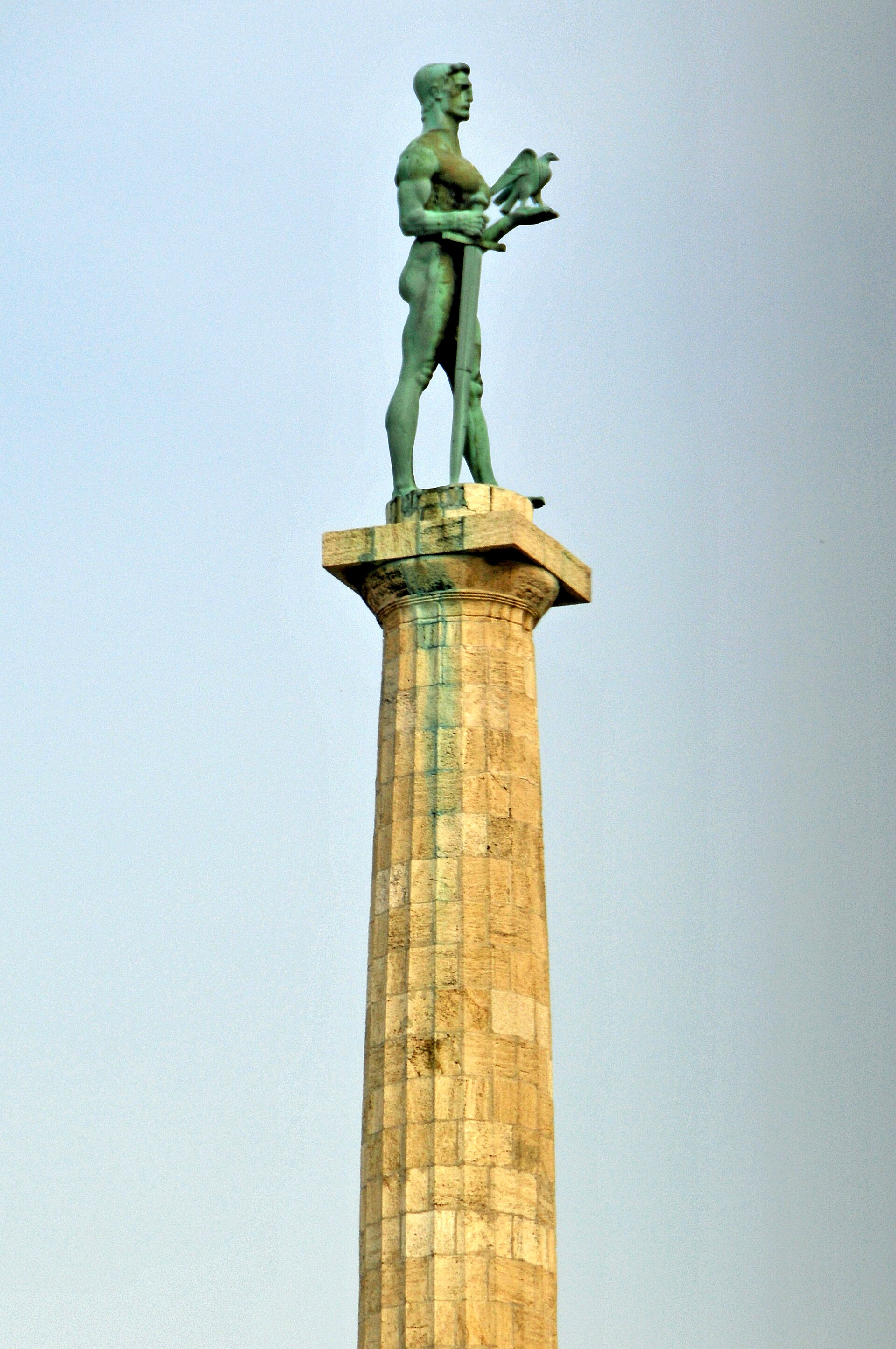
Victor Monument Statue
The Victor Monument stands atop a tall stone column in Belgrade, with a bird perched beside the figure
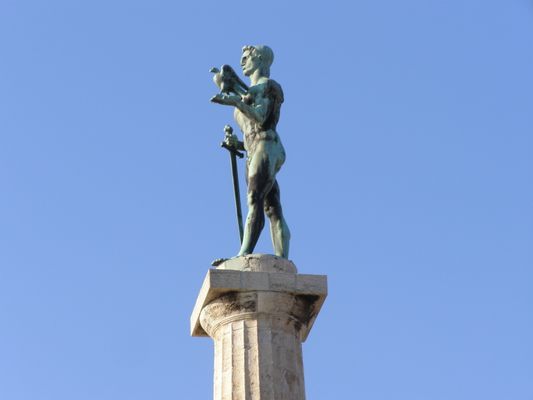
Victor Monument Statue
The Victor Monument in Belgrade stands atop a stone column against a clear blue sky
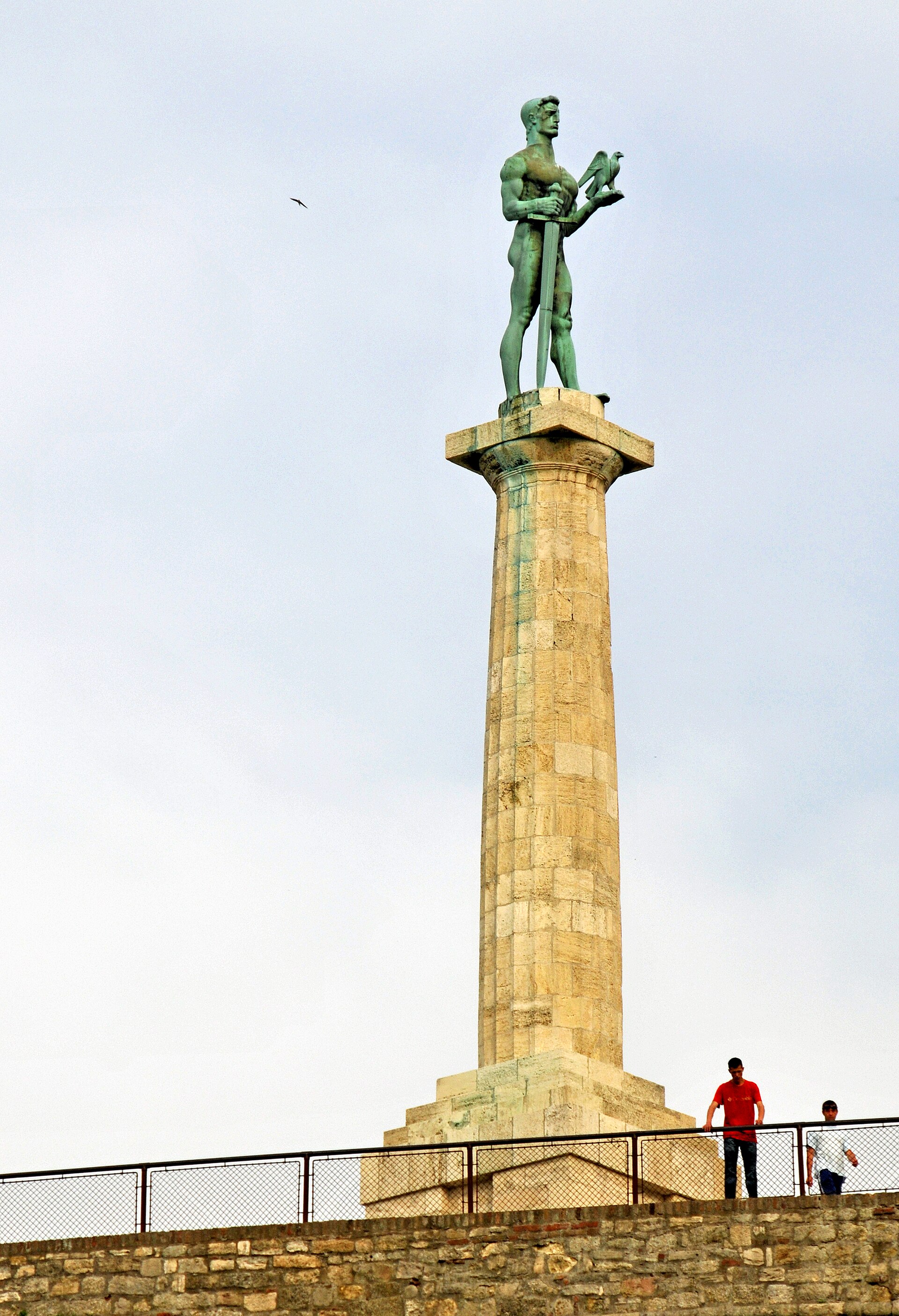
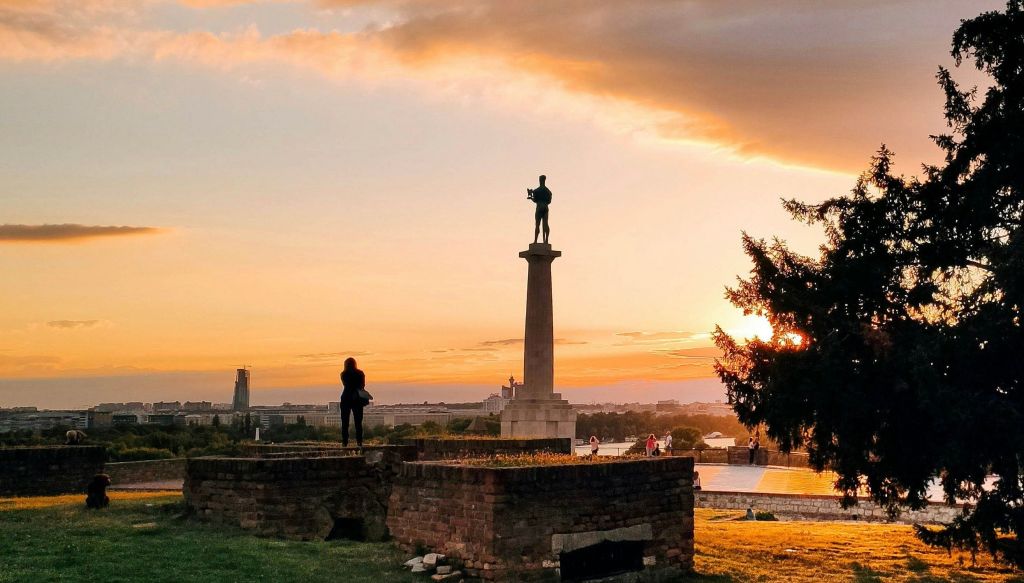
Victor Monument on Column
The Victor Monument rises above a stone column at Belgrade's Kalemegdan fortress, overlooking the river and sky
Victor Monument View
The Victor Monument stands on a stone pedestal above the fortress walls in Belgrade, overlooking the river
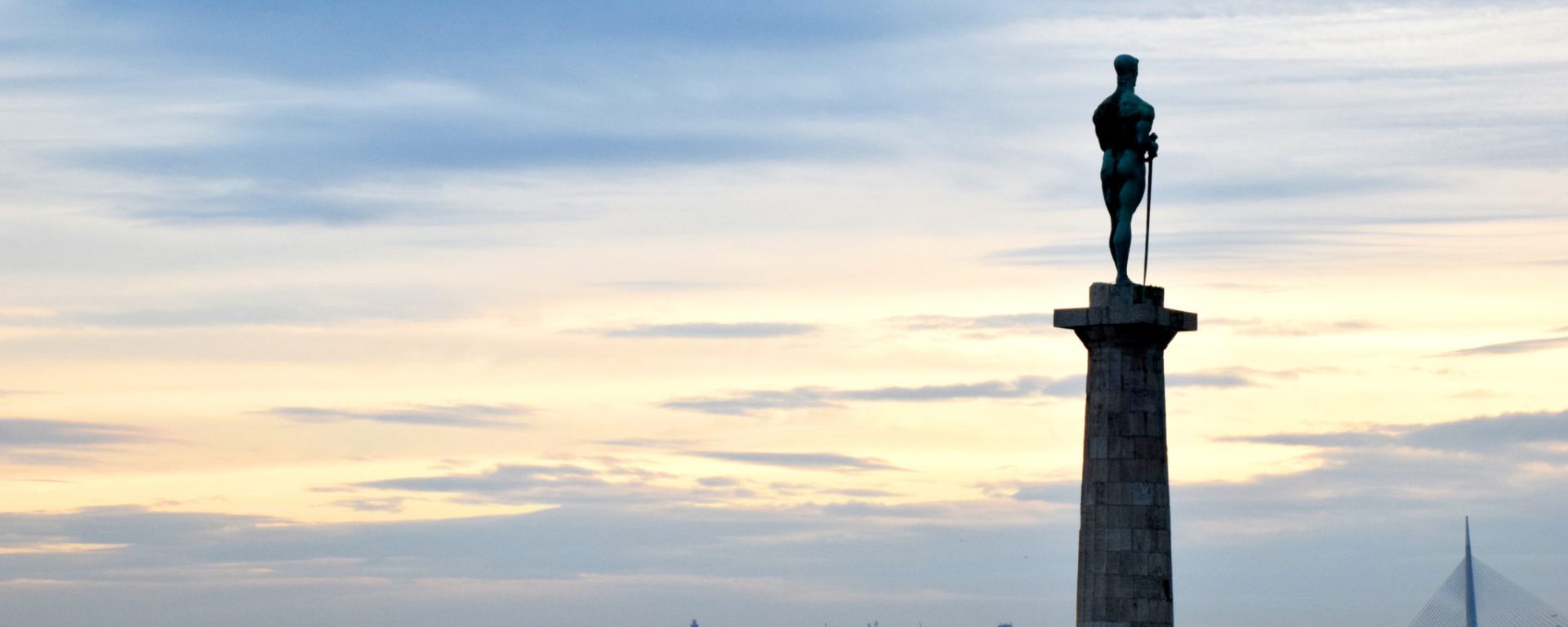
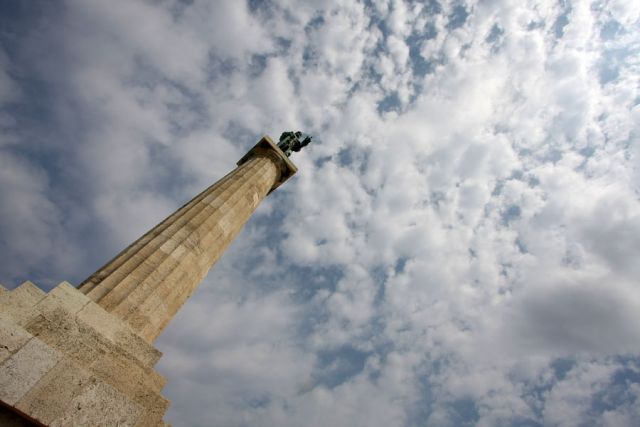
The artistic power of the Victor Monument comes from its silhouette and placement. It works at close range, where the sculptural form becomes more tangible, but it also works from a distance, where the outline reads cleanly against the sky and river horizon. The monument does not need a complex setting to make its point; the geometry of Kalemegdan does much of that work for it.
What makes the sculpture memorable is the way it interacts with light and movement. Morning visitors often see a calmer, sharper scene, while late afternoon softens the stone and metal tones around the fortress walls. The monument then feels less like an object and more like a fixed point in a changing city. The surrounding paths help with that effect. You move through shaded park lanes, then emerge into wider views where the rivers and the distant shore pull the eye outward.
It is also an exceptionally photogenic viewpoint, though the appeal is not only visual. The monument is framed by other major cultural stops, so the visit tends to become a full walk rather than a single stop. The Belgrade Zoo, the Military Museum, and the Natural History Museum give the area a strong institutional presence, while Ružica Church and St. Petka’s Chapel add a quieter spiritual layer. The mix gives the site a rare density.
If you enjoy places where sculpture and landscape reinforce one another, this is one of Belgrade’s clearest examples. The monument gains power from the fortress, and the fortress gains a distinct focal point from the monument. That mutual relationship is part of its appeal. It feels designed to be seen in context, with the river junction doing as much visual work as the statue itself.
The Victor (Pobednik) faces west from the upper terrace of Kalemegdan, on the corner where the Sava meets the Danube. From that platform the monument is visible to anyone on the old bridges, on the Brankov interchange, on the Sava embankment in Savamala, and on the New Belgrade waterfront across the river. The location was chosen in 1928 partly for that reach: it is one of the few points in Belgrade that is deliberately legible from many parts of the city at once.
For most visitors the easiest approach is from Knez Mihailova: walk to the north end of the pedestrian street, enter the fortress, and follow the path toward the upper plateau. Allow ten minutes from Trg Republike. The terrace immediately around the monument is the same vantage used for most fortress photographs of Belgrade, which means it gets busy at sunset; if you want a quieter viewing, late morning works better and the light is also good on the bronze figure.
The monument is part of the same loop as the Military Museum, the Roman Well, and the Nebojša Tower, so most travelers see it as one stop in a longer Kalemegdan walk rather than as a destination on its own.
Start in Kalemegdan, follow the paths to the Victor Monument, then keep going toward the walls and viewpoints that look out over the Sava and Danube. This is the cleanest way to read the monument in context.
From there, descend toward Beton Hala for lunch or dinner beside the river warehouses that now house restaurants.
Begin on Knez Mihailova Street, where the pedestrian zone gives you cafés, shops, galleries, and street life, then walk uphill into Kalemegdan. The change in atmosphere is immediate and worth experiencing slowly.
If you still have energy, continue later to Skadarlija for kafana culture or to Kosančićev venac for a more intimate historic quarter.
The statue is part of everyday city life, not only a formal heritage stop. People walk, rest, and pass through here all year.
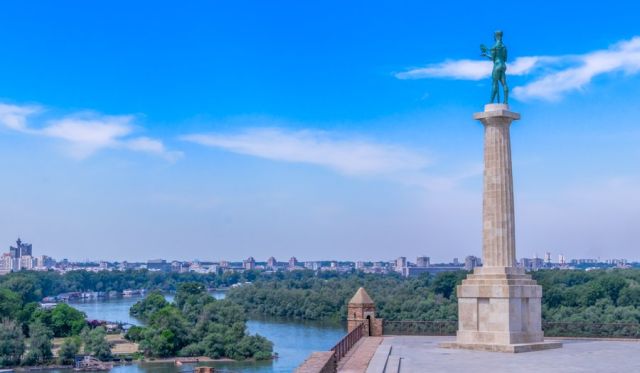
The Belgrade Zoo, the Military Museum, the Natural History Museum, Ružica Church, and St. Petka’s Chapel all sit within the same walking area.
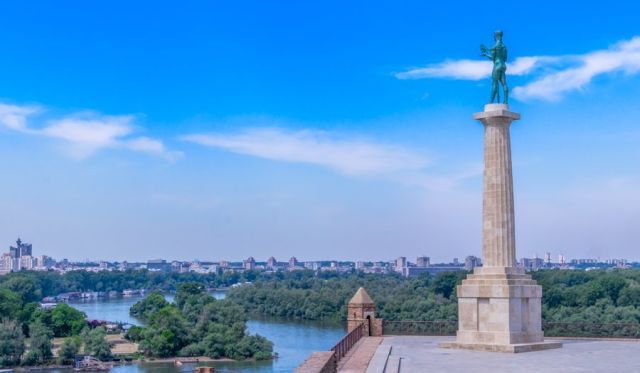
The confluence is one of the city’s defining scenes, and the monument helps shape how visitors read the panorama.
The Victor Monument sits in a dense part of the city, so it works well as one stop in a broader walking circuit.
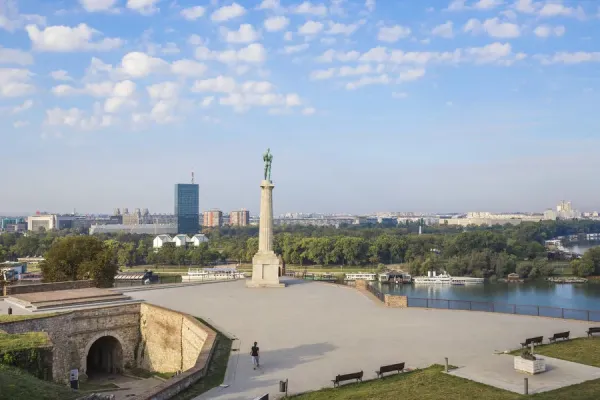
Kalemegdan Fortress
Belgrade’s great historic stronghold and the monument’s natural setting.
This is the main reason the Victor Monument feels so rooted in the city. The fortress landscape carries the story from Roman layers to the present day.
Knez Mihailova Street
The central pedestrian zone that leads naturally into the fortress area.
Shopping, cafés, galleries, boutiques, musicians, and street performers make this the city’s liveliest approach to Kalemegdan.
Beton Hala
Riverside restaurants at the foot of the fortress.
The old customs warehouses now hold numerous excellent restaurants, making this a useful stop after the monument and fortress walk.
Visit the Victor Monument from Kalemegdan Fortress, best combined with a walk to the Upper Town and the river terraces. It is ideal for first-time visitors, photographers, and sunset views. There is no ticket for the monument itself, but wear comfortable shoes and avoid rushing in high wind or after dark.
Last checked: 2026-06-09. We review this page regularly and update practical details such as opening hours, ticket guidance and transport when they change.
Kalemegdan Fortress and park, above the confluence of the Sava and Danube
Belgrade Zoo, Military Museum, Natural History Museum, Ružica Church, St. Petka’s Chapel
On foot during a Kalemegdan walk, then continue toward Beton Hala
Give yourself time for the walk through Kalemegdan. The Victor Monument is most rewarding when it is part of a larger loop through the fortress park. Start from Knez Mihailova Street if you want the full city-centre transition, then continue into the park, pause at the museums and churches, and finish near the river edge or at Beton Hala, where the old customs warehouses now hold several good restaurants.
This area works well in every season, but the atmosphere changes with the weather. Clear days open the panorama, while cooler evenings give the fortress a calmer, more reflective tone. If you want to pair the visit with Belgrade’s river culture, continue toward the promenade and then into the food scene along the Sava bank.
It stands in Kalemegdan, the large park and fortress complex above the confluence of the Sava and Danube rivers. The location is central to how people experience the monument.
Within the same walking area you can visit the Belgrade Zoo, the Military Museum, the Natural History Museum, Ružica Church, and St. Petka’s Chapel. Knez Mihailova Street and Beton Hala are also easy to combine with the visit.
It has become one of the city’s strongest symbols because it sits inside a fortress landscape that represents Belgrade’s long history, its river identity, and its ability to absorb different cultural layers.
Yes. A simple route is Knez Mihailova Street, Kalemegdan Fortress, the Victor Monument, and then down toward Beton Hala for food by the river.
Stay connected in Serbia