Quibity
5% off with code ROCZXIII. European-focused eSIM with a flat reader discount; useful if you want a simple short-trip bundle.

For most visitors, Serbia is straightforward: 4G is broadly available, 5G is live in the main cities, and prepaid data is affordable. The best choice depends on how much you move around. If you land late, want instant setup, or hate store queues, an eSIM is the easiest option. If you will stay longer or need a local number, a prepaid SIM from mts, Yettel, or A1 can be cheaper.
Public Wi‑Fi exists in hotels, cafés, malls, and some city zones, but it is not a substitute for mobile data. If you rely on banking, corporate logins, or streaming from home, plan for a VPN and a backup data source.
Coverage drops once you leave the main corridors. Tara, Đerdap Gorge, and Stara Planina can all have usable signal, but the experience is less even than in the cities. Valleys, forested slopes, and long drives between settlements can break up both data and voice coverage. If you are hiking, driving, or staying in a small guesthouse, download offline maps and do not assume constant reception.
That matters for trip planning: the route from Belgrade to Zlatibor is manageable for data most of the way, but once you get into the hills and smaller villages, the network can slow down or shift between operators. For mountain travel, Telekom Srbija often has the broadest practical footprint, but no network is perfect everywhere.
Prepaid data is still affordable by European city-break standards. Small tourist bundles can start around €3–€5, while stronger packs with 10–30 GB often sit in the €8–€15 range depending on promotions, validity, and operator. Unlimited-style travel eSIMs cost more, but they remove the need to count megabytes.
Local in-store SIM packages can be cheaper per gigabyte than many roaming products, especially if you are staying longer. For travellers who want to spend with less friction, the best value is often not the cheapest plan, but the one that avoids top-ups, top-up codes, and finding a store on arrival day.
5% off with code ROCZXIII. European-focused eSIM with a flat reader discount; useful if you want a simple short-trip bundle.

Editors pick for many short trips. Large catalogue and dependable nationwide coverage on Yettel in Serbia.

Unlimited data at a single flat price, which suits streaming, navigation, and tethering if you use a lot of data.

Good for travellers crossing borders who want one plan for Serbia plus nearby countries.

Boutique-style flat-rate plans for short stays if you prefer simpler checkout and quick activation.

Strong option if you want more granular data sizing, from light-use bundles to larger allowances.
A competitive regional platform for Europe bundles, especially useful if Serbia is only one stop on a wider trip.

Best if you land late, want setup before departure, or need data immediately after passport control. Good for 3–10 day city trips and easier than finding a kiosk.
Best if you need a Serbian phone number, expect heavy usage, or will stay longer than a week and can visit a store.

Best if your home plan already includes Serbia or you are travelling with multiple devices and want a single shared connection.
Yettel, Telekom Srbija (mts), A1
4G often 20–80 Mbps down; fibre can exceed 100 Mbps
Belgrade, Novi Sad, Niš, plus selected tourist areas
About €3–€15 for starter data bundles, more for heavy use
A local eSIM plus hotel Wi‑Fi
Not for data plans; only for some airport pickup desks
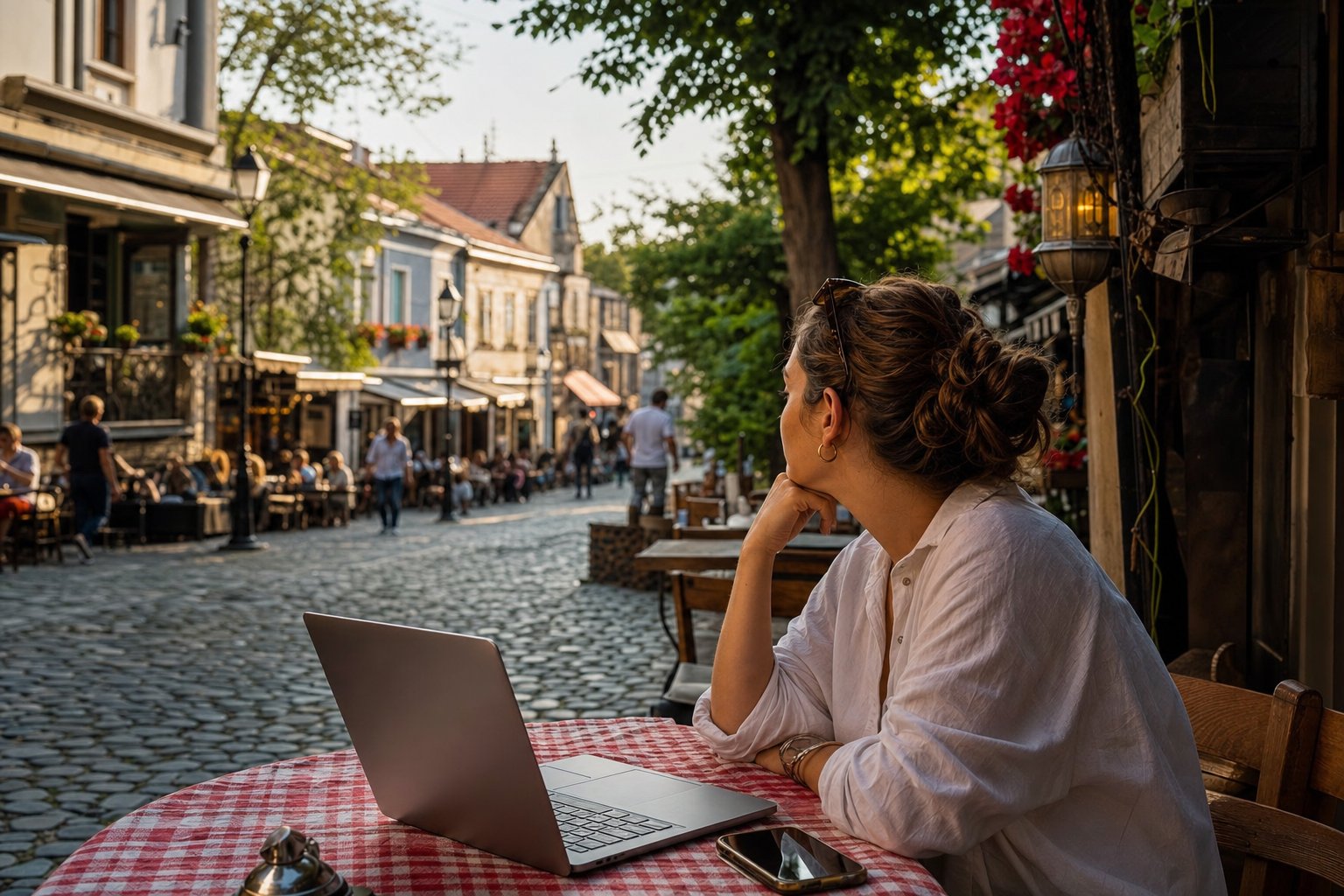
If you are flying into Belgrade, the most practical arrival setup is to pair a plan with the airport transfer and connectivity basics in Belgrade Airport Internet and the broader Serbia travel tips guide. If you work remotely, the Digital Nomad Guide to Serbia covers long-stay connectivity, workspace expectations, and longer rental considerations. Festival and event visitors should also check the pages for EXIT Festival in Novi Sad and eSIM for Expo 2027 Belgrade if they want a trip-specific data plan.
Yes, in many central parts of Belgrade, Novi Sad, and Niš. Coverage is still uneven compared with 4G, so treat it as a useful bonus rather than something to depend on everywhere.
If you want immediate data after landing, yes. It is the easiest route for a 3–7 day trip and avoids airport kiosk hunting.
Often yes, but etiquette varies. Ask at the counter, check the receipt, or look near the till; some places treat the password as something for paying customers only.
Usually yes. There is no general VPN blocking, and it is commonly used for banking, work, and streaming libraries.
Telekom Srbija (mts) often has the broadest practical reach in rural areas, while Yettel and A1 can still work very well on the main roads and in towns.
Sometimes, but ask for speed and connection type before booking. Fibre is worth paying for; generic Wi‑Fi is not a guarantee of stable video calls.
Decide whether your trip is mostly city-based or includes mountain and rural time. If it is mostly urban, an eSIM is the quickest answer. If you will travel farther, combine a local or travel eSIM with offline maps and one backup option. Then check your arrival airport, your hotel Wi‑Fi, and any app logins you need before departure.
For the full travel setup, continue with eSIM for Serbia, Belgrade Airport Internet, and the Digital Nomad Guide to Serbia.
Stay connected in Serbia