




An eSIM is a digital SIM card that lives inside your phone. There is no plastic to swap, no airport kiosk to find, and no roaming charge from your home operator. You buy a Serbia data plan online, scan a QR code, and the eSIM is active the moment your phone connects to a Serbian network — usually within seconds of landing at Belgrade Nikola Tesla airport. Your existing line stays active in parallel, so you can keep using your home number for SMS-based two-factor authentication while your data flows through the Serbian eSIM.
Serbia is not part of the EU and therefore not covered by EU roaming rules. Tourists from EU countries who rely on "roam like at home" packages will hit extra-EU surcharges within hours — typically €0.50–1.00 per minute and €5–10 per GB. A €10 eSIM with 5 GB of data eliminates that risk for an entire two-week trip.
Airalo is the most established travel-eSIM brand and the easiest first choice: the Serbia plan range starts at 1 GB / 7 days and scales up to 20 GB / 30 days, the app is well-built, and activation is reliable on every recent iPhone and Android device. The dedicated Serbia plan runs on Yettel, which gives strong coverage across Belgrade, Vojvodina, and the highway corridors south to Niš. If you want a single carrier across multiple Balkan countries, the Airalo "Balkans" regional plan covers Serbia, Croatia, Slovenia, Bosnia, Montenegro, North Macedonia, and Albania on one eSIM.
Holafly takes a different approach: all plans are unlimited data, priced by duration only. That is excellent value for a one-week trip where you might stream maps, use Google Translate constantly, and tether a laptop — but it is overkill for a weekend break. Holafly's Serbia plan also tethers without restriction on most devices.
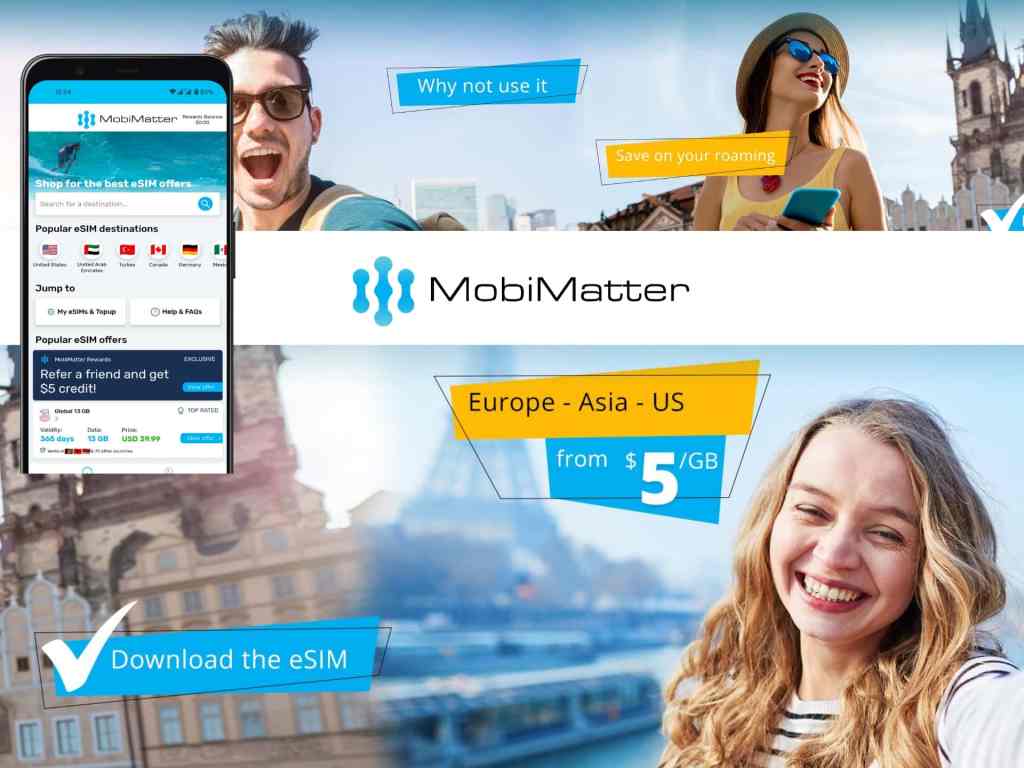
Nomad eSIM and Maya Mobile are strong alternatives if you want regional coverage. Both offer Serbia-only and Europe-wide plans, with comparable pricing to Airalo. MobiMatter and eSIM Go sit slightly more towards the reseller side and are most useful if you want a broader catalog of niche plans.
Buy the plan from the provider's website or app before your flight. The provider emails a QR code and an installation profile. While you are still on your home Wi-Fi, open Settings → Cellular → Add eSIM on iPhone, or Settings → Network & Internet → SIMs → Download a SIM instead on Android, then scan the QR. Name the plan ("Serbia"), and leave your home line as the primary voice/SMS line. Set the new eSIM as the default for data only. On arrival, your phone will automatically connect to a Serbian carrier the moment airplane mode is turned off — no extra step required.
Keep one habit in mind: do not delete the QR code email until your trip ends. If you reset your phone or move to a new device, the same QR can usually be re-installed within the validity window. If it cannot, the provider's support team can reissue it within a few hours.
<p>Most phones from 2020 onwards do. iPhone XS and newer, Google Pixel 4 and newer, Samsung Galaxy S20 and newer, and most recent OnePlus, Oppo, and Xiaomi flagships all support eSIM. Older phones do not — check your device manufacturer's spec page before buying a plan.</p>
<p>Yes. Dual-SIM is the default state on modern phones — your physical SIM (or your existing eSIM) stays active for calls and SMS while the Serbia eSIM handles data. This is how you receive bank one-time codes, WhatsApp messages, and rideshare confirmations on your home number while paying nothing extra for roaming data.</p>
<p>Yes. Airalo, Holafly, and Nomad all run on Yettel, A1, or mts — the three national operators. 4G coverage reaches every regional centre we cover on this site (Novi Sad, Niš, Kragujevac, Zlatibor, Tara, Sombor, Sremska Mitrovica), all motorway corridors, and the Đerdap and Tara national parks. 5G is rolling out in Belgrade and Novi Sad.</p>
<p>For a one-week city break with maps, photos, and casual social media, 3–5 GB is comfortable. If you stream music or video, plan 1–2 GB per day. For a two-week trip with intensive use, 10 GB is a safe upper bound. Most providers let you top up if you run out — there is no need to buy the largest plan up-front.</p>
<p>Prepaid SIMs from Yettel, A1, and mts are sometimes a few euros cheaper per GB, but you need a passport, time at the kiosk, and a phone that can accept a physical SIM. eSIM is faster, works from the moment you land, and avoids the language barrier. For most travellers the small premium is worth it.</p>
<p>Airalo, Nomad, and Maya allow tethering by default. Holafly officially flags tethering as restricted for unlimited plans, but most users report it works fine for laptop use; check current policy before relying on it.</p>
The right eSIM depends on how long you stay, how much data you need, and whether your trip pairs Serbia with neighbouring countries. The short comparison below covers the three providers we link to.
| Provider | Plan range | Unlimited option | Serbia coverage | Multi-country | Best for |
|---|---|---|---|---|---|
| Airalo | 1, 3, 5, 10, 20 GB | No | Yettel (national 4G/5G) | Yes (regional & global) | All-rounder for short trips |
| Holafly | Day / week / month bundles | Yes (fixed price) | Yettel / MTS | Regional Balkans plans | Heavy users, tethering, streaming |
| Nomad | 1, 3, 5, 10, 20 GB plus regional packs | No | Yettel / A1 | Strong regional & global range | Multi-country itineraries |
All three providers deliver the eSIM as a QR code by email within minutes of purchase. Install the profile on home Wi-Fi before flying and the line activates automatically when you switch it on in Serbia.
If you already know where you are heading, open the destination guide for everything else: hotels, transport, and what to do.