Experience Serbia

Navigating the Danube in Serbia

A practical guide to Serbia’s river corridor, from Belgrade’s embankments to Đerdap Gorge, with national parks, river features, and easy stops for road trips, cycling, and boat days.

Route planning Nature and heritage Year-round travel Back to Serbia Travel Guide
river
Danube travel in Serbia East of Belgrade, the Danube links a chain of fortresses, Roman ruins, and protected gorges before narrowing into the Đerdap canyon at the Iron Gate.
Belgrade
Đerdap
National parks
River route

At a glance

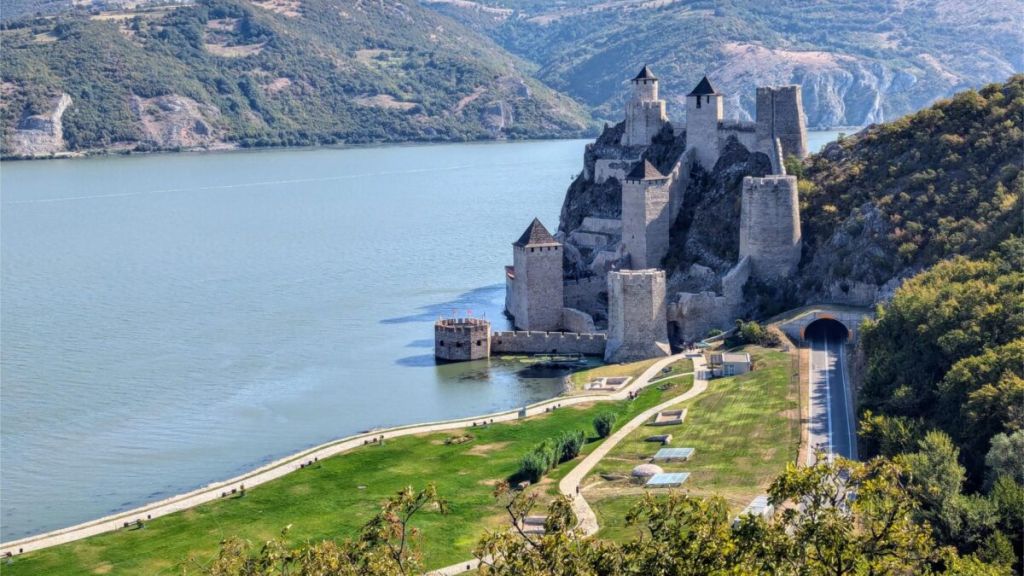
East of Belgrade, the Danube defines Serbia's border with Romania and Bulgaria for over 600 km. The river corridor holds a concentration of historical sites unusual for its length: the Ottoman fortress at Ram, rebuilt 2017–2019 with 1.5 million euros from Turkey; the Roman legionary city of Viminacium, where excavations since the late 19th century have exposed only 3–4 percent of the total site; and the medieval fortress at Golubac, restored by the EU in 2019.

Between these fixed points, Srebrno Jezero (Silver Lake), a 14-km former arm of the Danube dammed in 1971, serves as Serbia's inland sea substitute. Further east, the Đerdap National Park protects Europe's largest river gorge landscape. The road along the Serbian bank also provides a clear view across to the rock-carved face of the Dacian king Decebalus on the Romanian shore — visible only from this side.

Along the Danube: fortresses, ruins, and the Iron Gate

Drawing on Matthias Pasler's Reise-Taschenbuch Serbien: the eastern Danube corridor is where Serbia's Roman past is most concentrated. Eighteen Roman emperors were born in the territory of present-day Serbia — more than any other country except Italy. The legionary city of Viminacium, between the 1st and 5th centuries AD, reached a population of 30,000, issued its own coins, and hosted the conference at which Constantine the Great's sons divided the empire after his death. It fell to Attila's Huns around 441 AD and was never rebuilt.

What has been excavated — officially just 3–4 percent of the site — includes a mausoleum, heated baths, and a partially reconstructed amphitheatre. The adjacent Mammutpark displays two nearly intact mammoth skeletons found at the site, estimated to be between 400,000 and 1 million years old, exhibited at their original excavation points.

Further downstream, the Ram Fortress, built in 1483 by Sultan Bāyezīd II, was reconstructed 2017–2019 using archaeological evidence to match original materials and construction methods. The funding — 1.5 million euros — came entirely from Turkey. The fortress's most distinctive feature is a west-facing balcony whose only apparent purpose was viewing the Danube.

River features to notice as you travel

Confluence landscapes

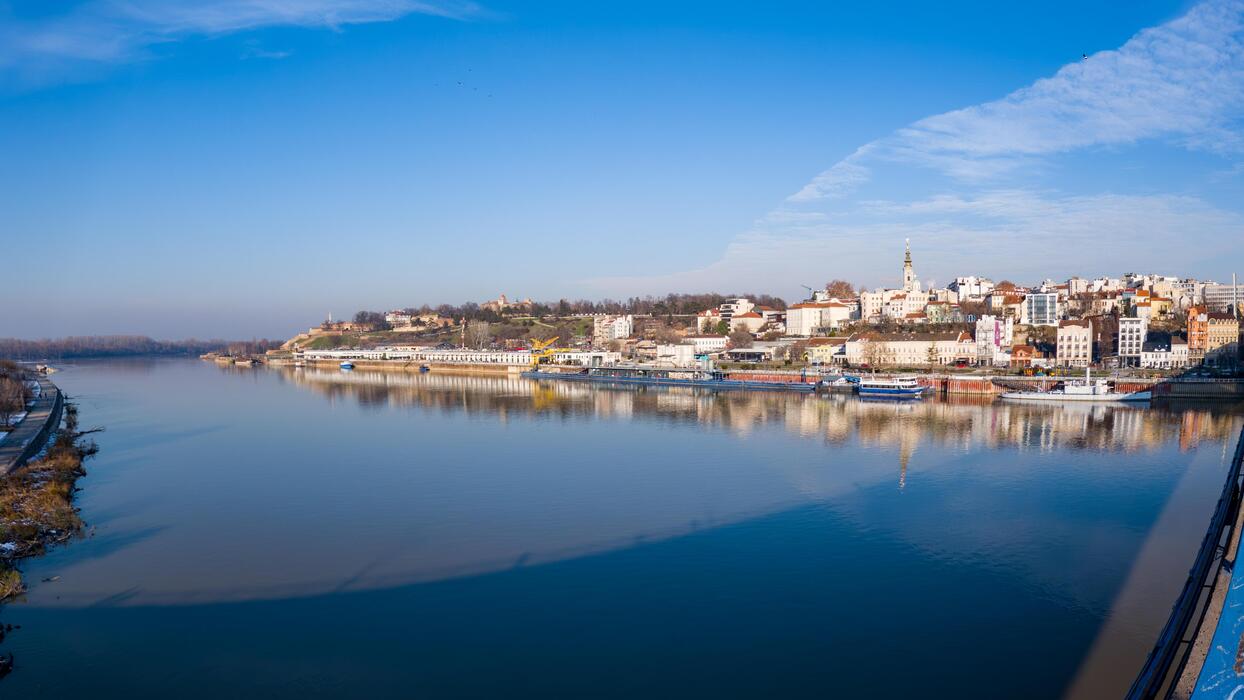
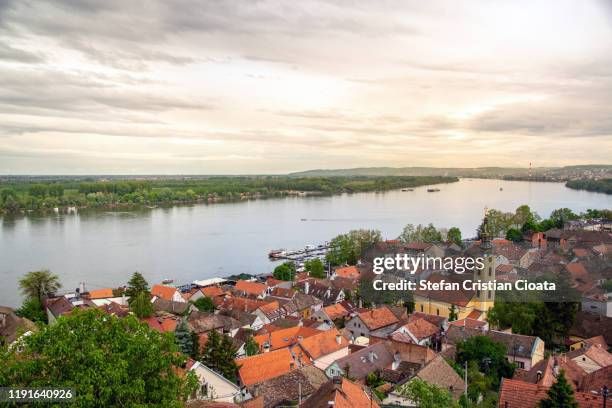
In Belgrade, the meeting point of the Sava and Danube shapes promenades, fortress views, and riverbank walks. It is the most accessible place to read the river from the city.

Gorges and narrow passages

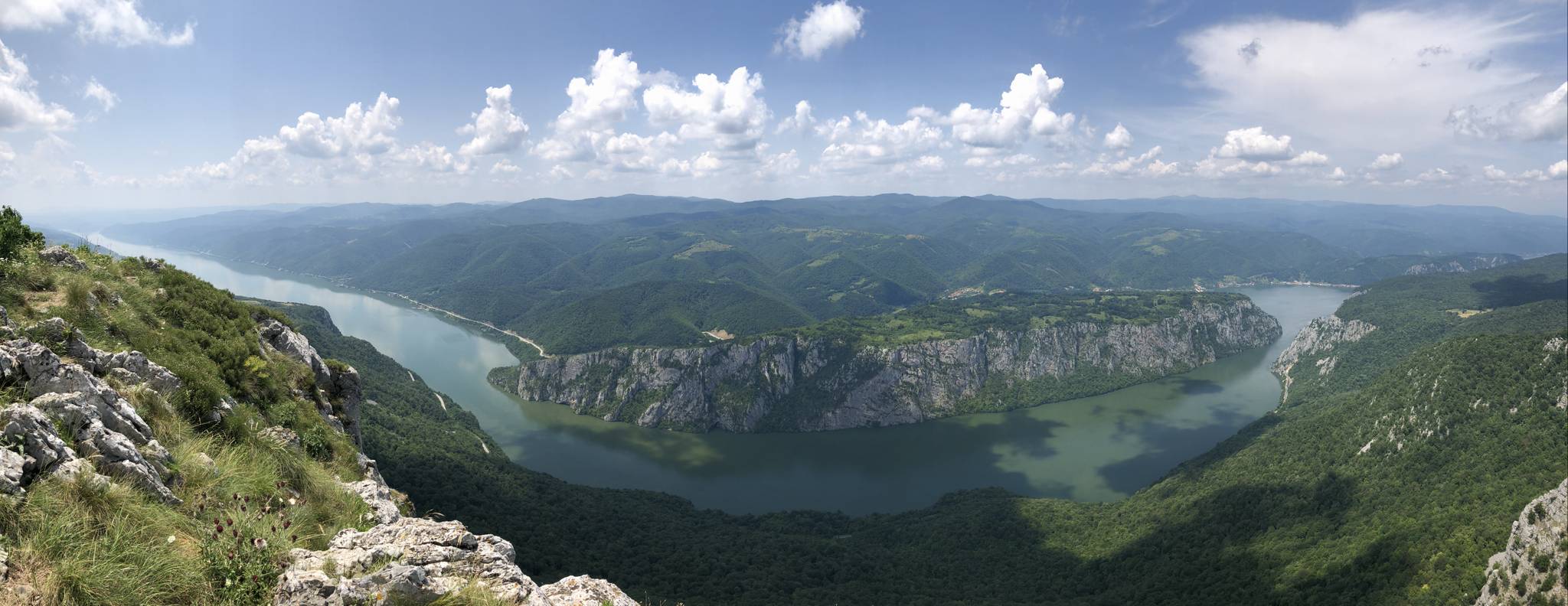
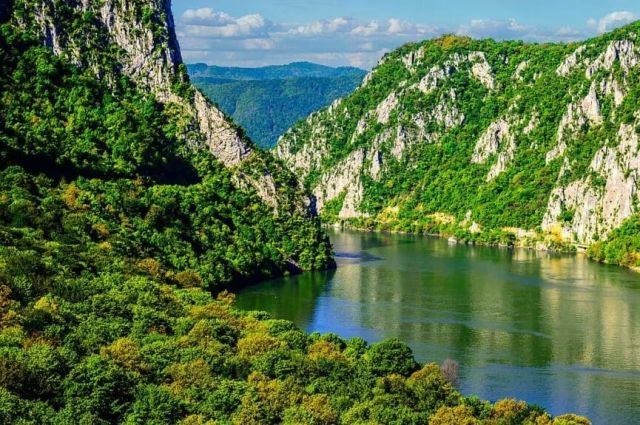
Further east, Đerdap brings steep walls, tighter bends, and long views across the water. This is the section many visitors come for when they want a more scenic Danube experience.

Đerdap National Park and the Iron Gate

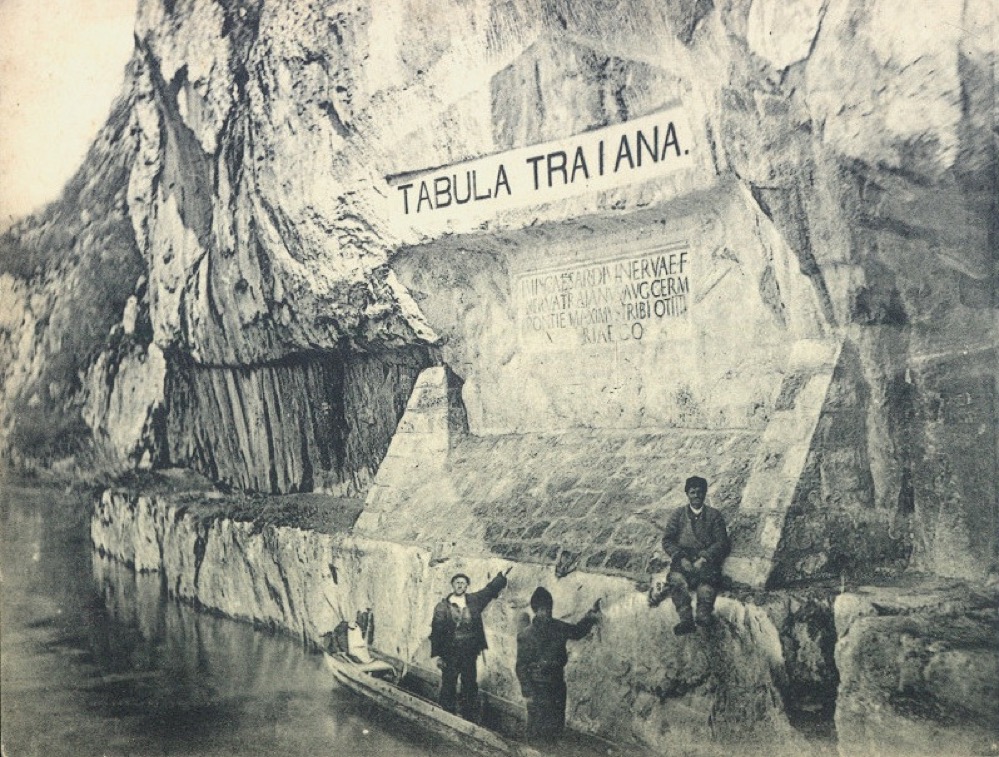
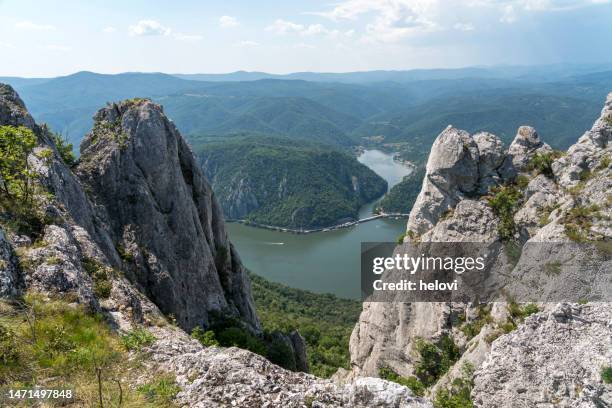
The Đerdap National Park protects Europe's largest river cliff landscape at the Iron Gate (Eisernes Tor), where the Danube narrows between high rock walls before opening into Romanian and Serbian lowlands. The Iron Gate Hydroelectric Dam (Đerdap I), built jointly by Romania and Serbia, raised the Danube level significantly when completed — a change that permanently altered the gorge's appearance and required the relocation of several settlements, including the town that became Donji Milanovac. Built largely from prefabricated panels and today showing its age, Donji Milanovac serves as the main logistical base for the national park; the Đerdap Information Centre, opened here in 2019, provides current access information.

The riverside road through the gorge is also the best viewpoint for the carved face of Decebalus, the Dacian king, cut into the Romanian cliff face. The EuroVelo 6 cycling route follows the Danube through this section, and the stretch through the Đerdap gorge is among the more dramatic segments of the entire river route.

Near Šalinac, a forest of some 200 trees — many up to 200 years old, most of them dead and standing — covers approximately 200,000 m² in a landscape that Pasler describes as resembling a Tim Burton film set. The location is not marked and requires asking locally for directions.

A simple 3-day Danube route

This route keeps transfers manageable and leaves room for viewpoints and meals.

Belgrade and the river confluence
  • Walk Kalemegdan and the riverfront
  • See where the Sava meets the Danube
  • Stay overnight in Belgrade or Zemun
Golubac and the approach to Đerdap
  • Drive east along the river corridor
  • Stop at Golubac Fortress
  • Add short viewpoints and village lunch stops
Đerdap National Park
  • Choose a boat ride or scenic drive
  • Pause at gorge viewpoints
  • Keep time for a slower return journey
If you prefer a city-and-river split, add Novi Sad as a northern base and compare the trip with the Danube-facing side of Vojvodina.

Danube route map

Use this map to orient the main Danube corridor from Belgrade east toward Golubac and Đerdap.

Quick facts

Best for

Slow travel, fortress stops, nature drives, and Danube viewpoints

Top park

Đerdap National Park for gorges, cliffs, and river scenery

Good base

Belgrade for access; Novi Sad for a northern river stay

Frequently asked questions

Can I travel the Danube in Serbia without a car?

Yes, but it is easier in parts than others. Belgrade is walkable, and some excursions run from the city. For Golubac and Đerdap, a car or guided transfer makes the route simpler.

Which section of the Danube is best for scenery?

The eastern stretch near Đerdap is the most distinct for river scenery, with cliffs, bends, and viewpoints. The Belgrade section is better for city views and river confluence landscapes.

Where should I start if I only have two days?

Start in Belgrade, then choose either Golubac or a shortened Đerdap day trip. That gives you a balanced mix of fortress history and river landscape.

How does this route connect with other Serbia guides?

It links naturally with Belgrade, Eastern Serbia, Golubac Fortress, and the main Serbia country guide, which makes it easy to expand into a longer itinerary.

Build your Serbia route around the Danube

Start with the river, then add the city, fortress, and park stops that suit your pace. If you are planning a longer trip, use the Danube as the spine and branch into nearby Serbia regions from there.

Return to Serbia Travel Guide