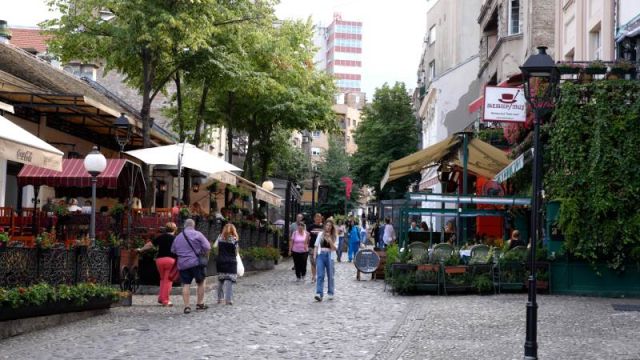
Skadarska Street, Stari Grad, Belgrade, Serbia

Skadarlija is a short, central dining street in Stari Grad rather than a gated attraction. You visit for traditional kafanas, older facades, outdoor tables and live acoustic music, usually in the late afternoon or evening. The quarter itself has no published area-wide opening hours, ticket price, phone number or booking link. If you are building a wider stay, the Belgrade Travel Guide helps place Skadarlija among the city center’s other walkable stops.
Skadarlija is a short, sloping pocket of Stari Grad gathered around Skadarska Street, only a few minutes from Trg Republike and the National Theatre. It grew out of a 19th-century area of taverns and artisans and gradually became the bohemian address many visitors in Belgrade recognize first. What tends to stay with people is not one landmark but the whole setup of the lane itself: older facades, closely placed tables outside, and a street that encourages you to slow down. In mid-afternoon it is easier to look around; after sunset, diners and musicians take over the rhythm of the quarter.
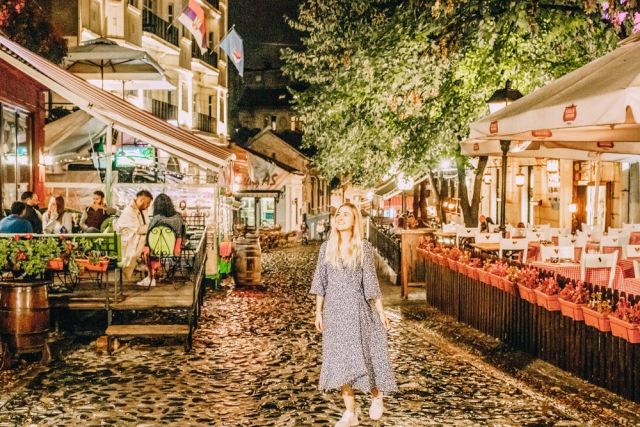
Skadarlija is known for kafanas rather than club-style nightlife. Its character comes from a specific combination: grilled meat dishes, long meals, live acoustic music, and dining rooms that still lean on carved wood, framed photographs and formal table service. That mix feels different from newer restaurant streets because the quarter’s identity depends on continuity rather than reinvention.
Names such as Tri šešira, Dva jelena and Zlatni bokal work as both restaurants and pieces of cultural memory. The food associated with the street includes ćevapi, veal under the sač, sarma and house wines. Music matters here, but it is usually part of the room rather than a staged performance. On busier evenings you are likely to hear tamburica, familiar folk standards and singers moving from table to table, which is why Skadarlija remains Belgrade’s most recognizable preserved eating district.
These are the visual cues most travelers notice first: the lane itself, older facades and the named kafanas that anchor the quarter’s identity.
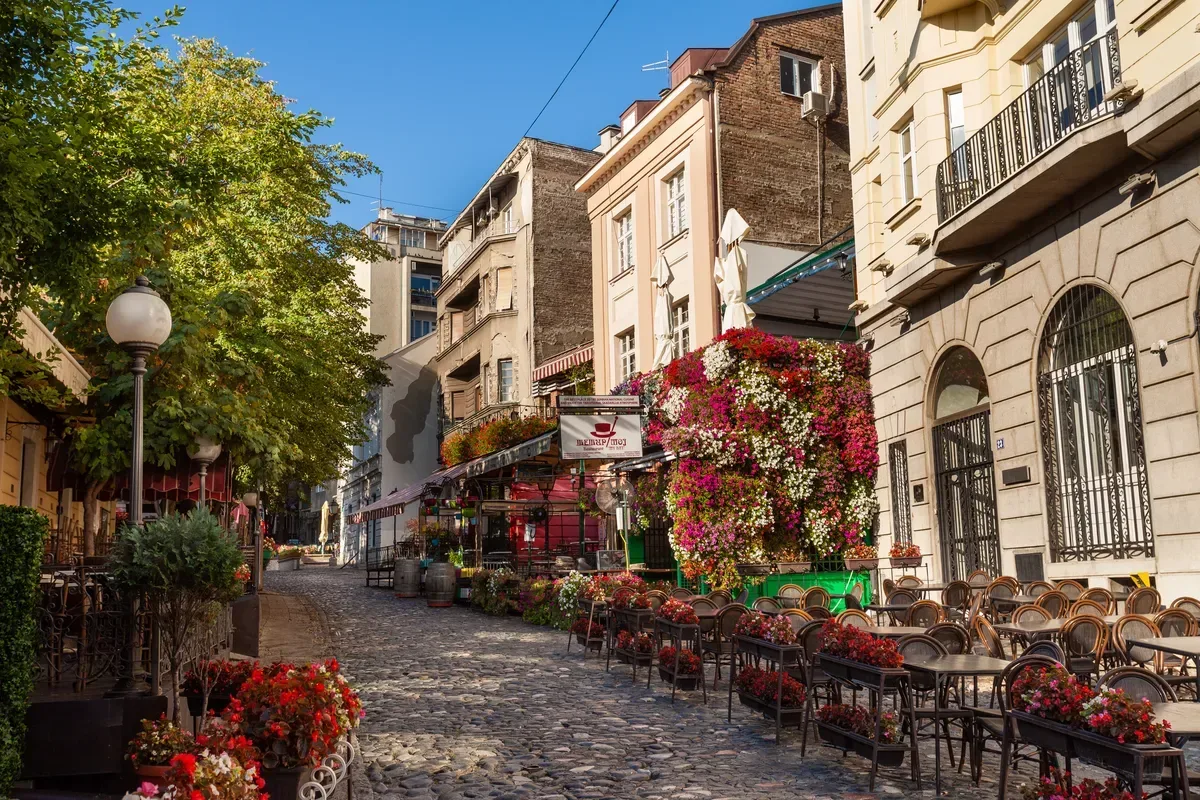
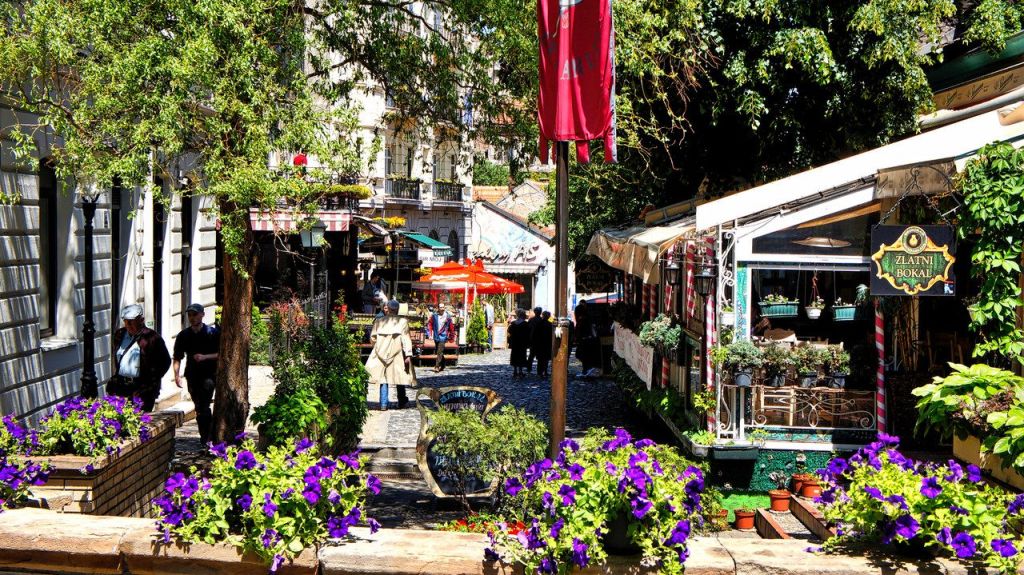
Skadarska Street in Skadarlija
The short sloping lane, cobbles and outdoor tables are the core of the quarter rather than any single monument.
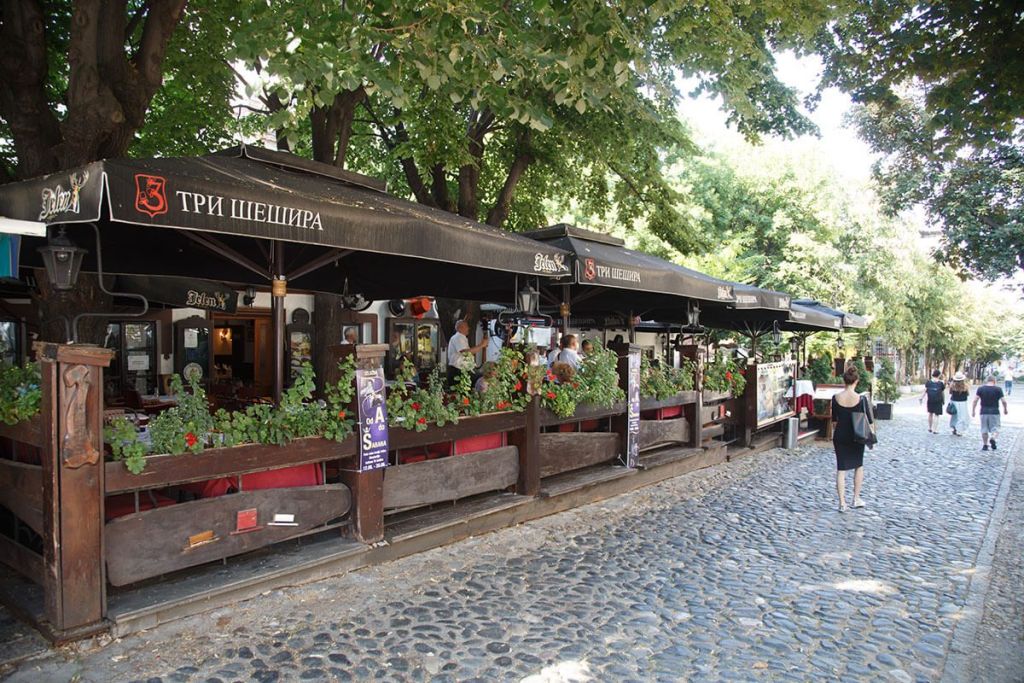
Tri šešira in Skadarlija
One of the established kafana names tied to the street’s preserved bohemian image.
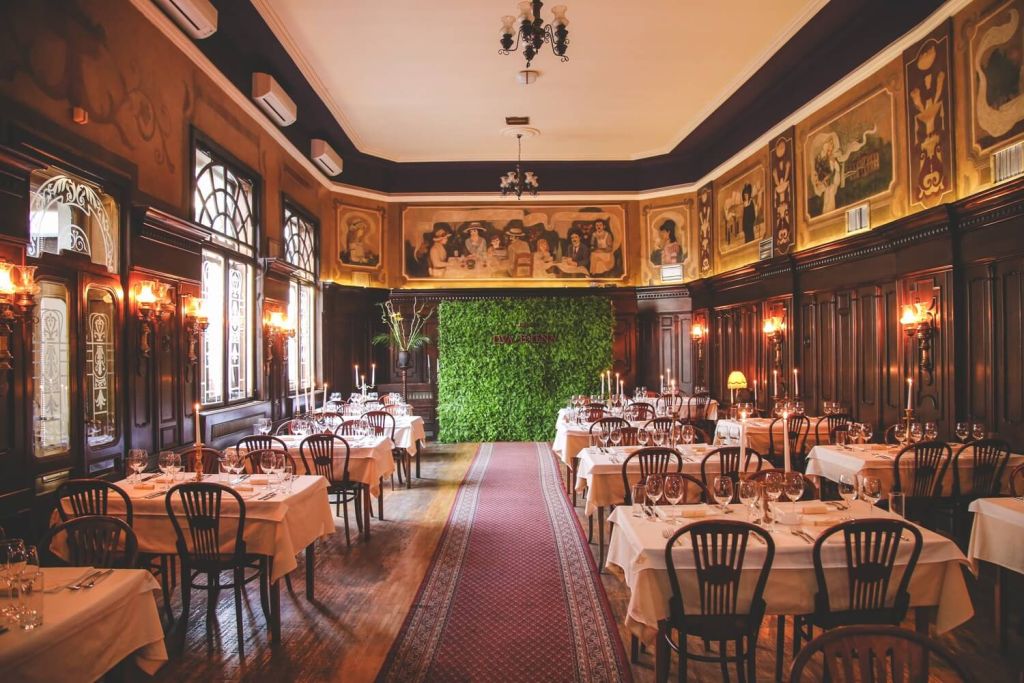
Dva jelena on Skadarska Street
An older dining address associated with Skadarlija’s traditional table-service culture.
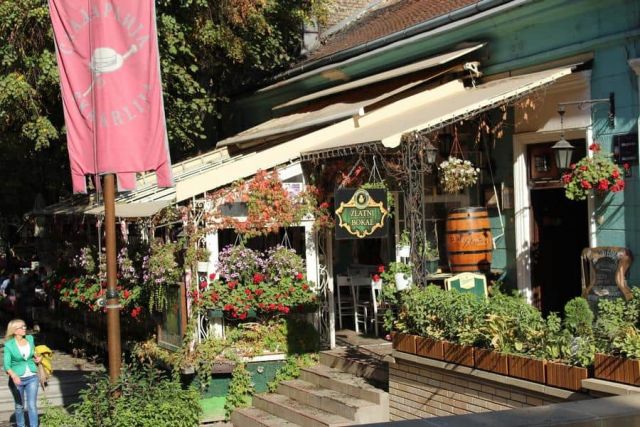
Zlatni bokal in Skadarlija
A kafana name frequently mentioned when describing the quarter’s continuity and menu style.
Because Skadarlija sits in central Belgrade, most visitors arrive on foot. The simplest approach is from Trg Republike: walk behind the National Theatre through the side streets and you are there in about 5 to 7 minutes. From Knez Mihailova Street, allow roughly 10 to 12 minutes depending on where you start. Coming from the riverfront or Dorćol, the walk is still usually about 15 minutes.
The nearest public transport stops are Trg Republike and Studentski trg. Common central routes include buses 24, 26, 31 and 37, plus trolleybuses 28, 40 and 41, subject to timetable changes. A taxi from the main rail or bus area, or from New Belgrade, is usually a short city-center ride, often around 500 to 900 RSD from nearby central districts and more from across the river. Parking around the quarter is limited, so a central garage is generally easier than trying to stop directly on Skadarska Street.
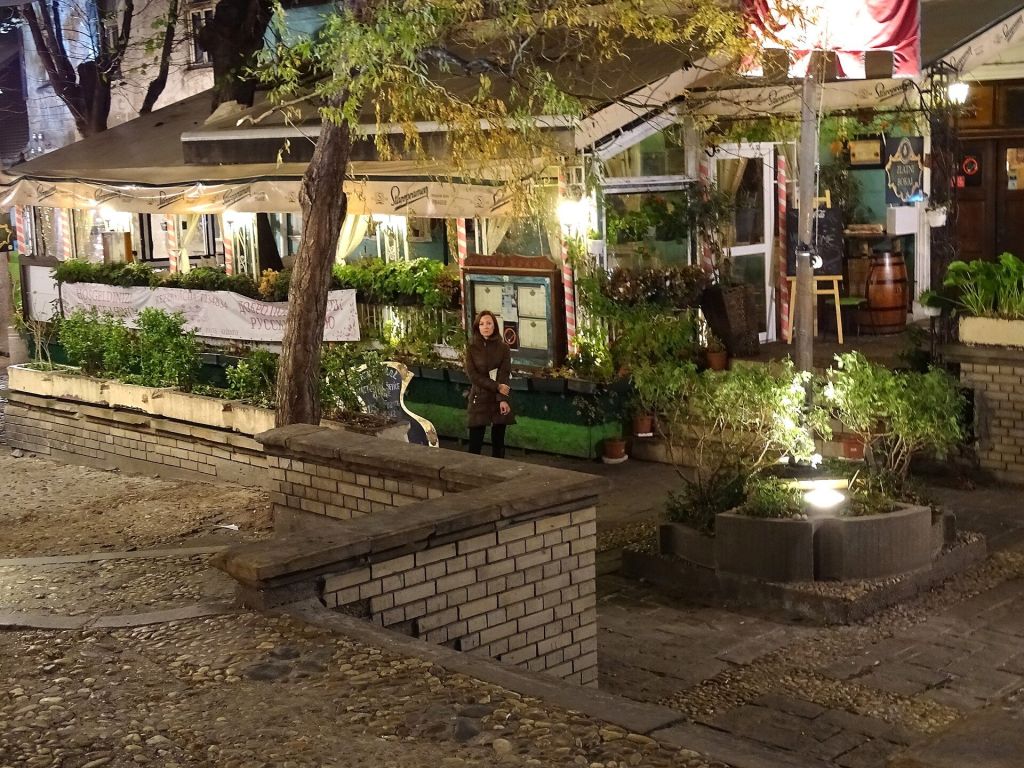
No attraction-wide opening hours are published for Skadarlija as a whole. The sources treat it as an open street and dining area rather than a ticketed site. In practice, late afternoon to evening is the most useful window. If you want to walk the cobbles, compare menus and choose a table without the full dinner crowd, arriving before 7 pm is the easier option.
Going later still makes sense if Skadarlija is part of your first evening in Belgrade, because that is when the street is busiest with diners and music. Wear flat shoes for the cobbles, and on weekends it is sensible to reserve with your chosen kafana in advance.
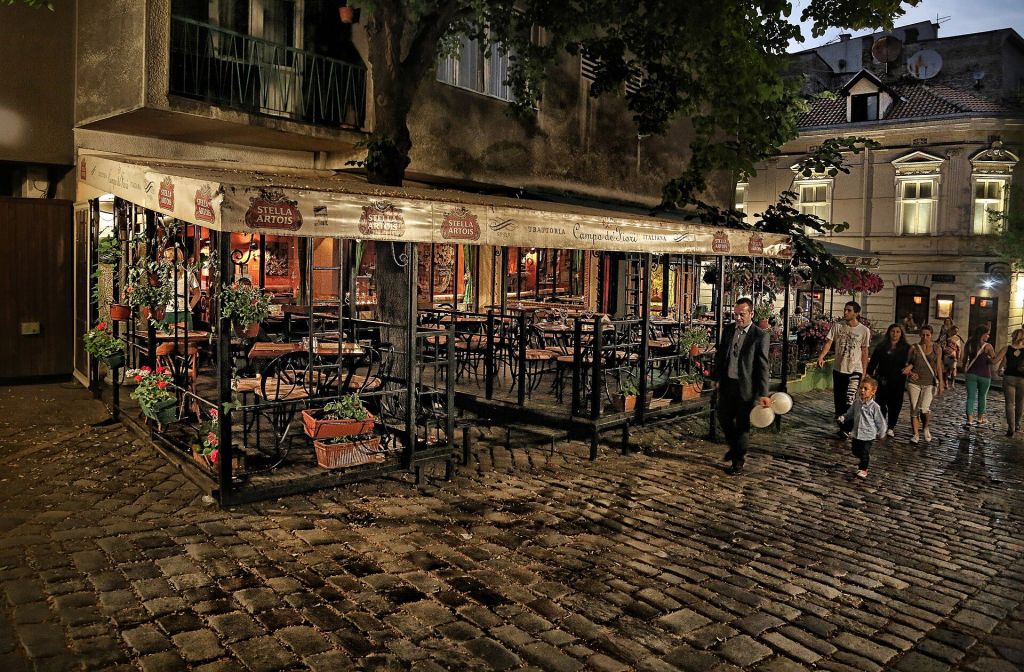
Expect an older dining quarter rather than a polished modern restaurant zone. The cobbles are uneven, some terraces involve a few steps or shallow slopes, and tables can be quite close together. Dress is usually casual-smart rather than formal, although many people do treat dinner here as an occasion.
Families are comfortable earlier in the evening, but later hours lean more adult and the noise level rises once live musicians begin moving between tables. Bring a card, but carry some cash too, because smaller places do not always handle payment in the same way. If you need step-free access, check the exact entrance of the place you choose in advance, since the old street layout can be awkward for wheelchairs and strollers.
Operational details for the quarter itself are limited because Skadarlija is an open street rather than a single managed venue. Where area-wide hours, phone numbers, prices or booking links were not published in the supplied sources, they are marked as not published.
Skadarlija runs along Skadarska Street in Stari Grad, a short walk from Trg Republike and the National Theatre.
The supplied sources name these places as part of Skadarlija’s preserved kafana identity. Venue-specific prices and hours were not published in the source set used for this page, so they are marked accordingly rather than guessed.
Tri šešira
A classic Skadarlija kafana associated with the quarter’s long-running bohemian image.
Found on Skadarska Street, Tri šešira is one of the names most closely tied to the quarter’s dining tradition, where grilled dishes, slow meals and live background music define the experience.
Dva jelena
Another established kafana that sits at the center of Skadarlija’s cultural-memory dining scene.
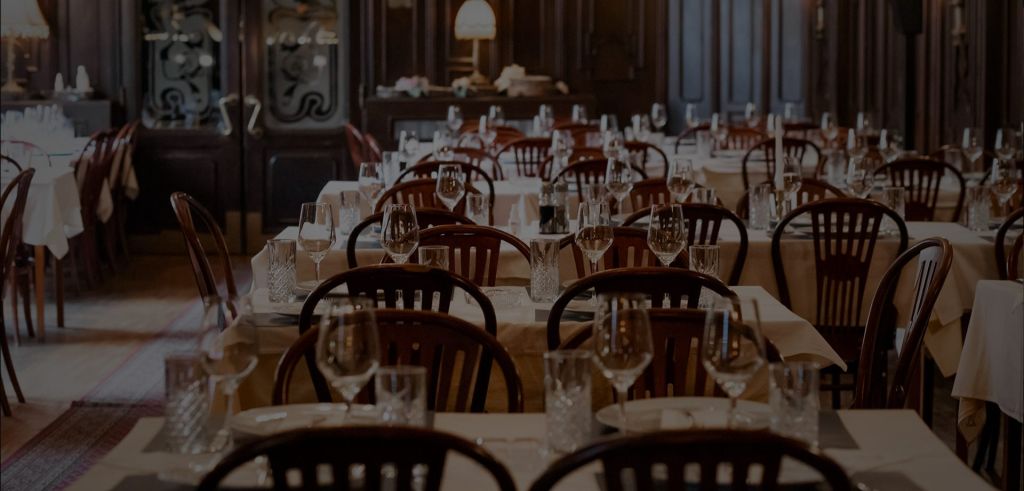
Dva jelena is part of the cluster of older dining rooms that make Skadarlija recognizable: table service, traditional specialties and music that stays in the background rather than turning into a stage show.
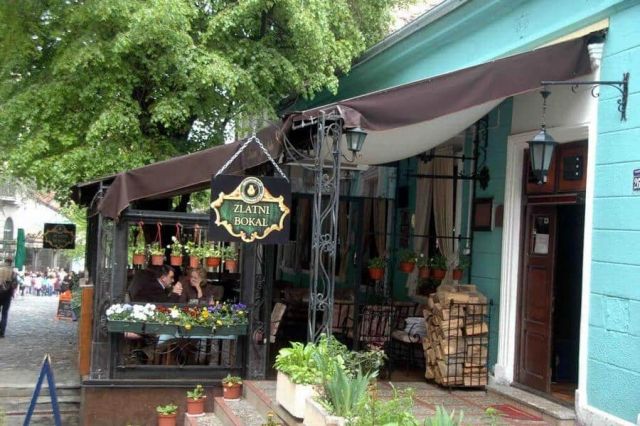
Zlatni bokal
A named Skadarlija address connected with the quarter’s established kafana style.
Zlatni bokal belongs to the group of places that keep the quarter focused on Serbian classics such as ćevapi, sarma, veal under the sač and house wine, framed by older interiors and live acoustic music.
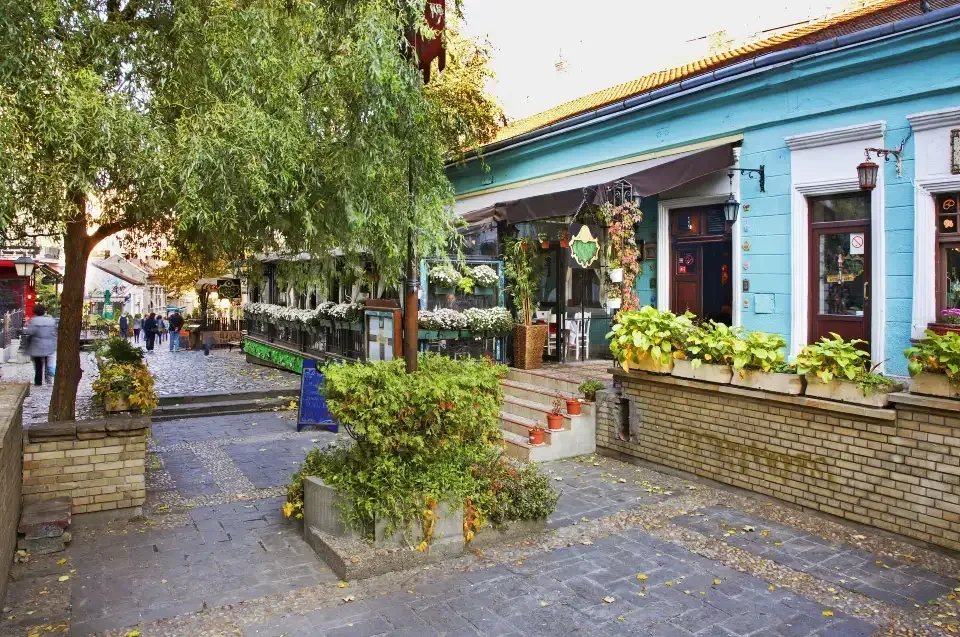
Skadarska Street terrace row
The outdoor table line is part of the quarter’s identity even when you are only stopping for a short look.
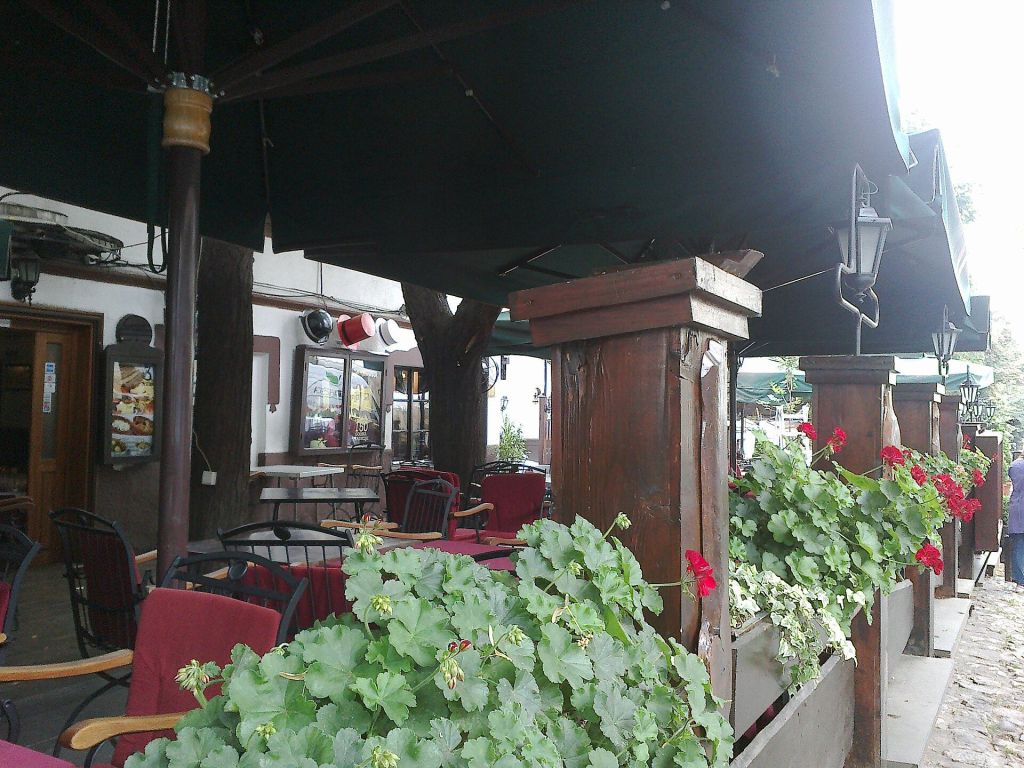
If you are deciding where to sit, the terrace stretch itself helps you read the street: older facades, tables close to the cobbles and musicians circulating more often later in the evening.
Skadarska Street, Stari Grad, Belgrade, Serbia
Trg Republike and the National Theatre
Bohemian kafanas with traditional food and live acoustic music
Quarter itself: no ticket price published; restaurant pricing varies by kafana
Late afternoon to evening; before 7 pm for an easier table search
Not for the street itself; sensible for popular kafanas on weekends
No area-wide opening hours published
Not published for the quarter
tob.rs/en/what-to-see/belgrade-attractions/skadarlija
The street itself does not require booking, but weekends and later dinner hours are busier. For a specific kafana, reserving ahead is a sensible step, especially if you want an outdoor table or are arriving after 7 pm.
The source material links the quarter’s identity to traditional kafana dishes rather than tasting menus: ćevapi, veal under the sač, sarma and house wines are the reference points to look for on menus.
A simple plan is to ride toward Trg Republike or Studentski trg and finish the last stretch on foot. The final approach is short, and it avoids dealing with limited parking around the quarter.
Payment methods can vary by place, so keeping some cash alongside a card is practical. For wheelchairs or strollers, check the entrance layout of the exact kafana you plan to use rather than assuming the old street will be fully step-free.
No. The sources describe Skadarlija as an open street and dining quarter, not as a ticketed site.
No area-wide opening hours were published for the quarter itself. In practical terms, late afternoon to evening is the most useful visiting window.
You do not need one to walk the street, but reserving a specific kafana is a sensible idea on weekends or if you want dinner later in the evening.
Usually about 5 to 7 minutes on foot if you walk behind the National Theatre through the side streets.
Yes, especially earlier in the evening. Later on, the quarter becomes noisier and more adult in tone once musicians begin circulating between tables.
Not always. The cobbles are uneven, some terraces have steps or shallow slopes, and entrance conditions vary by venue, so it is best to check the exact place in advance.
Skadarlija works well on the same day as the central pedestrian zone, Trg Republike and nearby Old Town walks.
Stay connected in Serbia