Golubac Fortress
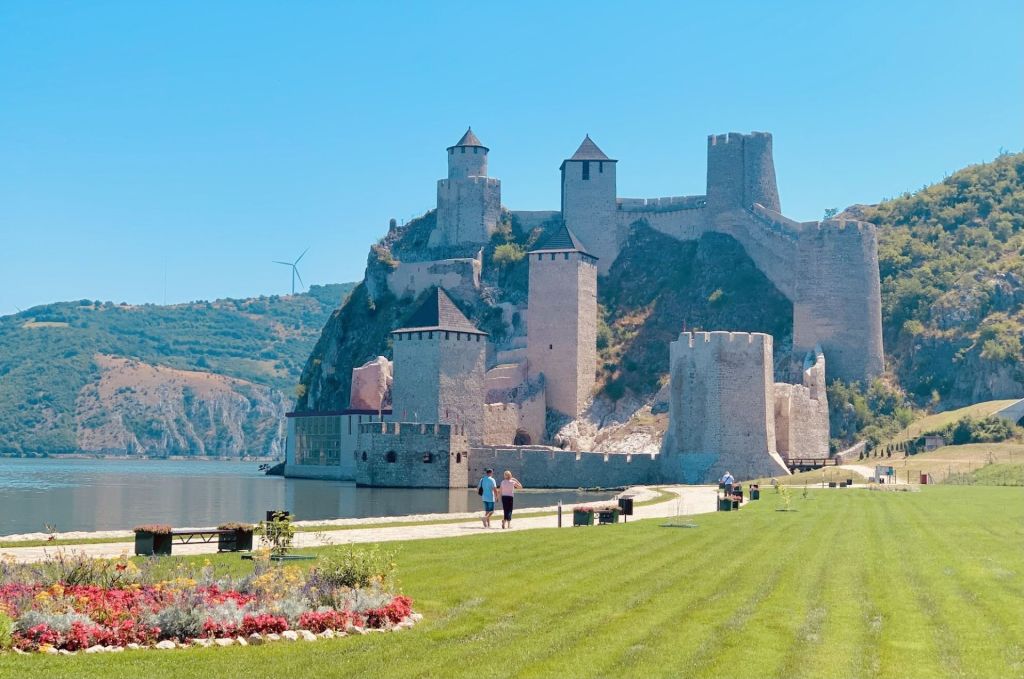
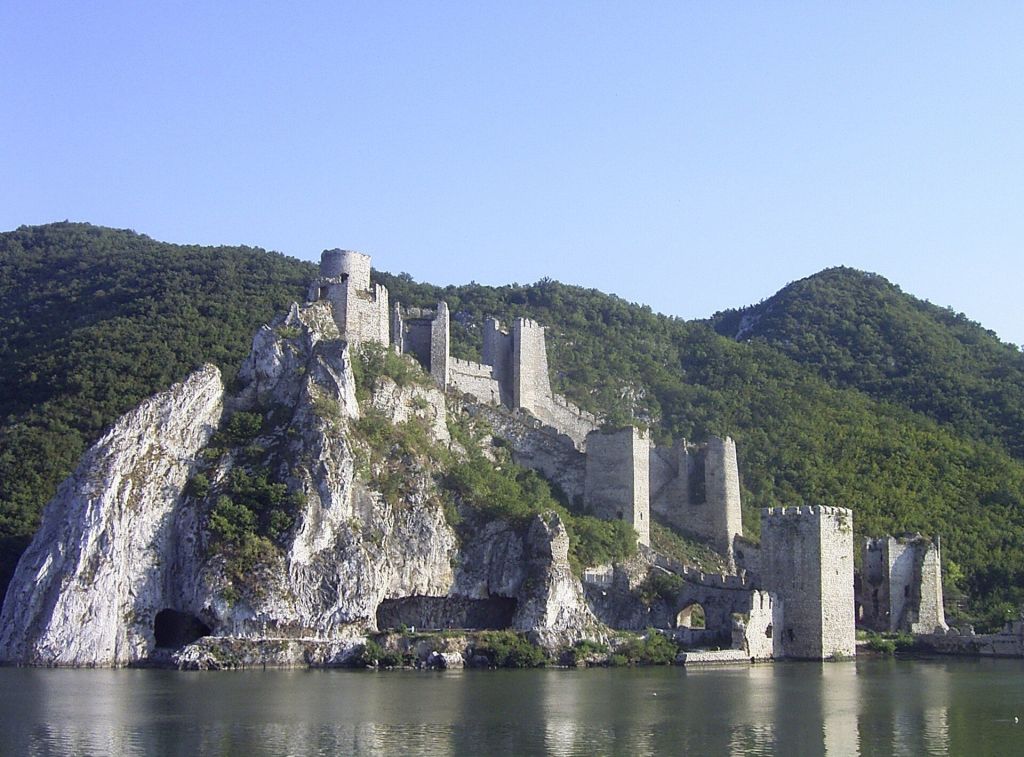
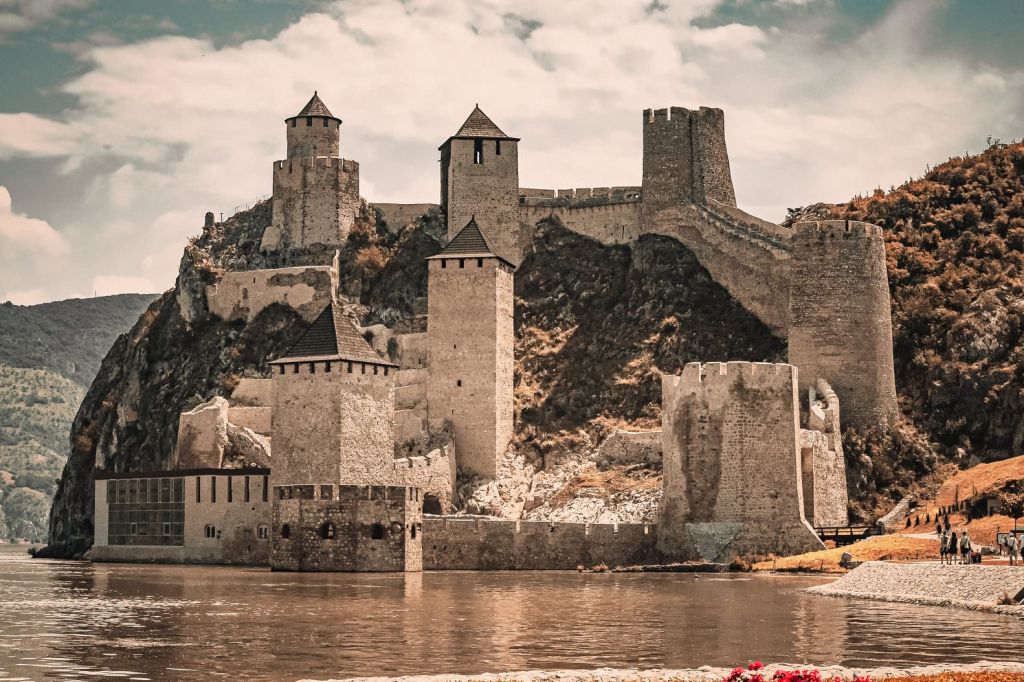
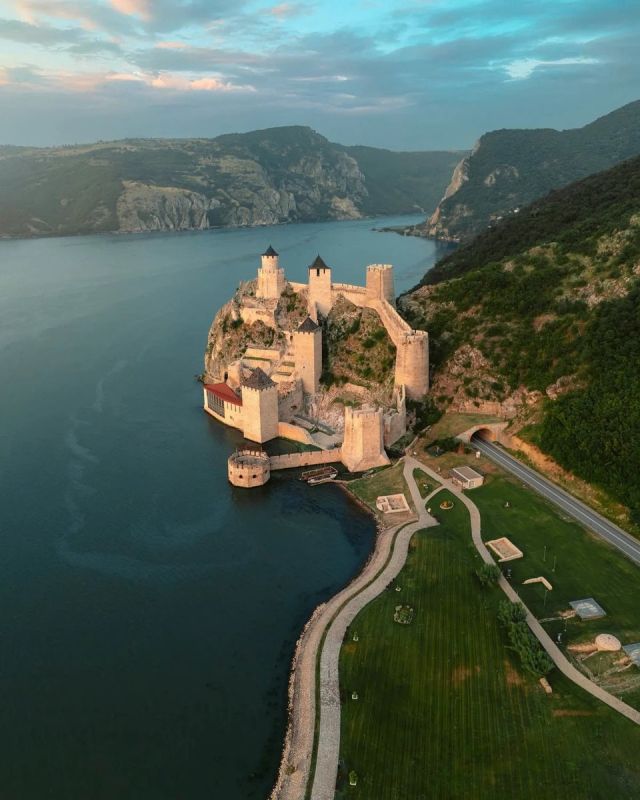
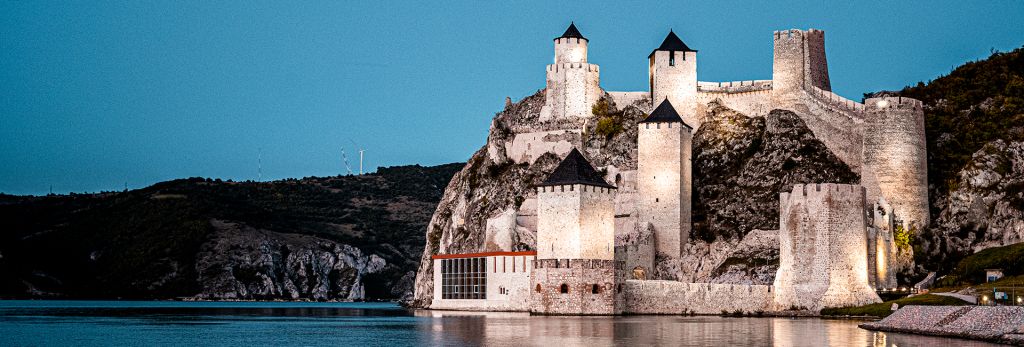
Golubac Fortress is a fan-shaped stone stronghold built into cliffs above the right bank of the Danube, with a palace and nine towers rising from the riverside to the citadel. Most of the visible complex dates from the 14th century, though archaeology has shown that this site mattered long before the medieval walls. It is best known for its command over the river entrance to the gorge. The lower route feels structured and museum-like, while the upper sections quickly become narrow, steep and exposed.
Guardian of the Iron Gates at Golubac Fortress
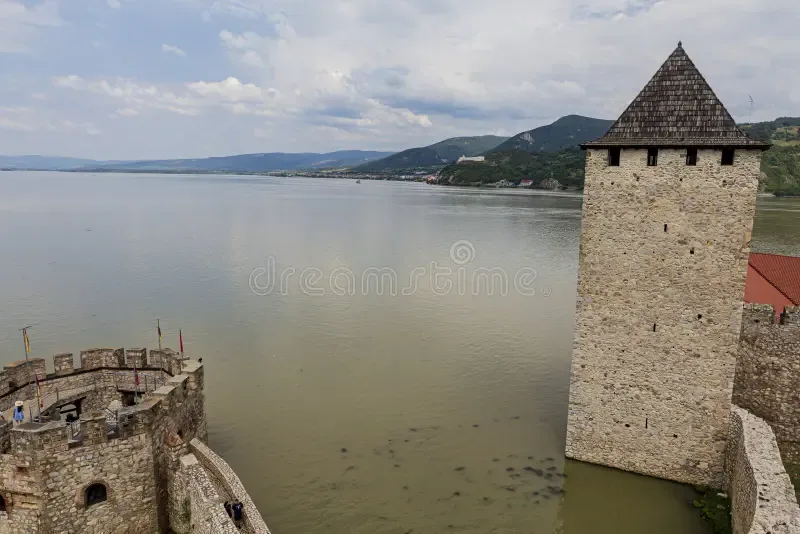
The fortress mattered because this part of the Danube was a checkpoint in both directions. West of the site, the river still reads as open water and broad banks; east of it, the landscape begins its transition into the tighter Iron Gates setting. Anyone moving by boat or along the land corridor below the cliffs had to pass beneath these walls. Medieval authorities could reinforce that control with a chain stretched toward the Babakaj rock in the river, turning geography into a customs and defence line. That is why Golubac feels different from an inland hill fort: it was built to watch, tax, delay and defend movement through the Lower Danube.
History of Golubac Fortress
Golubac Fortress is first documented in Hungarian sources in 1335; its exact construction date and patron are unknown. Archaeology also shows that the location mattered before the medieval stronghold, with Roman and Byzantine remains uncovered during recent conservation work.
- 1335: first written reference in Hungarian sources.
- 14th century: Golubac stood on a shifting frontier and passed through periods of Hungarian and Serbian control.
- Early 15th century: the upper complex, chapel and palace phase are generally associated with the period of Despot Stefan Lazarević.
- 1428: the Battle of Golubac brought a major clash between Hungarian forces and the Ottomans; Zawisza the Black was killed during the retreat.
- 1458: the Ottomans took the fortress under Mahmud Pasha, after which artillery changes reshaped parts of the defences.
- 16th–18th centuries: the site remained a contested Ottoman-Habsburg frontier position.
- 1867: the Ottoman garrison withdrew and the fortress passed into modern Serbian control under Knez Mihailo Obrenović III.
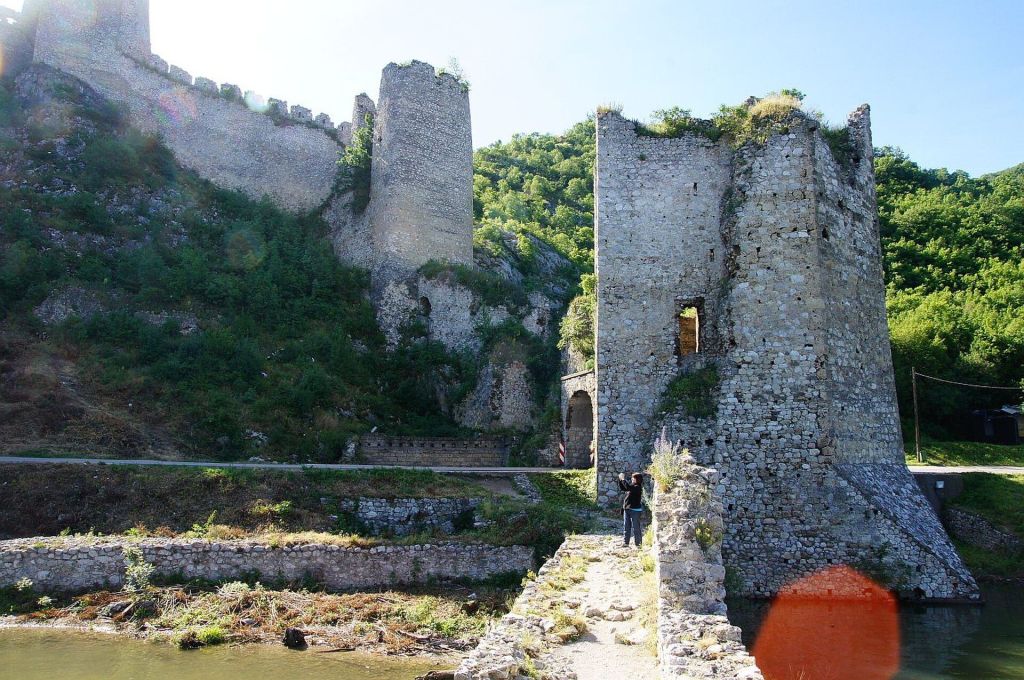
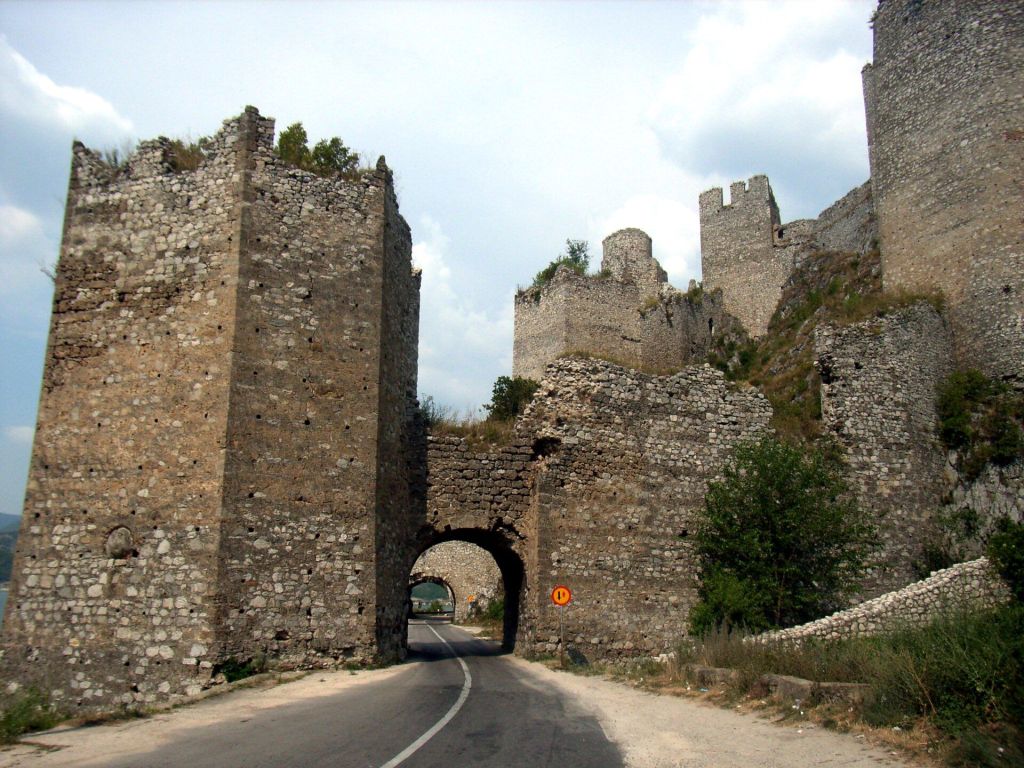
- 20th century: the road driven through the base of the site damaged the historic setting.
- 2010s: archaeological and conservation work exposed older structures, waterworks and the hammam area.
- 29 March 2019: the restored complex reopened to the public.
Local stories about Golubana and Baba-kaj belong to folklore. They are part of the place's cultural memory, but not firm evidence for the fortress's historical origins.
Palace, towers and defensive architecture at Golubac Fortress
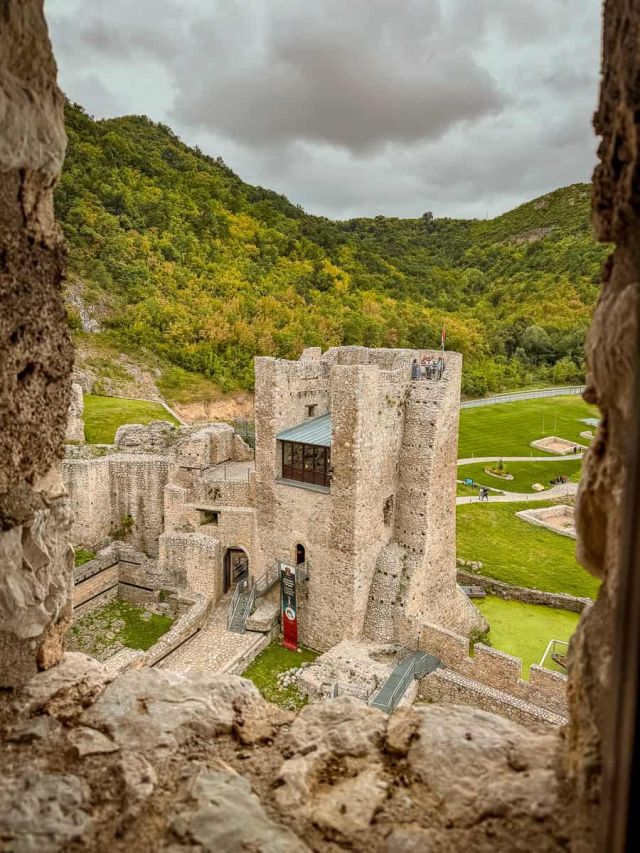
The restored complex is officially presented as a palace and nine towers connected by defensive walls. Its plan follows the rock rather than a neat geometric scheme, dividing the stronghold into front, rear and upper sections with both inner and outer lines of defence. The Main Gate controls the practical entrance through the lower part of the fortress, while the upper route leads toward the donjon, often called the Hat Tower, the visual symbol of the site.
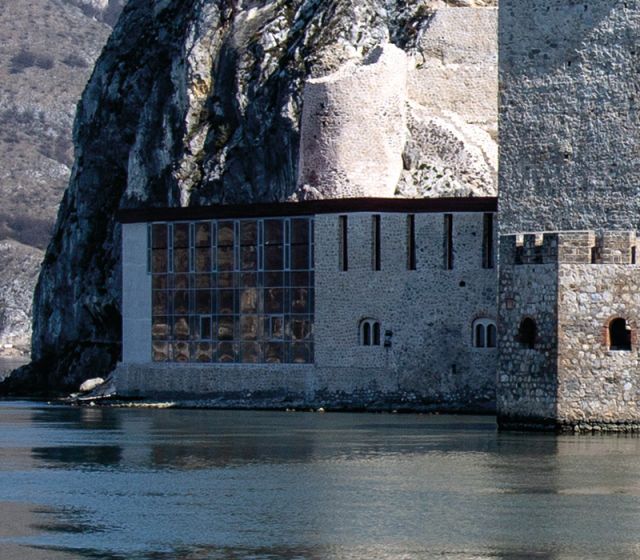
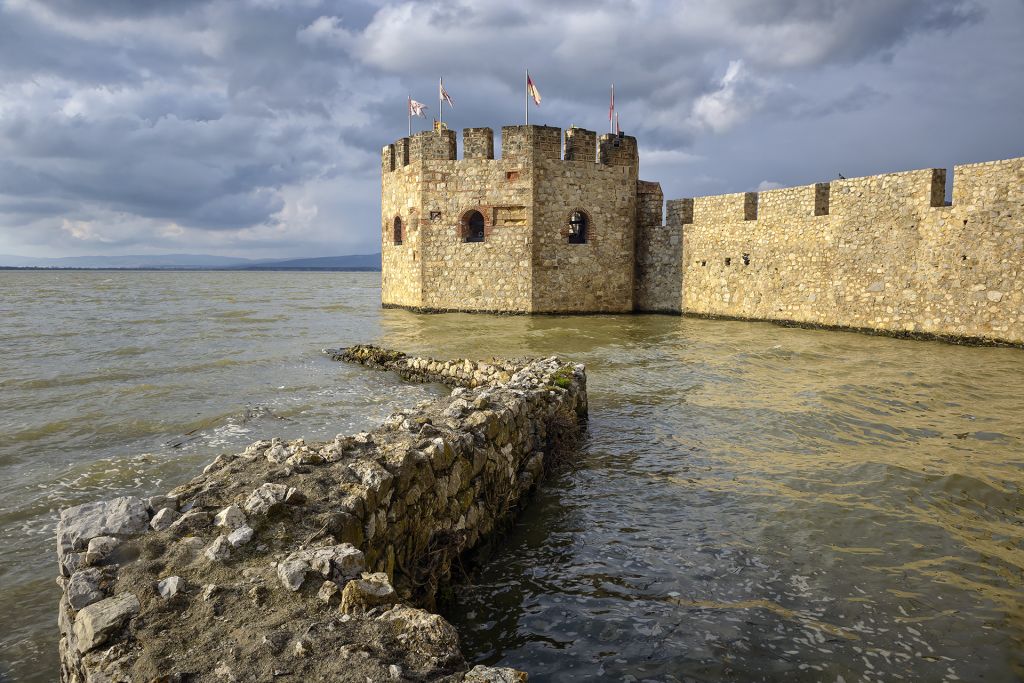
The Palace anchors the visitor experience because it is both historical fabric and exhibition space. Higher up, a chapel built into one of the towers points to the fortress's local Christian context before later frontier shifts. The ramparts show how movement inside the fortress was designed for defence, not comfort. At the river edge, the Cannon Tower and the low harbour-facing defences explain how Golubac watched shipping and protected access to the water. A wide-view photo of Golubac Fortress helps before arrival because it makes the relationship between the lower walls, the riverside towers and the upper cliff-line much easier to read.
Artillery changed the site over time. Early square towers belonged to a pre-gunpowder logic; later reinforcements, cannon openings and the lower artillery work show how the Ottomans adapted the fortress once firearms became central to warfare.
Exhibitions and the archaeological park at Golubac Fortress
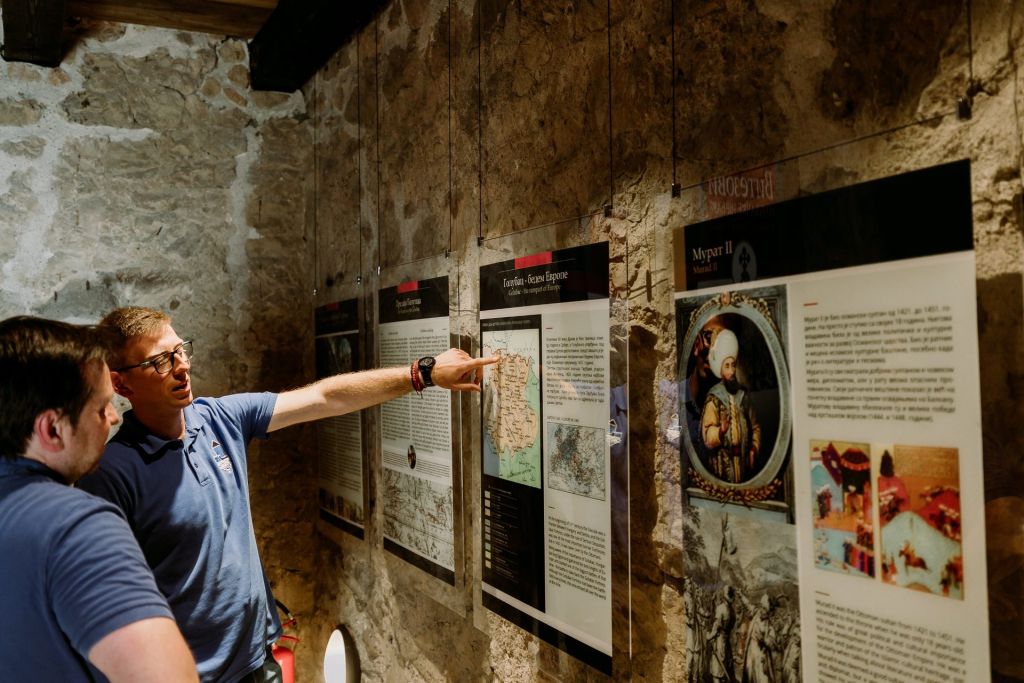
Golubac Fortress is more rewarding if you treat it as an interpreted historical complex rather than only an exterior viewpoint. The Palace holds the main interpretation, including a digital timeline, interactive map, model and film that explain how the fortress worked in the Lower Danube borderland. For independent visitors, this is the clearest place to understand the site before climbing anything.
Other displays continue that story inside named towers. Tower 8 focuses on the Knights of Golubac and includes the figure of Zawisza the Black. Tower 5 presents the commanders of Golubac, helping visitors place the fortress within changing frontier administrations. The Cannon Tower explains river defence and the military logic of controlling the Danube approach. The Visitor Centre adds orientation before entry and helps first-time visitors understand the route structure.
Outside the walls, the archaeological park widens the timeline. It contains the remains of a Roman House, a medieval lime kiln and Mahmud Pasha's hammam. Together, these remains show that the site was important long before the restored medieval towers became the main attraction visitors know today.
Which visitor zone should you choose at Golubac Fortress?
Golubac Fortress uses four colour-coded visitor zones. The Green Zone is the baseline route and the only one open to visitors under 18. Blue, Red and Black are adult-only and progressively more demanding. Upper zones operate only when weather, safety, maintenance, guide availability and capacity permit.
-
Green Zone All visitors
Low–moderate difficulty. The most practical choice for a first visit.
- Includes
Palace, general lower route and Towers 9, 8 and 5
- Guide
No designated guide required for the basic route
- Footwear
Secure closed shoes recommended
- Best for
First-time visitors, families and travellers short on time
- Operating status
Normally the core route; Mondays excepted
-
Blue Zone Adults only
More demanding. Exposed stairs and uneven surfaces require confidence at height.
- Includes
Green Zone plus Towers 3 and 4
- Footwear
Secure closed shoes essential
- Best for
Fit adults comfortable with heights and uneven ground
- Operating status
Weather- and operations-dependent
-
Red Zone Adults only
Very demanding. A harder upper-fortress route with tightly controlled access.
- Includes
Green Zone plus Tower 7
- Guide and capacity
Designated guide required; maximum 5 visitors
- Footwear
Secure closed shoes essential
- Best for
Fit adults who want a harder upper route
- Operating status
May be suspended for safety, maintenance or staffing
-
Black Zone Adults only
Most demanding. The highest sections are intended for experienced, steady-footed visitors.
- Includes
Green and Blue elements plus the highest sections around the Hat Tower
- Guide and capacity
Designated guide required; maximum 2 visitors
- Footwear
Proper hiking footwear required
- Best for
Experienced adults with no fear of heights
- Operating status
Fri–Sun, 10:00–13:00; weather-dependent
The official visitor notes also make clear that the Blue route is not suitable for people uncomfortable with heights or with the possibility of encountering snakes. For all upper routes, weather, wind, heat, wet stone and operational limits matter as much as ticket type.
Tickets, opening hours and guided visits at Golubac Fortress
Golubac Fortress normally closes on Mondays. Ticket sales stop before the site closes, and upper-zone access can be suspended because of weather, safety, maintenance, guide availability or visitor capacity. Use the official ticket page as the reference point for changes rather than assuming that every route is available every day.
Seasonal tourist-area opening hours
| Period | Hours | Notes |
|---|
| Jan–Feb | 10:00–14:00 | Closed Mondays |
|---|
| Mar | 10:00–15:00 | Closed Mondays |
|---|
| Apr | 10:00–16:00 | Closed Mondays |
|---|
| May–Jun | 10:00–17:00 | Closed Mondays |
|---|
| Jul–Aug | 10:00–18:00 | Closed Mondays |
|---|
| Sep | 10:00–17:00 | Closed Mondays |
|---|
| Oct | 10:00–16:00 | Closed Mondays |
|---|
| Nov–Dec | 10:00–14:00 | Closed Mondays |
|---|
| Black Zone | Fri–Sun 10:00–13:00 | Guide required; maximum 2 visitors; weather-dependent |
|---|
Admission prices
| Ticket | Price | Includes |
|---|
| Green adult | 950 RSD | Green Zone, parking, Visitor Centre and Archaeological Park |
|---|
| Child 7–18 | 250 RSD | Green Zone only; under-18s do not use upper zones |
|---|
| Senior | 500 RSD | Green Zone |
|---|
| Group without guide | 800 RSD | Green Zone for organised groups |
|---|
| Group with guide | 850 RSD | Green Zone plus arranged guide service |
|---|
| Student / school | 350 RSD | Green Zone educational visit |
|---|
| Blue adult | 1600 RSD | Adult-only upper route when operating |
|---|
| Red adult | 1600 RSD | Adult-only route with designated guide |
|---|
| Black adult | 2500 RSD | Adult-only highest route with designated guide |
|---|
Information last checked: August 13, 2026.
Green Zone admission includes parking, the Visitor Centre and the Archaeological Park. Individual visitors can join a short Palace presentation every full hour; it lasts about 20 minutes and is offered in Serbian, English and Romanian, while the Palace also has a self-guided digital presentation. Pre-arranged group tours cover the Palace plus the exhibitions in Tower 8, Tower 5 and the Cannon Tower and last about 45 minutes. Organised groups should announce visits at least five days in advance by email to info@tvrdjavagolubackigrad.rs; the official pages also list tvrdjavagolubac@gmail.com and phone numbers +381 12 7160 882, +381 12 7160 883, +381 12 638 798 and +381 12 638 794.
Booking help for Golubac Fortress
Choose the help that matches your visit. We check the current official rules in English before anything is arranged.
For individual visitors choosing the standard Green Zone or an available adult-only upper route.
- Standard route
- Green Zone for all visitors
- Current adult price
- 950 RSD at last check
- Important
- Upper-zone sales may stop because of weather, capacity or safety
For organised groups or visitors who need a designated guide for a controlled upper route.
- Advance notice
- At least 5 days for group tours
- Reservation method
- Official request by email
- Upper routes
- Red and Black require a designated guide
Requesting concierge help is free. We confirm availability and any cost before arranging anything.
How to get to Golubac Fortress
Driving is normally the simplest option for Golubac Fortress from Belgrade. The site is about 129 km east of the capital, and the final approach is straightforward once you reach Golubac and continue along the Danube road for roughly 4 km toward the fortress. From Golubac town itself, the last stretch is a short drive.
Public buses generally serve Golubac town rather than the fortress entrance, so travellers arriving by bus need to arrange the final leg separately, usually by taxi, bicycle or on foot. Check a live timetable shortly before travel; intercity schedules change.
Walking or cycling from Golubac is possible, but the official warning matters: there is currently no separate cycle path along the complete route, so pedestrians and cyclists share the main road with motor traffic. From the town centre or Danube promenade, allow roughly 45–60 minutes on foot for the final distance. On-site parking is available, including reserved spaces for visitors with disabilities.
Best time to visit Golubac Fortress
Spring, early summer and early autumn are the easiest periods for a longer outdoor visit because the stone surfaces, ramps and exposed sections are more comfortable in moderate temperatures. In July, August, on weekends and on public holidays, earlier arrival makes the visit simpler and usually gives you calmer light for the river-facing viewpoints. Mondays are normally closed, so avoid building a one-chance stop around that day.
For planning, allow about 1.5–2 hours for a relaxed Green Zone visit, about 2.5–3 hours if you add an operating upper zone, and half a day if you also want a walk, a river view or time in Golubac town.
Wear secure closed shoes and bring water, sun protection, a light layer for wind near the Danube and rain protection when the forecast is unstable.
What to expect at Golubac Fortress
A visit begins as a cultural and museum experience and becomes physically demanding only if you choose an upper route. Children may visit the Green Zone, while the Blue, Red and Black routes are reserved for adults. Wheelchair access is limited to the Palace rather than the full tower circuit, so visitors who need step-free access should plan around that part of the complex.
The upper sections include steep, narrow and exposed passages. Visitors who are uncomfortable with heights will generally find the Green Zone the more suitable choice, and upper routes can close during very hot, wet or windy weather. Families should expect to supervise children closely around walls, steps and river-facing edges.
Drone use is not permitted within the fortress complex. Commercial photography and filming require prior permission; request current fees from the fortress.
What to wear and bring to Golubac Fortress
There is no formal dress requirement, but the surfaces and exposed position make practical clothing more useful than ordinary city sightseeing wear. Secure, closed shoes with dependable grip suit the Green, Blue and Red routes; proper hiking footwear is required for the Black route.
- For the lower route: comfortable closed shoes are the sensible baseline for stone paving, steps and uneven ground.
- For the upper routes: hiking-style footwear, flexible clothing and a small bag that leaves both hands free make the steep sections easier to manage.
- For exposed weather: water and sun protection are useful in warm months, while a light layer helps when wind comes off the Danube.
Danube views, hiking and outdoor experiences at Golubac Fortress
Golubac Fortress reads differently from land and from water. The river-facing profile explains why boat and catamaran views are popular. On land, the fortress also works as the starting point for short walks and longer local routes.
- Golubac Ring: about 7 km, easy, roughly 2.5 hours.
- Smoketree and Lilac Trail: about 1.5 km, easy, roughly 30 minutes.
- Path of Spiritual Health: about 13.5 km, easy to moderate, roughly five hours, linking the fortress area with Tumane Monastery.
Building a Golubac Fortress itinerary
Golubac town and its Danube promenade make the easiest add-on after the fortress, especially if you want lunch or a calmer riverside walk after the ticketed complex. A fuller day can combine the fortress with Tumane Monastery, a river viewpoint and, if departures line up, a short boat or catamaran perspective on the walls. For a deeper route into the gorge, extend into Đerdap National Park and the Đerdap UNESCO Global Geopark, then add Lepenski Vir on a two-day plan. Silver Lake works better before or after Golubac than as a rushed detour in the middle of a fortress morning.
If Golubac is one stop on a longer Serbia route, compare its river frontier role with Kalemegdan Fortress in Belgrade and Petrovaradin Fortress. Urban bases such as Belgrade, Novi Sad and Niš lead into very different onward journeys, while the broader Vojvodina, Eastern Serbia guide and the site-wide Serbia travel guide help place Golubac within a longer national itinerary.