Strojkovce bb, 16203 Strojkovce, Serbia

Choose this branch if the relationship between vernacular architecture, water power and textile work matters more to you than a broad collection survey. The visit is compact and object-led: its value lies in reading one production site through machinery, original manufacturing objects and the furnishings of a miller’s household. Treat it as a separately arranged excursion rather than a casual city-centre stop. Settle the date, arrival point, guiding language and whether the restored mechanism will be operated before travelling.
In Strojkovce village, the museum occupies a rural complex in which productive work and household life once shared the same setting. Braid manufacture began here in 1884, giving the building a second role beyond milling. Rather than reducing industrial history to a timeline, the displays place equipment beside furniture and ordinary domestic possessions. The defining feature is the visible relationship between a site-specific power system and textile craft. The atmosphere is closer to a scheduled study visit than a drop-in urban museum, with the building carrying as much meaning as the objects inside it.
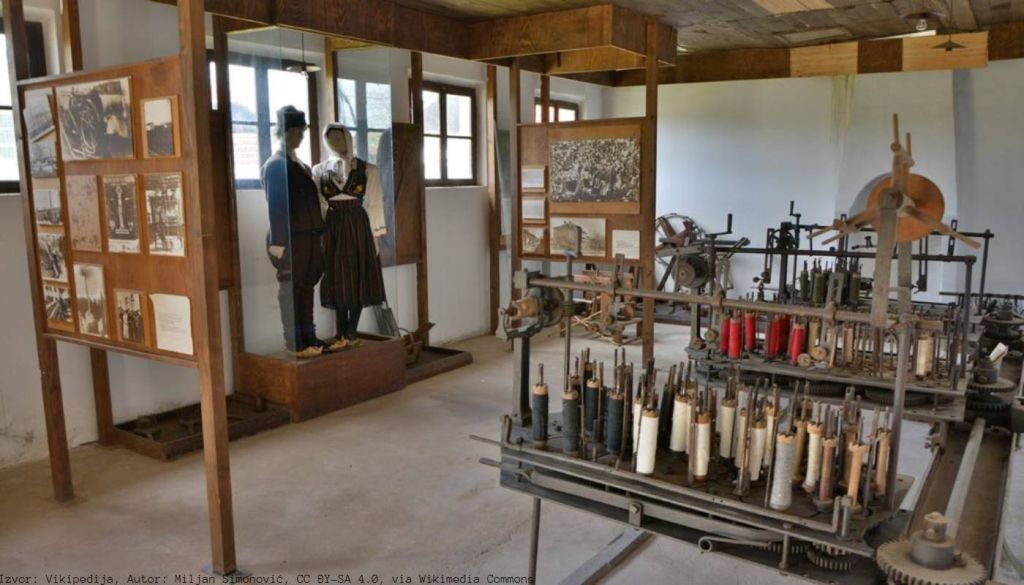
Gajtan is a narrow decorative cord or braid used as edging and ornament on clothing. At Strojkovac, it is not presented as an isolated craft sample. The interpretation follows the chain of production: channelled water supplied power, the traditional mechanism turned spindles, and the rotating parts twisted material into braid. That sequence explains why a mill could become a textile workplace without losing its dependence on the surrounding water system.
Visitors researching a gajtan braid factory in Serbia should focus on the relationship between the original production objects and the restored mechanism. The machinery gives scale to a task that can otherwise appear entirely hand-made. Restoration returned the mechanism to working condition, but operation during every booked visit is not promised and should be requested when arranging the appointment.
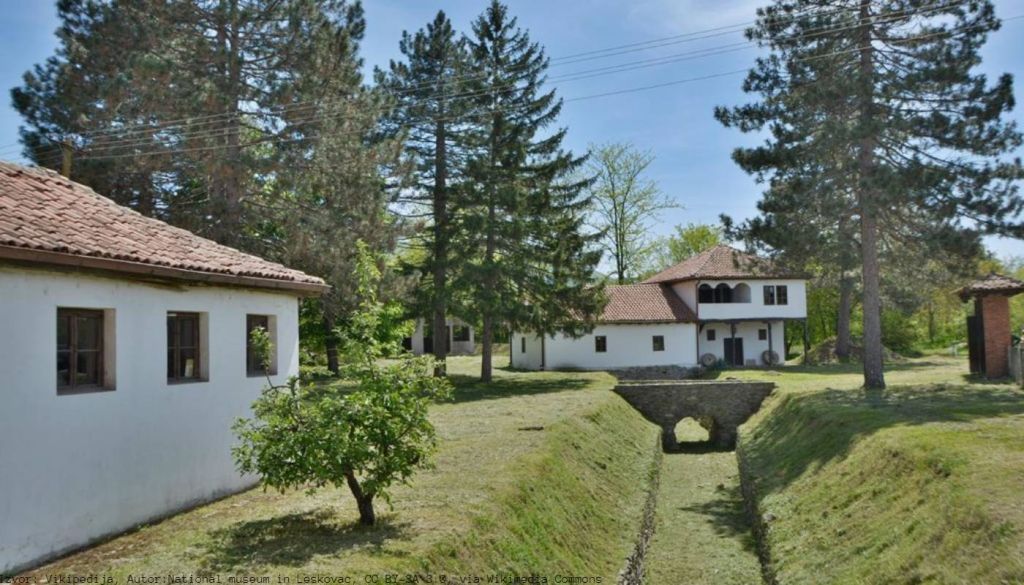
A mill already possessed the resource that early small-scale manufacturing needed: controlled moving water. When gajtan production started in 1884, the Strojkovac watermill became a place where rural infrastructure and organised textile work met. The historical interest therefore lies in adaptation rather than in a clean break between agriculture and industry.
Follow the power route before concentrating on individual tools. The restored channel and traditional mechanism make it possible to understand how movement reached the spindles and supported twisting. Furniture and household objects then return the building to human scale, showing that work developed within an inhabited rural property. This combination gives the Leskovac textile industry museum branch a narrower but more spatially coherent story than a conventional gallery of detached machines.
The branch is at Strojkovce bb, 16203 Strojkovce, outside central Leskovac. No verified public-bus line number, current stop, walking time from a stop or dependable village entrance landmark is published. Ask the museum to confirm the arrival point when booking, especially if a driver will be dropping you off. The available address should not be treated as proof of a precisely marked visitor gate.
A typical taxi fare from Leskovac, a formal taxi rank at the museum and visitor-parking arrangements have not been published. Request an estimated fare before departure and ask whether the driver should wait for the return journey. Travellers approaching from the regional centre can use the Niš city guide for wider trip context, but the museum appointment and local road transfer still need to be organised separately.
Expect a building-led visit in which the production mechanism and domestic rooms matter as much as labels or display cases. The museum documents furniture, miller-household possessions and original objects connected with braid production. A guided format, standard duration and available interpretation languages are not published as fixed parts of every appointment. English guiding has a listed charge, but availability should be agreed in advance.
No dress code is published. A physical-access assessment is also unavailable, so do not assume step-free movement through the mill, household rooms or terrace. Families can use a published family ticket, but information about pushchair access, child facilities and hands-on activities is not available. Keep the booking confirmation and museum contact details accessible during the journey. Visitors sensitive to stairs, narrow passages or uneven surfaces should describe their needs before confirming, rather than relying on assumptions about a restored historic building.
The most useful way to read the building is to separate its functions before reconnecting them. The working wing explains where power and production belonged. The living wing contains furniture and everyday objects associated with the miller’s household, while the terrace forms part of the domestic arrangement rather than an industrial display.
This division prevents two common misunderstandings. The site was not simply a factory inserted into an empty shell, and the household collection is not decorative staging detached from the industrial narrative. Production developed within an inhabited vernacular complex. Notice how the interpretation shifts from energy and machinery to rooms organised for daily life. That movement reveals what the broad phrase “industrial heritage” can conceal: early manufacturing depended on buildings, skills and routines that remained closely tied to a rural household.

Prior announcement is required for the Strojkovac branch. The published opening window is Tuesday to Saturday, 10:00–16:00, but a confirmed appointment is still necessary; Sunday and Monday availability is not published. Organised groups may request a visit outside the regular window by prior agreement.
Use the official National Museum Leskovac visit-scheduling form, call National Museum Leskovac on +381 (0)16 212 975, or write to the museum visit-scheduling team. A separate institutional address is available through the museum’s general email contact.
The documented visit content covers the nineteenth-century mill, authentic furniture and household possessions, original gajtan-production objects, and the restored water channel and spindle mechanism. A standard duration, guaranteed guided format, precise meeting point and fixed demonstration time are not published. Ask for those details, the guiding language and accepted payment method in the same booking request.
Strojkovac is a village branch operated by the National Museum of Leskovac; it is not the museum headquarters at Stojana Ljubića 2. Keep the two locations separate when planning transport or asking a driver for directions. The central institution provides the wider museum context, while Strojkovac concentrates on one mill, one production system and the household around it.
This division is useful for travellers following Leskovac’s “Serbian Manchester” heritage. The branch explains how water-powered gajtan production worked at a rural site without trying to reproduce the main museum’s broader archaeology, history and ethnology coverage. If the itinerary also examines the region’s much earlier urban history, Caričin Grad adds an archaeological setting with a different period and visitor logic.
Sources cross-checked for this guide:
Last checked: 13 October 2026. Fact-checked by the editorial team led by Nenad against the official sources above, and reviewed before publishing.
The preservation history explains why the building and its production system can be interpreted together. The dates describe documented interventions, not a schedule of present-day demonstrations.
Ask in advance if observing the restored mechanism in operation is important to your visit.
National Museum Leskovac publishes individual, group, family and combined-ticket categories. Confirm which rate applies to the separately arranged branch visit when reserving.
Prices can change. Reconfirm the applicable branch ticket, guiding charge and payment method when booking.
Historical interpretation and visitor arrangements were checked against National Museum Leskovac material on 9 October 2026. Hours, prices, access conditions, meeting points and demonstrations should be reconfirmed before travel.
Original objects present the gajtan-making process, while the restored water channel and traditional mechanism explain how the spindles were turned. Concentrate on the transfer of movement from water to machinery rather than viewing each tool in isolation. A functioning historical mechanism is documented, but a demonstration is not a guaranteed part of every appointment.
Authentic furniture and ordinary miller-household objects establish how people occupied the complex alongside the work areas. These pieces are important evidence for the social setting of production. They show what belonged to daily life without turning the domestic wing into a separate ethnographic survey of the whole Leskovac region.
The map query uses the published postal address, Strojkovce bb, 16203 Strojkovce. It does not establish a precise visitor entrance, so confirm the meeting point with National Museum Leskovac.
A booked visit brings the mill building, production equipment and domestic collection into one interpretation. Advance reservation through National Museum Leskovac is required. Guiding format and visit duration are not published, and operation of the restored mechanism should be confirmed rather than assumed.
Strojkovac Watermill Building
The nineteenth-century structure provides the physical framework for the textile story.
Read the property as an adapted working site rather than as a neutral container for exhibits.
Restored Water Channel and Spindle Mechanism
The power system shows how water movement was transferred to gajtan production.
The mechanism was returned to working condition during reconstruction, but a live operation is not guaranteed for every visit.
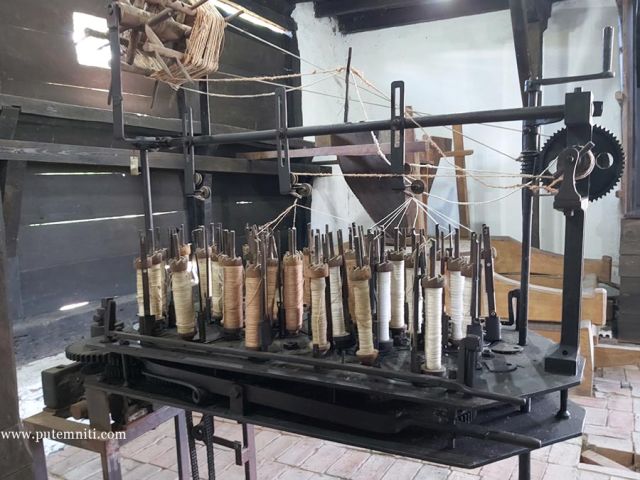
Gajtan Production Display
Original objects explain the stages involved in twisting decorative braid.
Use the tools and machinery to follow the process from powered rotation to the finished cord.
Miller’s Household Rooms and Terrace
Furniture and everyday possessions place manufacturing beside domestic life.
The living spaces and terrace help visitors distinguish household functions from the mill’s working areas.
Strojkovce bb, 16203 Strojkovce, Serbia
No dependable entrance landmark is published; confirm the meeting point
Water-powered gajtan braid production in a historic mill
100–400 RSD across published ticket categories; guiding costs extra
A confirmed Tuesday–Saturday appointment
Yes, advance announcement is required
Tuesday–Saturday, 10:00–16:00
National Museum Leskovac scheduling office; form, telephone and email details are in the booking section
National Museum Leskovac
Do not rely on walk-up admission. Request a date and time, then confirm the village meeting point, guiding language, applicable ticket and whether the restored mechanism can be operated during the appointment.
Choose a confirmed slot between Tuesday and Saturday, 10:00–16:00. Sunday and Monday availability is not published. Organised groups may ask about attendance outside the regular window, but an alternative time must be agreed with the museum.
A step-free route, accessible toilet, reserved parking space and suitability of the terrace for visitors with reduced mobility have not been published. Describe specific mobility requirements to the scheduling team before committing to the journey.
The branch is most useful for travellers interested in industrial archaeology, textile processes, vernacular buildings and the overlap between work and household life. It requires more preparation than a central museum because the visit and local arrival must both be confirmed.
No. The operator singles out this branch for visits with prior announcement, so obtain confirmation before travelling to Strojkovce.
The mechanism was restored to working condition, but operation is not promised for every appointment. Ask specifically for a demonstration when making the reservation.
The published window is Tuesday–Saturday, 10:00–16:00, with advance notice still required. Sunday and Monday availability is not published.
The published adult rate is 250 RSD, with reduced, group, family and combined tickets also listed. Confirm which category applies to the separately scheduled branch visit.
An English-guidance charge is published, but availability and format are not guaranteed for every slot. Request English interpretation when booking.
No. The attraction stands in Strojkovce village and is separate from the National Museum headquarters at Stojana Ljubića 2 in Leskovac.
Stay connected in Serbia