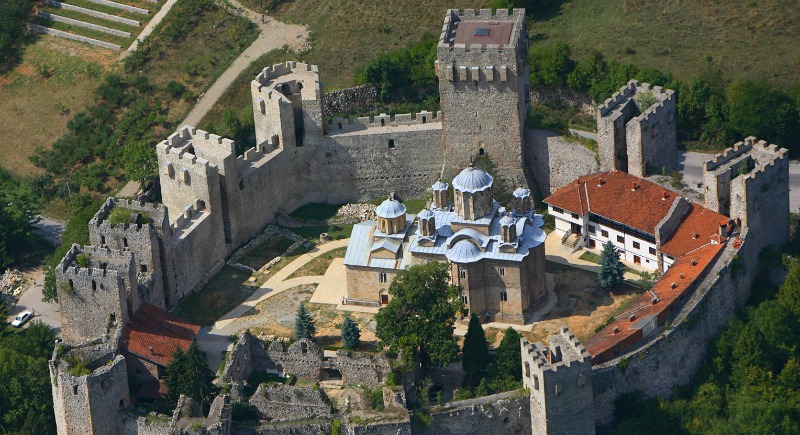
Near Despotovac, Šumadija

Manasija Monastery is one of the clearest places in Serbia to understand how late-medieval faith, political power, and defense came together in one complex. Travelers usually spend most of their time looking at the fortified enclosure, then moving into the church to focus on the frescoes and the foundation of Despot Stefan Lazarević.
Manasija Monastery stands near Despotovac as a fortified monastic complex from the early 15th century, built by Despot Stefan Lazarević. What makes it stand out is the way a church and monastic enclosure are framed by strong defensive walls and towers, giving the site the character of both monastery and fortress. It is especially known for its Byzantine frescoes and its place in the cultural history of medieval Serbia. The atmosphere is calm, enclosed, and reflective, with stone walls shaping the visit as much as the church interior.
For a broader regional plan, it fits naturally into the Šumadija Travel Guide | Kragujevac, Topola & Oplenac.
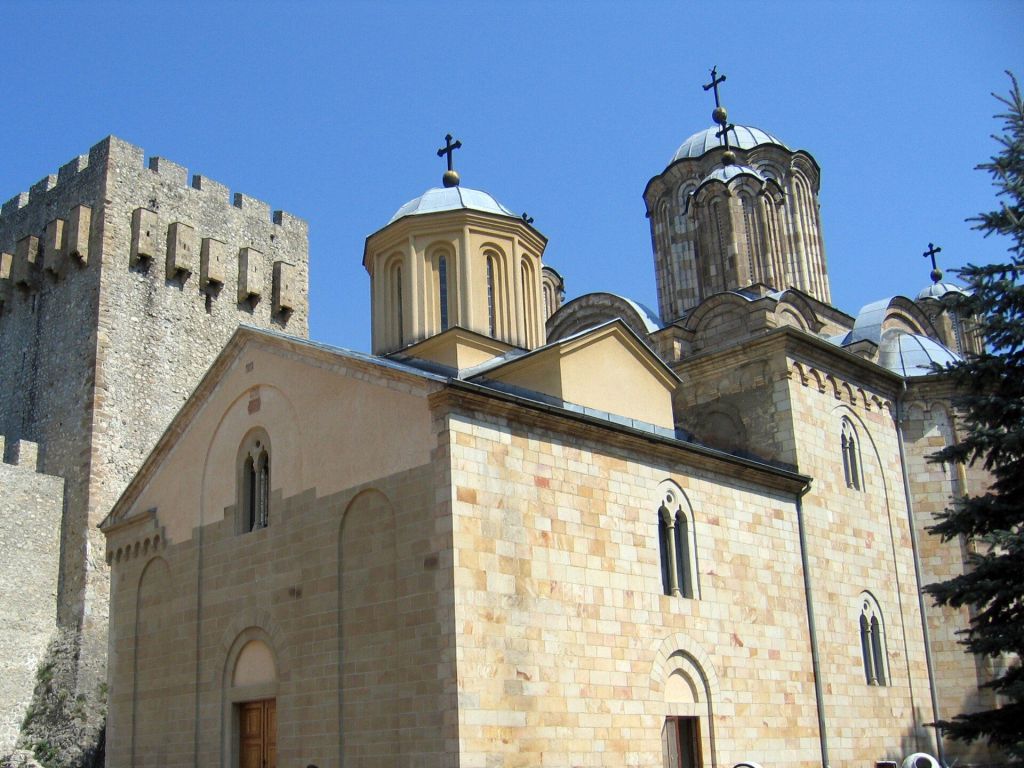
Manasija Monastery’s main speciality is not only that it is old, but that its identity is split between military strength and sacred art. The enclosure walls and towers give the complex a guarded outline that feels different from open monastery courtyards elsewhere in Serbia. Inside, the church shifts the visit from stone defense to painted theology, with Byzantine frescoes that make the interior the second half of the experience rather than an afterthought. This combination is what makes Manasija specific: you read the site first from the outside as a defended place, then from the inside as a monastic and artistic one.
Manasija Monastery is reached via Despotovac. From the center of Despotovac, the monastery is a short drive rather than a practical walk for most visitors. If you are arriving by public transport, the usual approach is to take an intercity bus to Despotovac and then continue by taxi for the last stretch. Drivers approaching by car should follow the local route from Despotovac toward Manasija; state road 35 is the key numbered road into this part of the region. Parking is usually the easiest option for independent travelers because the monastery sits outside a dense urban transport network.
If you are starting in a larger city, it is easiest to organize the trip together with a stay in Kragujevac or another Šumadija base.
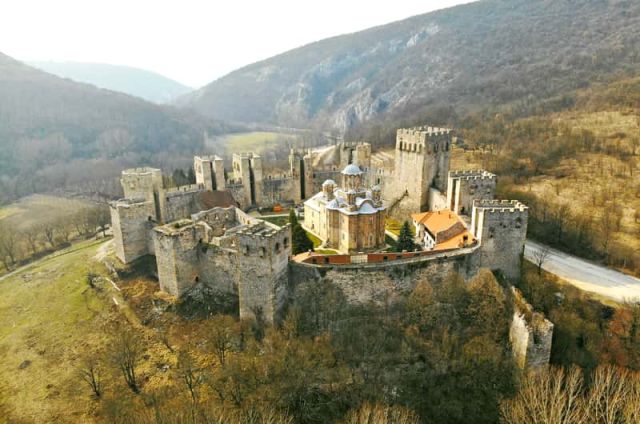
Morning and late afternoon are the most useful times to go if you want softer light on the walls and a quieter atmosphere in the courtyard. Midday can work well for visibility, but the stone enclosure reads flatter in strong overhead sun. Weekdays usually feel more contemplative than weekends and religious holidays, when there may be more domestic visitors and active worship. Spring and autumn are the easiest seasons for a longer exterior walk around the complex. If interior access matters to you, confirm locally before setting out, especially outside the main travel season.
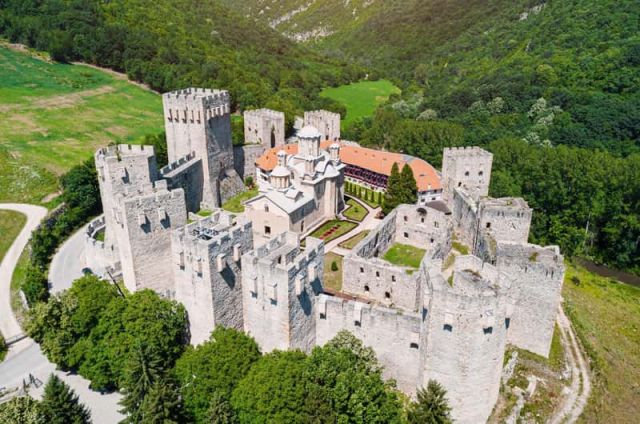
Expect a site that feels orderly, quiet, and self-contained rather than museum-like. The main visual contrast is between the hard, defensive exterior and the more intimate church interior. Dress modestly, especially if services are taking place. Surfaces are generally manageable for most visitors in the open parts of the complex, but old stone and uneven ground mean supportive footwear helps. Families can visit without difficulty if children are prepared for a respectful atmosphere. Bring water in warm weather, and carry a light layer in cooler months because time spent outdoors in the courtyard and around the walls is part of the experience.
Travelers building a wider heritage route through the region often pair Manasija Monastery with Topola and Oplenac rather than treating it as an isolated stop.
Tell us where you want to go and how you travel. We reply within two working days with a tailored plan.
Use the map to position Manasija Monastery near Despotovac before planning the drive or taxi leg from town.
These are the specific parts of the complex most visitors spend time on once inside the grounds.
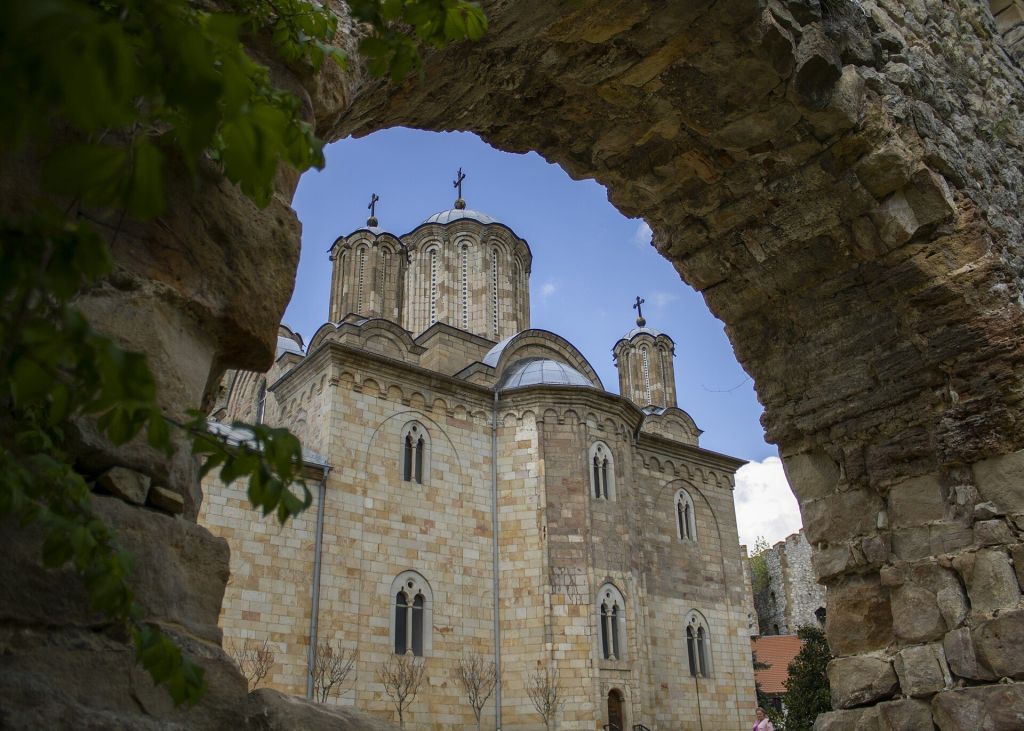
Church of the Holy Trinity
The spiritual center of the complex and the main place to view the frescoes.
This is the core of the visit and the part most closely connected with the monastery’s artistic importance. Spend time adjusting your eyes to the interior light before looking closely at the wall painting.
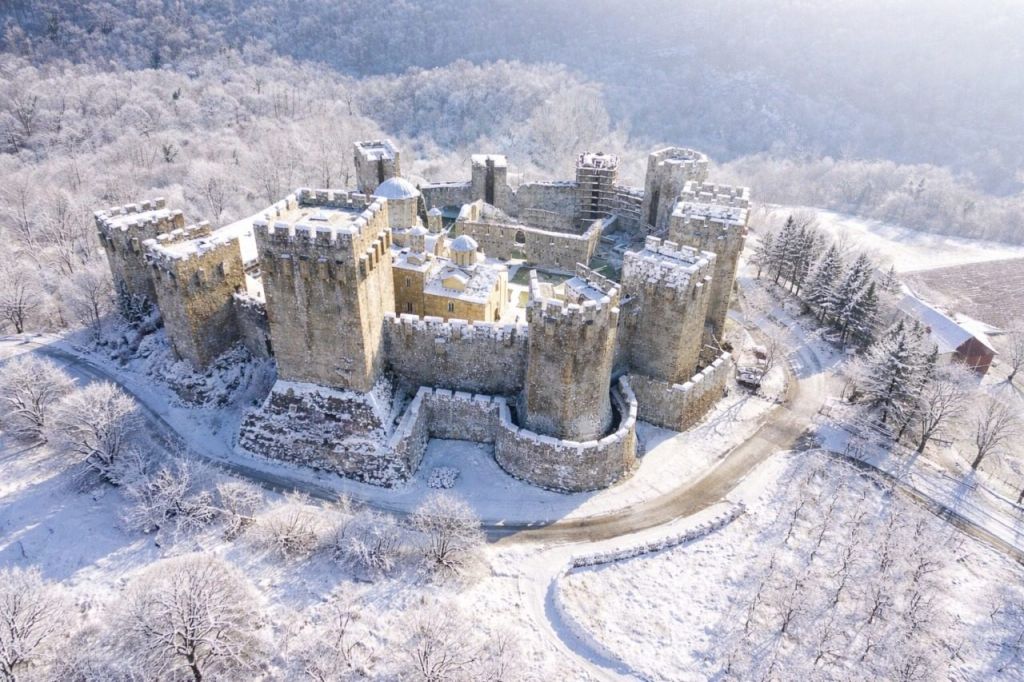
Fortified enclosure walls
The outer walls explain why Manasija feels different from many other monasteries.
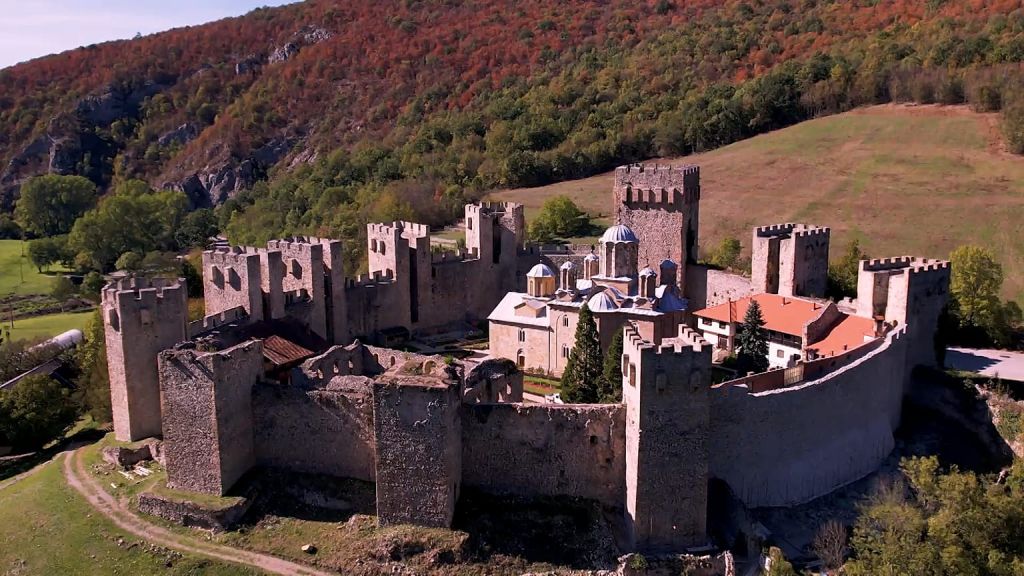
The stone curtain walls frame the whole visit and are the clearest expression of the monastery’s defensive role. They are best appreciated before entering the church itself.
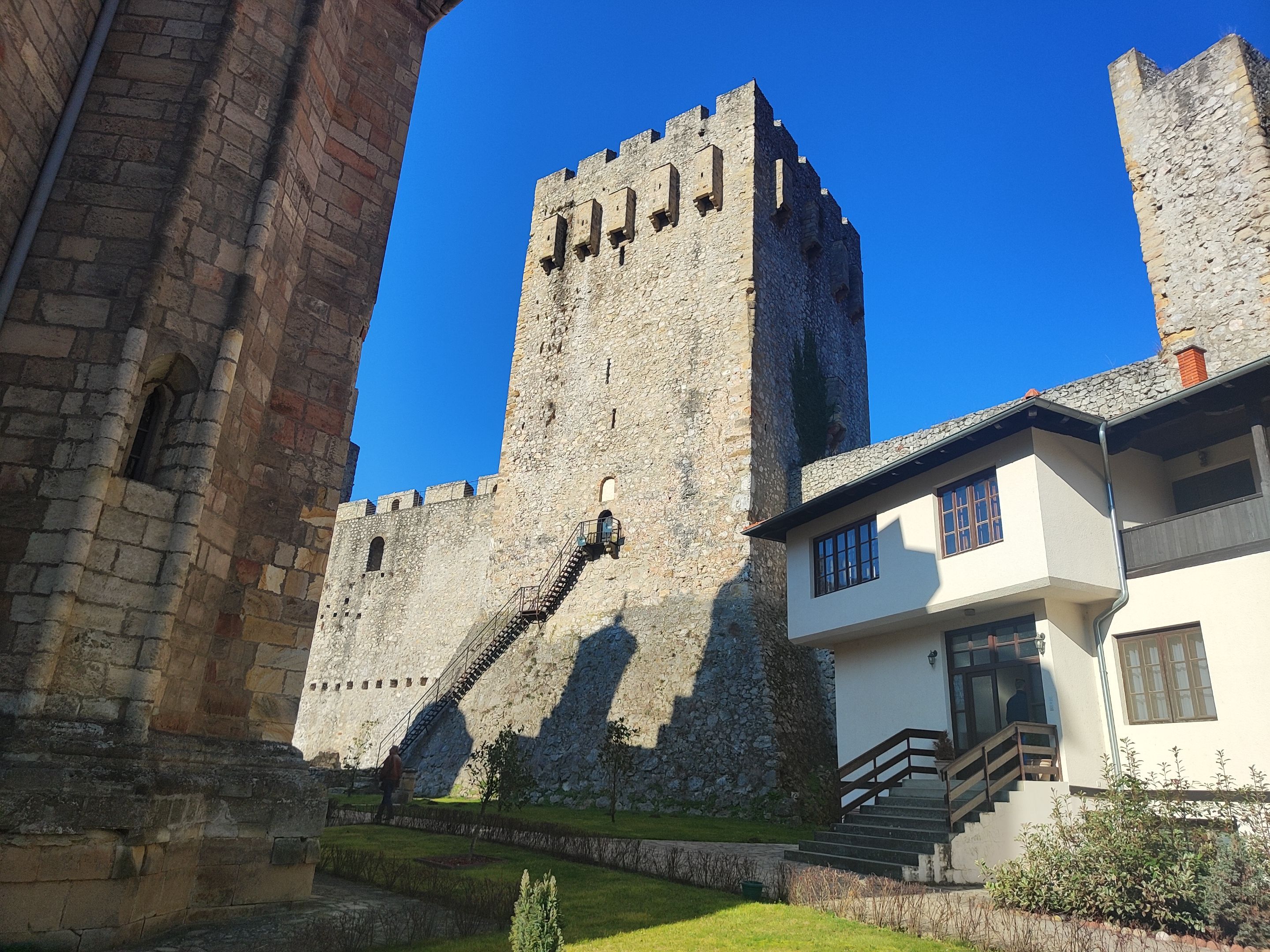
Defensive towers of Manasija
The towers give the site its fortress character.
Seen together with the walls, the towers turn the monastery from a purely religious stop into a study of protected medieval architecture. They are the detail most travelers remember from the exterior.
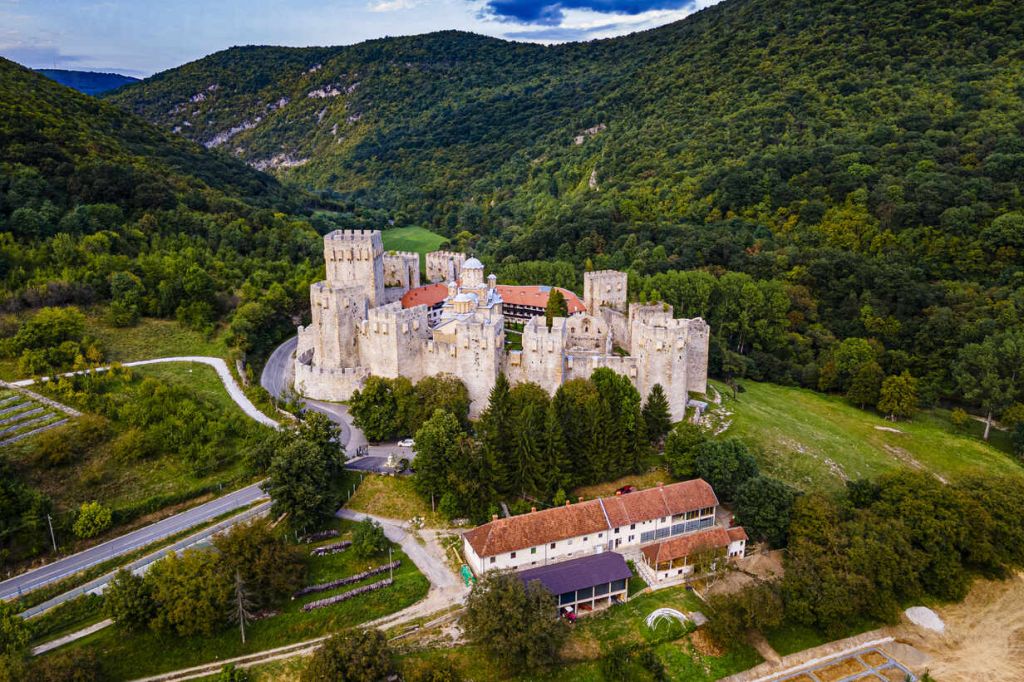
Monastery courtyard
The space where the defensive and monastic parts of the complex meet.
The courtyard helps you connect the outer military shell with the religious life inside. It is also the best place to pause and take in the proportions of the entire complex.
Topola and Oplenac | Royal Mausoleum, Uprising History and
Near Despotovac, Šumadija
Despotovac
Despot Stefan Lazarević
Early 15th century
Fortified monastery walls and Byzantine frescoes
Religious and cultural heritage stop
45 to 90 minutes
Morning or late afternoon
No formal reservation for an individual visit; confirm locally for current access
Dress and behavior should match an active religious site. Keep voices low, avoid blocking worship areas, and ask before photographing inside the church.
Start with a slow loop around the enclosure to understand the towers and walls, then go into the church. That outside-to-inside order makes the fortified design easier to read.
Most travelers need 45 to 90 minutes for a focused visit. Add more time if you want to linger over the church interior or combine the stop with a longer regional drive.
Manasija Monastery works best for travelers interested in medieval Serbia, church art, and fortified religious architecture rather than those looking for a full-service urban attraction.
It is known for being a fortified early-15th-century monastery built by Despot Stefan Lazarević and for its Byzantine frescoes.
It is both. The fortified walls and towers shape the exterior experience, while the church interior is the key artistic and religious part of the visit.
Yes. Most international travelers visit it as part of a day trip or a longer regional drive based around Despotovac or a larger Šumadija city.
Modest clothing is the safest choice because it remains a religious site. Quiet behavior is expected, especially near worship spaces.
A focused visit usually takes 45 to 90 minutes, depending on how long you spend on the exterior fortifications and inside the church.
Use Manasija Monastery as one heritage stop within a broader central Serbia trip that also includes city time and royal-history sites.
Stay connected in Serbia