Working-day visitor service
Working daysThe museum publishes a common service window for its facilities.
- Facility hours
- 08:00–16:00
- Visitor service
- Available until 15:00
- Guided interpretation
- Confirm in advance rather than assuming it is included

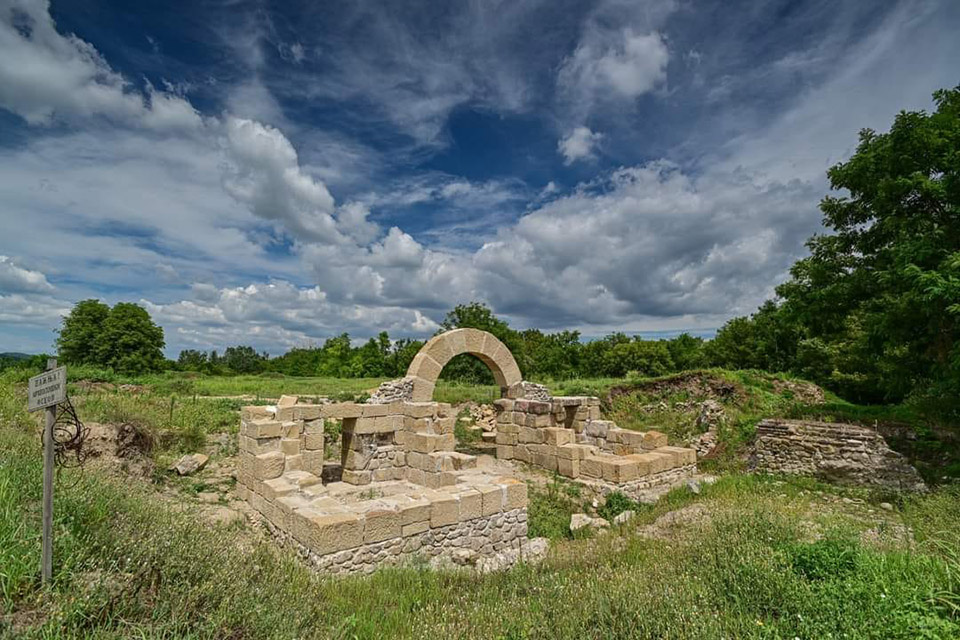
Plan Timacum Minus and the Ravna Archaeological–Ethnological Park as a paired visit rather than a single attraction with one gate. The first is the outdoor Roman field site; the second is a museum-managed interpretive setting around Ravna’s old village school. They are close enough to combine, but their entrances, parking arrangements and admission conditions should not be assumed to be identical. Contact the Homeland Museum of Knjaževac before an organised, weekend or holiday visit and ask explicitly which locations and services the arrangement covers.
North of Knjaževac, the Beli Timok valley broadens around Ravna into cultivated ground framed by eastern Serbian hills. Roman military occupation began here in the first century, and later phases left a layered site rather than one neatly restored monument. Low walls, gates and excavated building plans require attentive looking, while the old school complex supplies the labels, objects and wider local context that open ground cannot provide. The pace is quiet and analytical. Base planning, food stops and other town services are covered in the Knjaževac visitor guide.
The defining experience is the movement between evidence in the ground and interpretation under museum care. At Timacum Minus, the line of a defensive wall, the interruption made by a gate and the footprint of an excavated building show how a military enclosure was organised. At Ravna’s park, inscriptions and other movable material can be read at a human scale, away from the erosion and incomplete plans of the field site. This relationship matters: the ruins establish space, while the displays explain people, military administration and the economic setting of the Timok valley. Allow time to look twice rather than treating the fort as a quick roadside photograph.
The Roman fort near Knjaževac occupied a valley corridor with practical military and economic value. Roads through the Timok basin connected settlements, resources and administrative centres, while mining and metallurgy formed part of the broader regional economy. Timacum Minus should therefore be read as more than a remote garrison: soldiers, workers and local communities operated within the same landscape.
The Beli Timok setting also explains why the site works well within a road itinerary. Distances between towns and archaeological places are manageable by car, but interpretation varies sharply from excavated fields to formal museums. Travellers building a longer route can use Eastern Serbia’s valleys and archaeological routes to understand how Timok sites relate to the Danube, mountain districts and later historic towns.
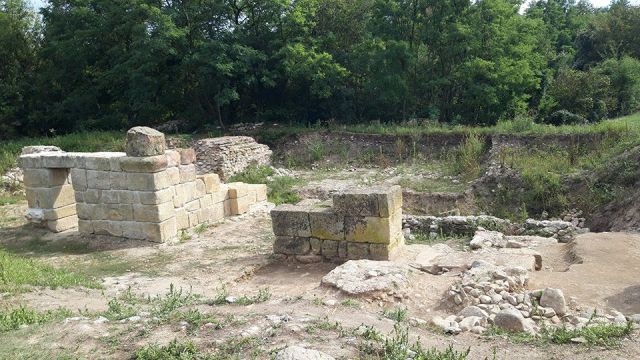
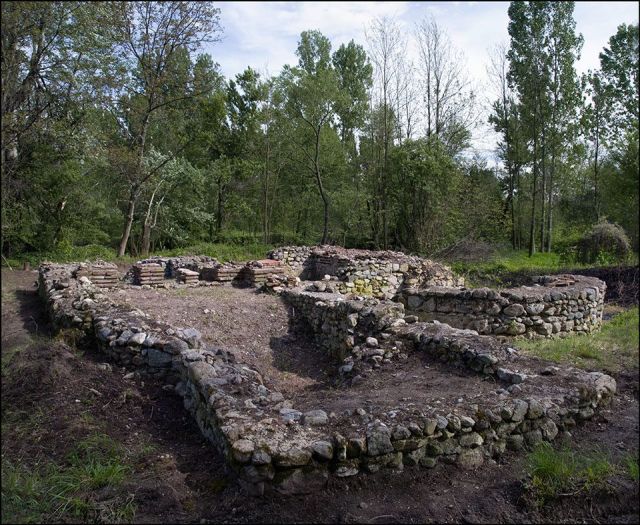
Start at the perimeter rather than the smallest exposed room. The defensive wall establishes the enclosure; gates then show where people, animals and supplies entered. Inside, excavated foundations divide the ground into structures whose purposes have been inferred from plan, finds and comparison with other Roman military sites.
Interpretations include administrative space and a likely granary, but these labels are archaeological readings, not intact buildings with surviving upper floors. Look for wall thickness, repeated room shapes and the relationship between a structure and the internal roads. That approach makes fragmented masonry legible without pretending that every identification is final. Excavation and conservation conditions can also change, so a named structure in an archaeological account should not be treated as guaranteed visitor access on a particular day.
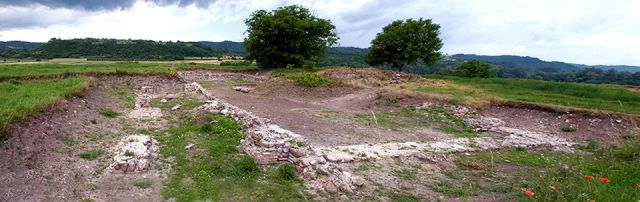
The baths shift attention from ramparts to routine. Their excavated footprint records a purpose-built part of settlement life in which washing, heating and social contact sat beside military duties. What survives is a plan in the ground, so interpretation matters more than visual completeness.
Inscriptions provide a different kind of evidence. Names, dedications and official language can connect the settlement to individuals and institutions in ways that anonymous wall lines cannot. Movable finds and inscribed stones are protected and interpreted in museum settings rather than being left throughout the field. This is why the Ravna lapidarium and related museum displays are part of the intellectual route even though they are not the fort itself. Ask staff which finds from Timacum Minus are currently displayed, as exhibitions and conservation arrangements may change.
The old village school gives the Ravna park a different scale from the open excavation. The lapidarium gathers stone material into a setting where inscriptions and carved surfaces can be examined closely. Around it, reconstructed traditional-building elements widen the story beyond Rome and show that Ravna’s heritage did not end when the fort ceased to function.
This mixed archaeological and ethnological approach is especially useful for families or travellers without specialist background because it supplies context before or after the abstract wall plans. Workshops, local wine presentations or food activities may sometimes be possible through museum coordination, but none should be assumed to be included in a standard visit. Ask what is actually scheduled for the date, how long it lasts and whether it carries an additional charge.
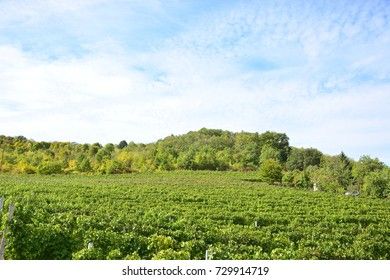
Ravna lies approximately 8–9 km north of Knjaževac; the range reflects differing distance figures within the museum’s own visitor material. From Knjaževac, follow Road 35 and then the signed local approach toward Ravna and the archaeological locations. The final approach to the ruins includes a gravel track, so reduce speed and avoid assuming ordinary urban-road conditions.
No dependable numbered public-bus line, stop-to-site walking time or taxi tariff is published for this visit. Independent travellers should not build the day around an unconfirmed bus connection. Ask the museum whether a local service is practical on the intended date, or arrange road transport from Knjaževac. If using a taxi, agree the fare and return collection before departure. Walking directions from the nearest public-transport stop are not published, and the separation between the park and field site makes an unsupported minute estimate misleading.
The Homeland Museum of Knjaževac coordinates visits to its facilities. Organised groups, school parties and visits outside ordinary working hours should be scheduled in advance. There is no published online reservation form: email the museum visitor service or call the Homeland Museum of Knjaževac. State clearly whether the request covers Timacum Minus, the Ravna park or both, and ask whether interpretation will be guided, audio-based or independent.
The museum’s hours are a visitor-service framework, not proof that the outdoor ruins have an identical fenced-gate schedule or continuous staffing. Check the Homeland Museum visitor information shortly before travel, particularly for holidays and weekend arrangements.
A working-day morning is the simplest choice because it leaves time to clarify tickets and interpretation before visitor service ends. Contact the museum before setting out even on a weekday if the park displays, a guided explanation or a particular excavation area is central to the trip. For weekends, public holidays and visits outside the normal framework, prior arrangement is required. Seasonal opening variations are not published as a separate timetable, so reconfirm close to travel rather than assuming the same conditions throughout the year.
Timacum Minus is an outdoor archaeological landscape, not a reconstructed Roman attraction. The experience depends on low foundations, ground plans and careful interpretation, with no promise that every excavated area will be accessible. There is no formal dress code, but closed footwear and clothing suitable for exposed outdoor ground are practical. Carry drinking water and sun or rain protection because visitor amenities at the ruins should not be assumed.
Families can visit, although children will gain more from the stop when an adult, guide or audio resource helps turn wall lines into a story. The park’s school and lapidarium provide a more contained setting. Visitors with mobility needs should discuss the exact route with the museum before travelling rather than relying on general accessibility claims from other museum buildings.
Begin with the fort while attention is fresh: establish the perimeter, identify the gates and then move inward to the baths and interpreted building plans. Continue to the old school and lapidarium, where inscriptions and protected finds can answer questions raised in the field. Return to Knjaževac for town services rather than expecting a full visitor complex beside the excavation.
For a wider Roman itinerary, Zaječar as a regional base places travellers closer to another group of Timok Valley sites. Felix Romuliana at Gamzigrad offers a different imperial and palatial context, so it complements rather than duplicates Timacum Minus. Avoid forcing both into a rushed schedule if museum coordination, road conditions or detailed interpretation are priorities.
Sources cross-checked for this guide:
Last checked: 16 October 2026. Written and reviewed by the editorial team led by Nenad, and fact-checked against the official sources listed above.
Use these published institutional details as a basis for questions to the museum; do not assume one ticket automatically covers both outdoor and park locations.
The museum publishes a common service window for its facilities.
Visits outside the weekday framework are handled directly by the museum.
The tariff is organised by the number of Homeland Museum facilities visited.
The published tariff does not conclusively establish a single combined ticket for the outdoor fort and Ravna park.
Operational details were last checked on 9 October 2026. Confirm volatile access, hours and ticket arrangements directly before travel.
The map locates Timacum Minus in the Ravna area north of Knjaževac. Check the separate field-site and archaeological–ethnological park pins before starting the final local approach.
These four stops explain the site’s primary speciality: reading a Roman military settlement through excavated structures, inscriptions and museum interpretation. Availability of individual excavations should be confirmed with the museum.
Timacum Minus fortified enclosure
The field site preserves the plan of a Roman military fort through excavated wall lines and structures.
Begin with the overall enclosure so later details make spatial sense; do not assume every excavated area is open to visitors.
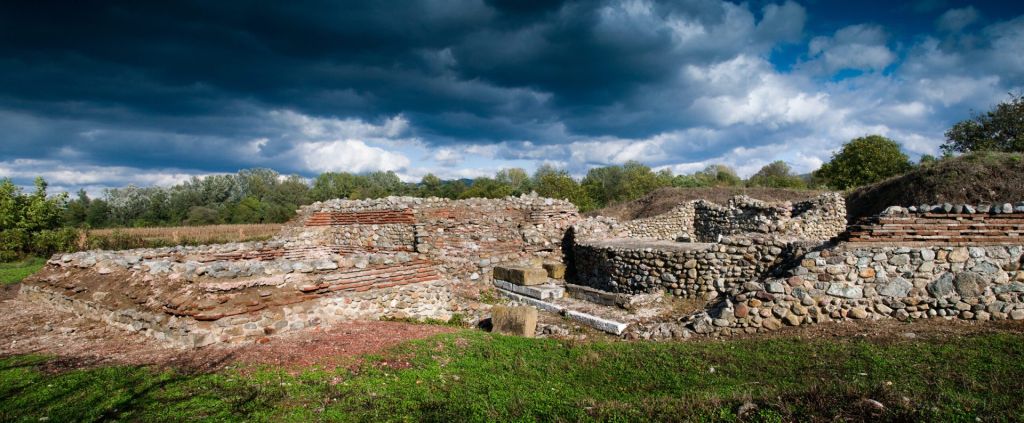
Defensive walls and gate remains
Wall sections and gate areas reveal how movement into the fort was controlled.
Use changes in masonry and breaks in the perimeter to understand the enclosure, while respecting barriers around active or sensitive excavation areas.
Timacum Minus bath remains
The excavated baths connect military planning with routine washing, heating and social life.
The surviving plan is archaeological rather than reconstructed; labels or guided interpretation help distinguish the building from surrounding foundations.
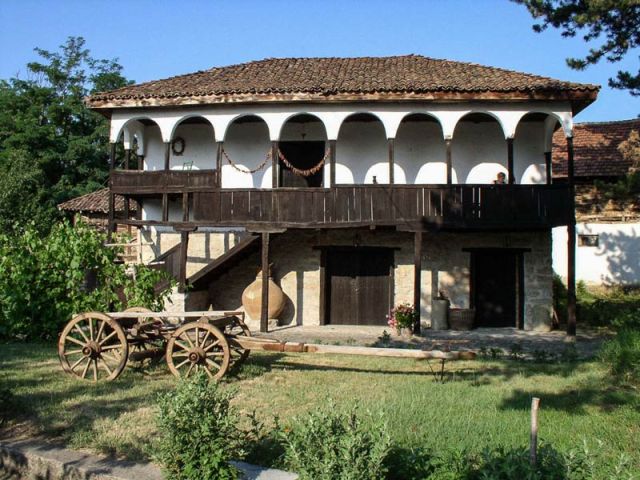
Ravna old school and lapidarium
The archaeological–ethnological park places stone monuments and local heritage beside the former village school.
Use this stop to connect inscriptions and movable finds with the fort, then examine the reconstructed traditional-building context around the park.
Ravna 3, 19345 Ravna, Serbia; the Roman field site is a separate nearby location
Village of Ravna, approximately 8–9 km north of Knjaževac
Roman fort remains interpreted alongside a lapidarium and archaeological–ethnological park
Published institutional tariff: 100–200 RSD depending on number of facilities; confirm coverage
Working-day morning, with visitor coordination completed before departure
Required for organised groups and weekend, holiday or out-of-hours visits
Homeland Museum visitor service
Homeland Museum visitor service
An Android guide application covers Timacum Minus and the Archaeological–Ethnological Park in Serbian, English and German. Some information is also available through QR codes, and audio guides are offered in Serbian and English. Ask whether a device is supplied, whether visitors should install the application beforehand and which content is currently active.
The site’s chronology is not presented as one seamless final phase. Detailed archaeological interpretation associates a destructive episode with the fifth century and does not confirm a restored fort afterward, while the concise visitor presentation extends activity into the sixth century. Read those statements at their stated level rather than combining them into an unsupported reconstruction.
No formal parking area is identified at the Timacum Minus ruins, while organised parking is available at the Ravna park. The field-site approach includes gravel and outdoor archaeological ground. Movable ramps reported at some museum facilities do not establish a fully step-free route here. Contact the museum with the visitor’s specific mobility needs and ask about drop-off points, gradients, surfaces and access to the lapidarium.
The park’s school setting and protected displays can make the archaeology easier to explain than isolated foundations alone. Keep children within the permitted route at the field site and do not treat excavation edges as play areas. Educational workshops are not guaranteed with admission; families interested in an activity should ask what is scheduled and whether advance booking or an extra fee applies.
No. Timacum Minus is the outdoor Roman archaeological site, while the nearby park around Ravna’s old school interprets archaeology and local ethnological heritage. Treat them as connected but distinct stops.
Yes. Weekend, holiday and out-of-hours visits are arranged in advance through the Homeland Museum of Knjaževac. Organised groups and school visits should also schedule their visit.
The museum publishes prices for visiting one, two or three institutional facilities, but exact application to these two locations is not conclusively stated. Ask which ticket applies before paying or beginning the visit.
The museum does not publish a dependable bus line number or stop-to-site walking route. Confirm local transport directly or arrange road transport from Knjaževac.
A universal step-free route is not established. The gravel approach, archaeological terrain and separate park setting require a visitor-specific check with the museum before travel.
No standard inclusion is published. Such activities are options to ask about when arranging a visit, not services that should be expected with ordinary admission.
Stay connected in Serbia